
Commentary
For decades, the European Union has lived luxuriously under the comfortable illusion that a deeper economic embrace would civilize the Chinese Communist Party (CCP). Today, as the CCP provides the industrial and financial lifeblood for Moscow’s war machine, that dream lies buried beneath the rubble of Ukrainian cities.
The EU is finally awakening to a grim reality: Its largest trade partner is not a partner at all but a systemic rival, weaponizing economic dependency to fracture the West.
But that’s starting to change, and the trade battle is heating up.
Beijing Wants to De-Industrialize Europe
The hollowing out of U.S. industry by China over the past three decades is well-known and has been a disaster for the American people and economy. The EU is aware that Beijing seeks to de-industrialize Europe as well and make it a vassal of Chinese industry.
The Chinese regime is doing this by various means. A few of those include dumping subsidized products into the EU, adding tariffs on EU-made electric vehicles, and exercising its “rare earth” chokehold whenever it suits them.
These actions (and others) demonstrate China’s economic muscle and clout over policymakers and business leaders. But they also reveal Beijing’s intention to put European suppliers and manufacturers out of business.
But the China–EU grand partnership is fracturing in a very big way.
The Ukraine War Turns Back China Trade Deals
The most glaring example is Beijing’s duplicitous role in the Ukraine conflict. While Chinese leader Xi Jinping pays lip service to “lasting peace,” the CCP has become the primary provider of dual-use technologies, superconducting magnets, and electronics that keep Russian missiles flying.
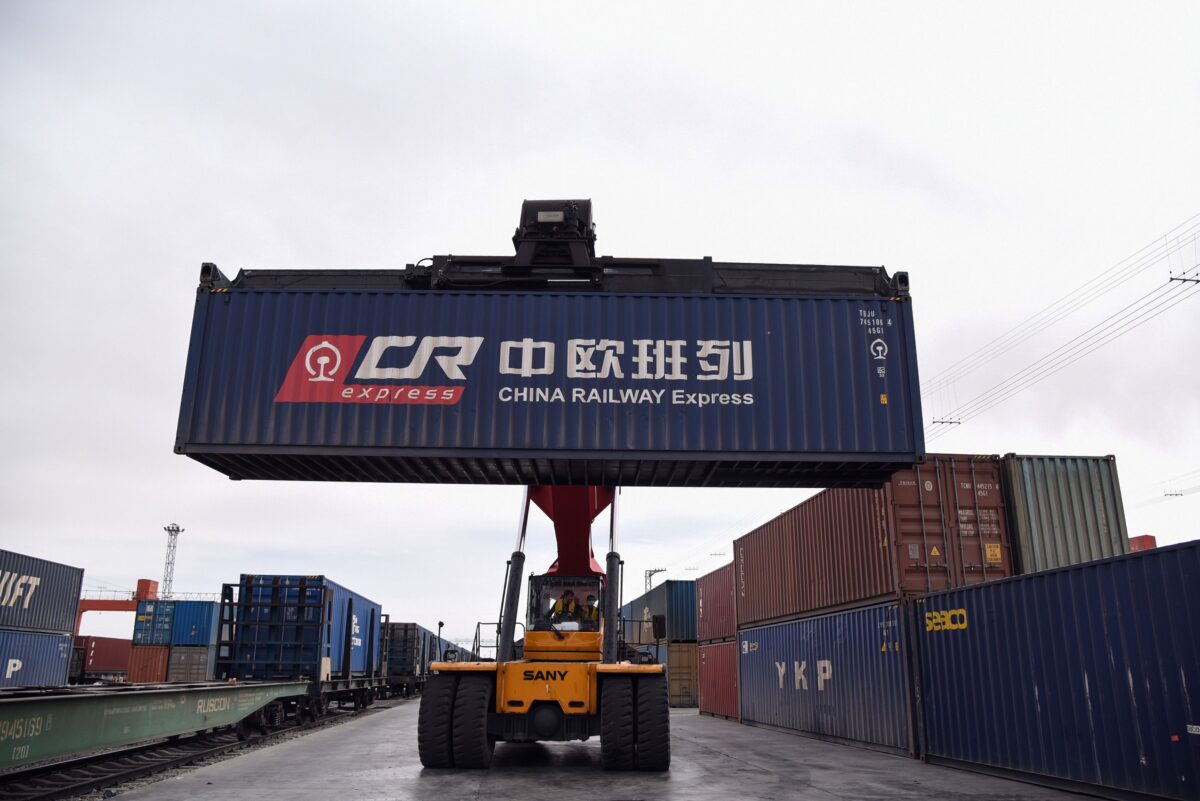
For Europe, the contradiction and the fallout of the CCP’s support of Russia’s war machine are becoming unbearable. Essentially, the EU is funding its own economic and security threat through a trade deficit with China, and according to Eurostat, that number exploded to roughly 359.8 billion euros in 2025.
As the war rages on into its fourth year, the political fallout has turned terminal.
Finland’s foreign minister recently signaled a de facto veto on any future EU–China trade deals, saying bluntly that Beijing’s support of Moscow makes a “free trade deal” impossible. The EU’s new “Made In Europe” policy targets China specifically.
In other words, the China–EU trade partnership is on its way out the door.
Central Europe’s Trade Deals—and Sympathy—Are With Taiwan
The sympathetic ear Taiwan is finding in Central and Eastern Europe—nations that understand what it means to live in the dark shadow of an aggressive neighbor—further isolates Beijing. For some European nations, trading with Taiwan is not only technologically desirable but is also the right thing to do.
What both the EU and Central and Eastern European nations understand is that trading with China isn’t about mutual benefit; it’s ultimately about Beijing destroying its economic competitors. For Europe as a whole, de-risking from China is no longer a choice; it is a survival mechanism.
Fear Drives the CCP
Of course, Beijing’s policy of taking full advantage of every trade angle it has at any given time is no secret to anyone. The examples of such behavior from the CCP are widespread and well-known. From debt traps stemming from the Belt and Road Initiative to intellectual property theft against trading partners and governments, forced technology transfers, falsified market listings, strategic dumping, and so much more, the Chinese regime’s behavior over the past several decades smacks of unbridled, abusive, zero-sum adversarial trade.
With such a cynical trading profile, it may appear that China operates from a position of unassailable strength. In some cases, it does. But in many others, China’s trading partners allowed those behaviors to occur because the economic costs or political benefits at the time may have outweighed the immediate costs of not entering into specific trade agreements with China.
The illusions of any such benefits are now gone. Beijing is now losing foreign companies and direct foreign investment as the realization of the true costs of trading with China is revealed in undeniable terms.
The CCP in Panic as EU Wakes Up
The Europeans have come back to reality. The EU’s latest round of sanctions targets banks and companies in third countries, including China, in order to block alternative financial channels used by Russia to support its war economy. The sanctions also targeted 27 Chinese companies that provided dual-use products to Russia.
In response, the CCP restricted seven EU defense companies from exporting to China, including German defense giant Hensoldt and Belgium’s FN Browning. Although Beijing referenced European support for Taiwan as the reason, that claim is patently false, as the EU has not sold a major weapons system to Taipei in 30 years to avoid Beijing’s ire.
Vulnerability Masked as Strength
Why is the CCP acting so aggressively?
Because China’s economy is mired in a prolonged deflationary phase, and its overcapacity is a desperate attempt to export its way out of a domestic collapse. These trade wars are not a show of confidence; they are the thrashings of a trapped player.
The CCP knows that if Europe successfully aligns with the United States and other democracies through “de-risking,” the Party’s primary source of hard currency and technology will vanish. The age of consequence has arrived. The cheapest price tag often carries the highest existential cost, and Europe is finally refusing to pay it.
Views expressed in this article are the opinions of the author and do not necessarily reflect the views of The Epoch Times.
 Friends Read Free
Copy
Facebook
Tweet
Friends Read Free
Copy
Facebook
Tweet