
Commentary
The UK was once a giant of car manufacturing. In the 1950s, we were the second-largest producer in the world and the biggest exporter. The cities of Coventry, Birmingham, and Oxford built not only cars but also the reputation of an industrial nation; to this day, it is a source of great pride that Jaguar Land Rover, a global automotive icon, still stands between Coventry and Birmingham. By the 1970s, we were producing more than 1.6 million vehicles per year.
Today? We have fallen back to 1950s levels. In 2024, the number of cars built in the UK was less than half of our peak output: 800,000 cars, the lowest number outside the COVID-19 pandemic since 1954. Half a year later, by mid-2025, production slumped by a further 12 percent. The country that once led the automotive revolution is now struggling to stay afloat and fighting to remain relevant.
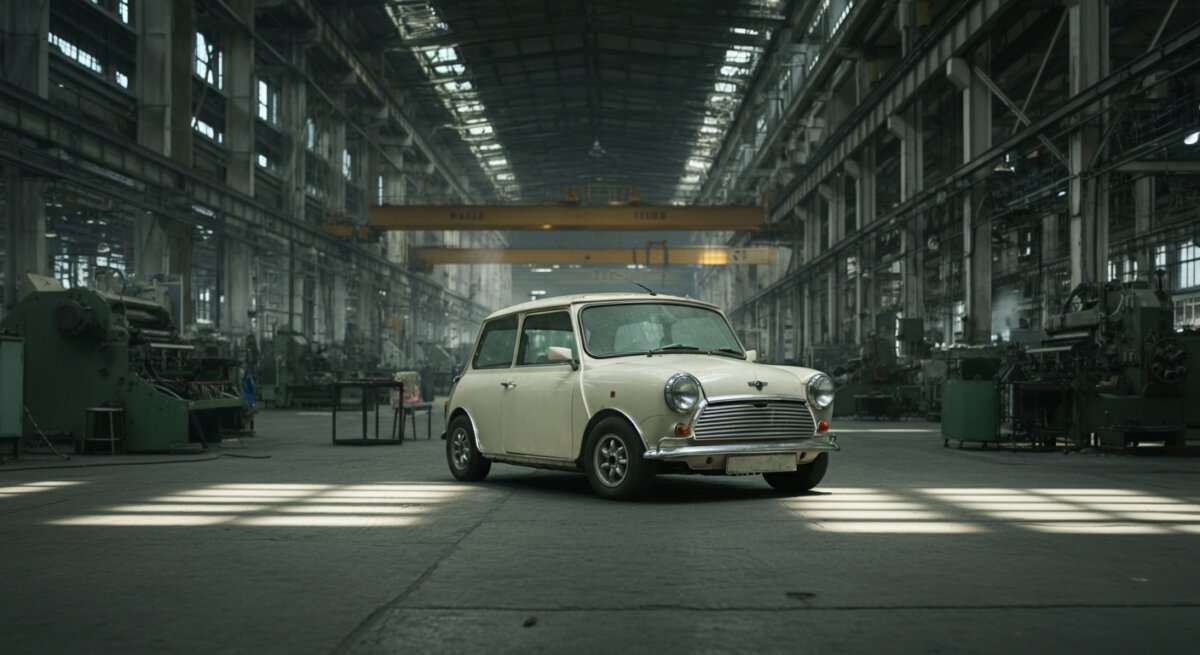
This is why the news that BMW will end car production at Oxford’s Mini plant, shifting work to China, is so damning, bringing this decline into sharp focus. The Mini is more than a classic UK car; Alec Issigonis’s original design made it an international icon. For decades, the Mini has been the bridge between UK design flair and foreign investment. Its departure leaves 1,500 jobs at risk at a time when the government is desperate to fuel growth and convince a wavering consumer market that there is no tension between industrial production and net zero goals.
It’s a bitter reminder that we in the UK have been here before. We are again letting an industrial crown jewel slip away.
The usual explanations will be offered: global competition, exchange rates, supply chains. All true, in the midst of a global trade war that is heating up and damaging major UK exports. But such a diagnosis is incomplete. The truth is that the UK car industry is being squeezed by a mix of geopolitical realignment and government missteps.
The car industry has become the frontline of a new trade war. Washington has already moved aggressively to shield its own firms: The Inflation Reduction Act offers vast subsidies for U.S.-made electric vehicles (EVs) and batteries, an unapologetic attempt to onshore production. This became a flashpoint of tension in U.S. President Donald Trump’s negotiations with the European Union in the latest trade deal. On the production side, the act has poured billions into U.S. manufacturing: Investment in EV and battery plants hit about $11 billion per quarter in 2024.
Ripples have been sent across the world in the United States’ wake: Europe, faced with a flood of cheap Chinese EVs, has imposed tariffs of up to 35 percent after an anti-subsidy investigation. Talks have even turned to a system of minimum import prices instead of tariffs. Unsurprisingly, China has threatened retaliation against European luxury marques, while experts warn that the tariffs may slow the EU’s green transition by raising prices.
This is no longer a free market: Cars are treated as strategic assets, the 21st-century equivalent of shipbuilding or steel. Whoever controls the supply chains, particularly for EV batteries and the mining of lithium, controls not only the future of the industry but also an important lever of national power.
The results are visible. In July, Tesla’s UK sales collapsed by nearly 60 percent, while Chinese giant BYD’s deliveries quadrupled. Europe responded by talking up new tariffs. The UK did nothing. In this asymmetric contest, our market risks becoming a showroom for foreign producers, subsidizing both sides of the trade war without defending our own.
The real danger is not simply that the UK loses factories; that would be lamentable, but new industries crop up all the time. The danger comes if the UK misreads the geopolitics of the moment. Policymakers assume that globalization still works on liberal lines, when in reality industrial competition has become nakedly political.
If the government continues to approach this as a morality play about “green obligations” rather than a contest of state-backed strategies, the UK will find itself outmaneuvered by rivals who are willing to fight dirty. The naivete of this government in the geopolitical realm is already on show; all it takes is an unscrupulous actor to take advantage.
Meanwhile, the UK car industry is being crushed under the weight of its own government’s net-zero agenda.
The most obvious domestic distortion comes from the government’s own net-zero policies. Ministers have decreed that petrol and diesel cars must disappear by 2035, with quotas forcing manufacturers to sell ever higher proportions of EVs long before customers are ready—a decision enforced by the current government but made by its predecessor.
On paper, it looks like progress. Nearly one in five new cars sold in the UK in 2024 was electric. In June, the figure briefly touched 25 percent. But strip out fleet purchases and subsidies, and private demand is anemic. Only about one in 10 EVs was bought by a private household.
For manufacturers, the economics are even tougher. Retooling factories for EVs requires billions of dollars in investment. Yet the batteries—the heart of the new supply chain—are overwhelmingly produced abroad. China commands more than 70 percent of global output, Europe is building dozens of gigafactories, and the UK has just one small facility. No wonder BMW decided that Oxford was not the place to build the future Mini. It was forced out by the pressures its own government applied.
The intention may be laudable, but the execution is not. Policy is not aligning with either consumer demand or industrial capacity.
Meanwhile, there are very few actual incentives for consumers to switch over: Charging network coverage remains patchy, electric models cost 35,000 pounds ($47,346) or more, and consumers already pay the highest energy bills in Europe. The market is being pulled one way by ministers, another by reality.
We’ve been here before. After the war and until the end of the 1970s, under the mislabeled postwar consensus, governments tried to micromanage the car industry’s future through subsidies, planning boards, and nationalization. The outcome was not at all surprising: UK cars and their manufacturers were known for poor quality, collapsing output, and eventual irrelevance.
The risk now is that net zero becomes another form of overreach, with governments trying to enforce an industrial transformation without the underlying conditions in place. Cleaner technologies may be necessary, and the automotive industry has already made huge strides in progress. The irony is that the UK has the engineering talent and know-how to deliver them, but when the state insists on timelines and quotas while failing to invest in the supply chain or shield producers from unfair competition, the result is predictable: decline.
The UK could chart a smarter course. That means lowering energy costs for industry, reforming planning so that battery plants can be built at speed, and ensuring that rules are competitive rather than punitive. Before all of this, it means recognizing that the route to prosperity is getting the government out of the way.
Most importantly, however, it requires recognizing that the car industry is now a geopolitical contest. The United States, EU, and China all understand this.
The decline of UK carmaking is not just about economics. These plants are part of our cultural DNA. The Mini isn’t just a car; it’s a symbol of the UK itself: small, ingenious, stylish, and stubbornly practical. To lose it to net zero dogma is an act of national self-harm and a loss of prestige.
Oxford’s closure is not an isolated blow. It is a warning. We can either learn from our own history and build policy around industrial reality, or we can keep writing the obituary of UK manufacturing.
Because if the UK continues down the current path, the story of the Mini may become the story of the entire industry: once world-leading, now outsourced, and soon extinct.
From the Foundation for Economic Education
Views expressed in this article are the opinions of the author and do not necessarily reflect the views of The Epoch Times.
 Friends Read Free
Copy
Facebook
Tweet
Friends Read Free
Copy
Facebook
Tweet