
Commentary
Recent reports suggest that China may have violated a mid-May trade agreement with the United States by slow-rolling the approval of rare earth element (REE) magnet export applications.
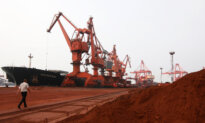
China’s REE exports, mostly in the form of powerful magnets, declined by 74 percent in May from a year earlier and by 38 percent in June. The decline in exports to the United States is more pronounced, with drops of 93 percent in May and 52 percent in June. Lack of REE is stalling some Western factories and prompting the United States and allied countries to urgently seek alternatives.
REE is required for a range of electronics applications, including fighter jets, missiles, robotics, and radar. Two of China’s state-owned corporations, which produce 90 percent of the metals, now have a near monopoly on its refining. And the communist country secured more REE patents than the rest of the world combined. The United States imports approximately 95 percent of its REE from China, whose lax environmental and labor standards, along with dumping meant to increase China’s global market share, make Chinese REE cheaper.
The Chinese Communist Party (CCP) is attempting to use its control over global REE production as leverage in trade negotiations with the United States, Europe, and Japan. In 2010, the CCP cut REE exports to Japan by 39 percent over a fishing dispute. The result was that Japanese companies scrambled for global supply, which initiated a global price hike. Now, the CCP is cutting supplies to the United States because of U.S. tariffs and cuts in semiconductor exports to China.
In June, the CCP issued quotas for REE production to its two manufacturers. This year, for the first time since the quotas started four years ago, it did not issue the customary public statement, supposedly for security reasons.
Despite Beijing agreeing in mid-May with the Trump administration to relax controls on REE in exchange for lower tariffs, Chinese state-controlled media Global Times recently reported a crackdown on “illegal outflows of rare earth-related items” by “criminals” and foreign intelligence agencies. The July 18 report came a week after the United States and the CCP reached another agreement by which the latter would relax export controls on REE sent to the United States in exchange for Washington relaxing export controls on semiconductors. Washington also agreed to relax restrictions on Chinese national students studying in the United States.
To deny the CCP an REE bargaining chip in the future, the U.S. government is rightly boosting production in the United States and allied countries. The Pentagon invested $100 million for a 15 percent stake in MP Materials, a U.S. REE mining and refining company. The Pentagon is guaranteeing purchases from MP at a set rate to incentivize investment in its refining plants. The U.S. State Department has proposed assistance to the Dominican Republic to increase its supply.
Import substitution is critical to ensure that the United States and our allies are not dependent on China’s REE. Like the United States, the European Union and Japan are attempting import substitution with their own domestic supplies to mitigate the risk of CCP export controls and global price spikes. While Japan, the United States, and the EU won a World Trade Organization case against China in 2014 regarding REE, and China agreed to abide by the results, Beijing persists to this day in attempting to leverage its monopoly against its geopolitical adversaries.
India is also exploring more recycling of REE from electronic waste, has commissioned a samarium-cobalt permanent magnet plant using indigenous technology, and is shifting imports of REE from China to Kazakhstan. Brazil has started six REE projects, with production expected to begin between 2027 and 2028. Vietnam, Malaysia, and Thailand are also seeking to expand REE production.
These countries will significantly increase the global supply of REE, making it more difficult for China to use the metals as leverage. However, all of them are too close to Beijing. The CCP has likely considered the creation of an REE cartel that, like the Organization of the Petroleum Exporting Countries (OPEC), can artificially restrict supply for economic and geopolitical gain. These countries are the type that would most likely join.
Washington should not only increase U.S. production of REE, which it is doing, but also source foreign REE from closely allied countries that oppose the CCP and seek to minimize their ties to China. The United States should not become dependent on China-aligned countries for REE or anything else. To do so would be to jump from the frying pan into the fire.
Views expressed in this article are the opinions of the author and do not necessarily reflect the views of The Epoch Times.
 Friends Read Free
Copy
Facebook
Tweet
Friends Read Free
Copy
Facebook
Tweet