
Commentary
European technology manufacturers are losing global market share to China and could lose even more if Beijing cuts Europe off from the rare-earth elements (REEs) necessary for Europe’s high-technology defense and industrial production.
In exchange for not doing so, Beijing wants European “dual-use” technology capable of both military and civilian applications.
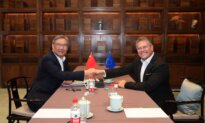
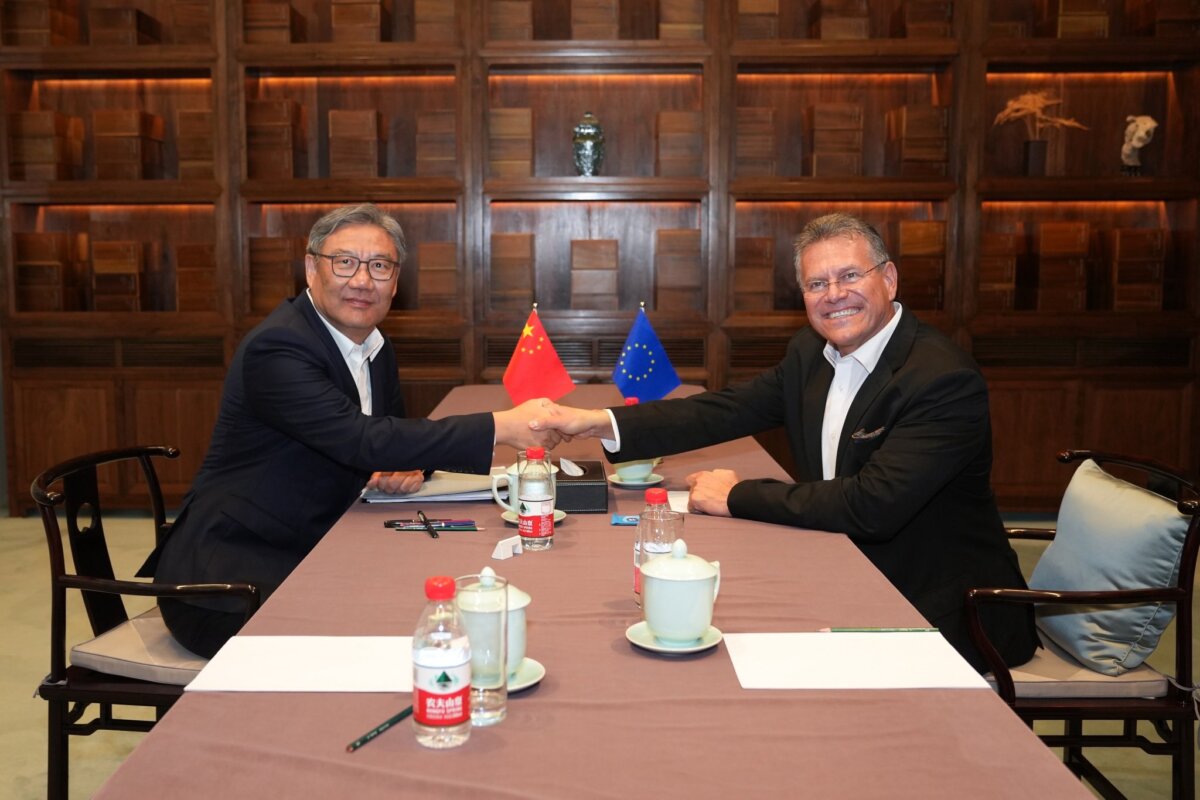
A joint EU–China statement released by the European Commission on Oct. 8 puts the release of such technology in the context of China facilitating REE exports.
“China is willing to continue facilitating export licenses for the supply of rare earths and permanent magnets to the EU through the fast-track mechanism,” the statement reads. “The EU side will continue to work with Member State authorities to facilitate specific priority licences to China among dual-use sectors.”
According to Bloomberg, China is offering rare earths and permanent magnets “in return” for key European dual-use technology.
This Faustian bargain is emerging amid a European “second-strike” threat to cut China off from European markets entirely if China continues its aggressive trade tactics, including restricting rare earths.
France and Germany issued a letter in support of not only the EU’s plans to “derisk” the European economy and get tougher with existing EU trade defense rules, but also a proposed “systemic reaction” weapon similar to the U.S. Section 301 tool against countries that “seek to undermine the restoration of a level playing field and fair market conditions by political or economic means.”
The EU trade weapon would block China’s exports to the EU within 24 hours if Beijing imposed significant economic distortions through tariffs, subsidies, currency manipulation, or export controls against Europe. The option of completely cutting off imports from China would provide emergency protection for European industries and improve the bargaining power of Brussels with respect to Beijing.
The proposal will be discussed by EU leaders at a summit between Oct. 15 and 16. Feedback on the proposed diversification tool is open until Oct. 27.
The threat of such measures is likely being wielded during ongoing EU–China negotiations, which cover not only REE and military technology, but also Chinese export shocks to the EU economy more broadly.
China Shock 2.0 is flooding Europe with Chinese exports, hitting the EU’s automotive, chemicals, plastics, machinery, textiles, and basic metals industries. Europe’s trade deficit with China exceeds $1 billion daily ($400 billion annually).
As European consumers and businesses shift from European to Chinese goods, many flagship European companies can no longer compete in China or against Chinese imports. Hundreds of thousands of European job cuts are projected over the next few years, including 350,000 in the automotive sector alone.
The EU’s trade deficit provides China with the capital to purchase significant quantities of European assets, including companies, ports, and real estate.
If nothing is done, Europe will likely continue to decline economically, further deindustrialize, and sell its strategic technology to China in exchange for cheap imports. That would contribute to a longer-term trend of China-linked political ruction from job losses on the continent that can be identified as far back as the 1990s and 2000s.
Brussels is trying to improve its trade position relative to Beijing. The EU wants Beijing to cap the export of hybrid electric vehicles and increase imports of European products. On Oct. 9, the EU trade chief announced that Beijing had agreed in the “first phase” of negotiations to reduce duties on European imports, facilitate REE exports to Europe, and cap China’s hybrid auto exports.
The deal potentially includes about $250 million of reduced Chinese duties on European exports, such as medical devices, olive oil, car parts, and footwear. He said the deal “opens the prospect of cutting China’s [hybrid vehicle] exports by more than a half” over the next four years of projected exports. In other words, China’s annual hybrid exports compared to last year could increase if projections increase.
Beijing said there was an EU–China understanding over hybrids, but did not confirm the size of the cap. The EU trade chief’s Oct. 9 social media post did not mention the possibility of increased military tech exports to China. Both sides spun the deal to appeal to their constituencies.
The arguably rosy EU trade chief’s characterization of negotiations will whet the EU public’s appetite for a deal midway through negotiations, thus pressuring him to deliver a more specific agreement in the second phase. As an authoritarian country, Beijing will feel no equivalent pressure from voters and exporters. So the mid-negotiation announcement was arguably a tactical error on the part of the EU.
As noted by Steven Lynch at the British Chambers of Commerce, “Any push for tougher action risks being portrayed as abandoning talks before they have run their course, very smart diplomacy from China. … Beijing can play the long game, while governments in Britain and Europe face pressure to deliver quick political results.”
Beijing will have this edge in the next round, unless a counterweight is imposed, such as institutionalization of the EU’s proposed trade weapons. The availability of the weapon, or something like it, will be necessary to deter Beijing’s REE retaliation in the context of any future EU attempts to stop the leakage of more dual-use technologies to China.
If approved, the European Commission could activate the proposed systemic trade weapon by majority vote, banning some or all Chinese companies from the European market. The commission consists of one member from each EU country. The commissioners focus on issue areas and do not represent their countries.
The commission’s activation of the trade weapon could only be overruled by a qualified majority of the member states (the double-majority rule requires at least 55 percent of countries representing at least 65 percent of the EU’s population). This “reverse qualified majority” lowers the bar for defensive trade action by the EU compared to activating the already existing anticoercion instrument, which has never been used.
Activation of the anticoercion instrument requires a qualified majority. The proposed reverse qualified majority would keep a few countries influenced by Beijing from stopping activation.
The proposed EU trade weapons are necessary for European sovereignty and the protection of its economy from China’s aggressive trade policies. As one of three major world economies, along with the United States and China, and as one of the biggest promoters of democracy and human rights along with the United States, the EU needs more bargaining leverage. This is critical to deterring the expansion of China’s trade power.
The proposed systemic reaction and supply chain diversification tools will be key to protecting European industry and limiting the percentage of a strategic product, such as REE, that can be sourced from unreliable authoritarian countries like China. Ultimately, that percentage should be driven to zero.
Meanwhile, the EU should better coordinate with other major democracies so that their military technology—and with it the security of their democracies—are not traded away for relief from rare-earth restrictions that Beijing itself imposed.
Views expressed in this article are the opinions of the author and do not necessarily reflect the views of The Epoch Times.
 Friends Read Free
Copy
Facebook
Tweet