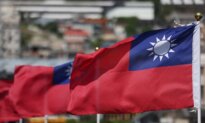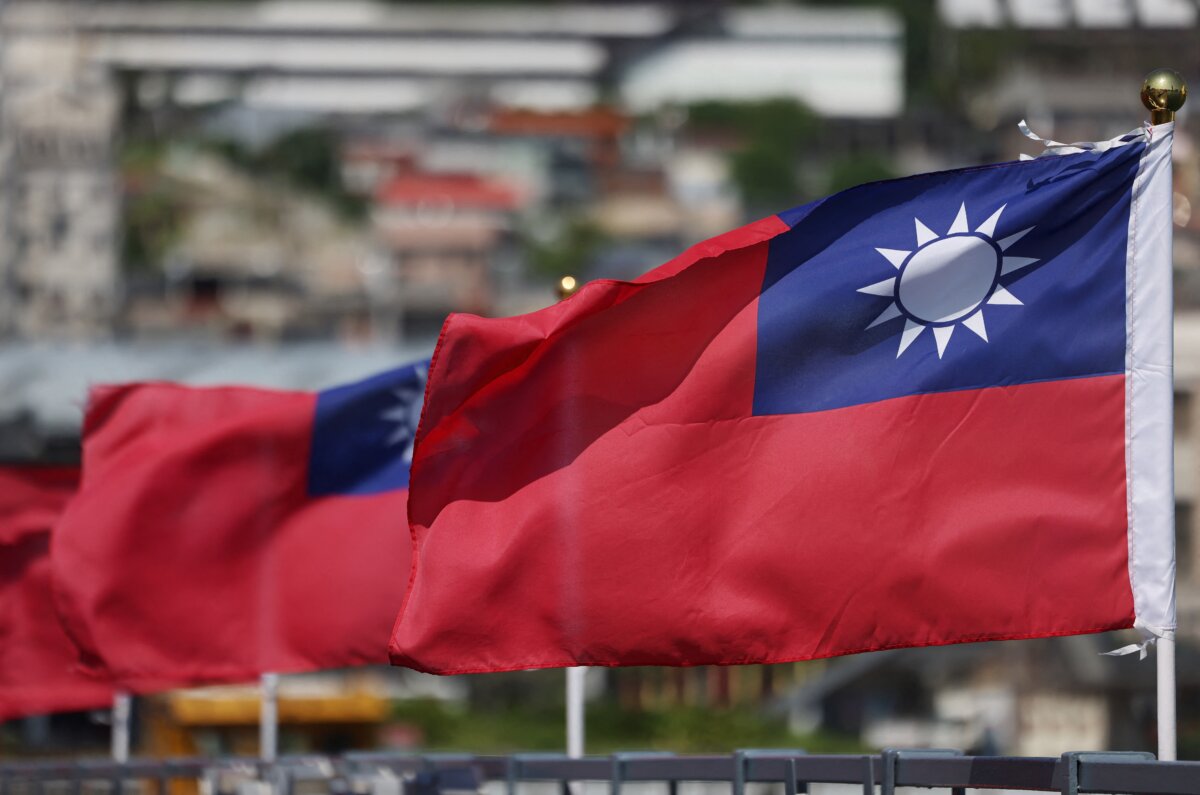
The communist regime in Beijing has long sought to conquer Taiwan, the island democracy to which the Nationalist government fled in 1949 when Chinese Communist Party (CCP) revolutionaries took Beijing. The CCP’s Taiwan crusade serves some of its purposes, but is long-term costly to the Chinese people in terms of financial and political capital.
Dr. Miles Yu, who served as China policy adviser in the U.S. State Department during the first Trump administration, has rightly called the CCP’s claim on Taiwan an “obsession” emerging from four causes: the faulty “Liberation Ideology” of anti-capitalism, the “delusion that China is stronger than the United States and its allies,” the fear that Taiwan’s success will destabilize China, and the use of Taiwan as a tool to motivate the Chinese military and provide Chinese diplomats with a way to deflect from uncomfortable topics—for example, North Korea and Ukraine.
One could add that Beijing knows it can use its economic heft to solve international problems in these countries, but would rather derail U.S. solutions and leverage the problems to get its way in Taiwan and elsewhere. The CCP may cooperate with international goals of peace and security, but only for a price that advances its primary crusade. Otherwise, it will feed the conflicts by trading with both sides.
The CCP never controlled Taiwan, but claims to be entitled to “reunification.” The fact is that the CCP cannot “reunify” Taiwan when the two were never unified to begin with. Accepting the CCP’s obvious irrationality over Taiwan is a litmus test for CCP supporters. Those around the world who want to profit from trade and investment in China tend not to contradict the lies that underpin the crusade. Getting benefits from the emperor has always required affirmation of the fine quality and coverage of his raiment. Nor do the underlings of the likes of Mao Zedong or Xi Jinping dispute the expensive military preparations for an invasion of Taiwan. The yes-men surrounding these dictators have traditionally affirmed the need and reasonableness of conquering the unconquerable, or have been shown the door. This was as true of the agricultural collectivism that caused the famine of 1959 as it is of the militaristic approach to Taiwan today.
Regular Chinese citizens pay the cost with 61 percent of the central government budget (excluding transfers to the provinces) going for military expenditures and interest on the debt. Forty-two percent of this budget is for military expenditures, most of which would not be needed were Beijing to stop threatening the territory and waters of Taiwan and China’s other neighbors, including Japan, India, the Philippines, Vietnam, Malaysia, Brunei, and Indonesia. There is more than one crusade at once, which is a military strategic error and one that costs the region better economic growth.
The CCP’s territorial claims have for years driven a regional arms race that is far too expensive for the Chinese taxpayer, much less those in the developing nations of Asia that fear a country many-times their size. The region’s military expenditures are leaching funds from regional economic development and putting the lie to the CCP’s claim to support that development. In reality the CCP’s militarism impedes economic growth, especially in the region it claims to care about the most. The CCP claims to speak for developing nations like it speaks for the Chinese people. Clearly, no country has democratically chosen the CCP as spokesman, much less as spokesman of the poor in Asia. The CCP foists itself upon and profits off most anyone it claims to represent.
China’s slowing economy needs fiscal stimulus and more foreign investment, but the regime’s military expenditures and growing debt payments—now 19 percent of the central government budget—have constrained Beijing’s fiscal possibilities and disappointed investors. The regime pays a diplomatic and trade cost too. It refuses diplomatic relations and normal trade relations with countries that recognize Taiwan for what it is: a sovereign democratic government. Taiwan is one of the greatest hopes for a market democracy in mainland China given that Taipei demonstrates how to achieve not only a Chinese market democracy, but a transition from authoritarianism to that democracy. It did so in the 1980s and 1990s. Singapore also demonstrates the success of a Chinese free market, and one that can be a good friend and strategic partner to the United States, including naval facility access and joint training. Singapore is only partly democratic, but more so than China.
As Dr. Yu has noted, the CCP likely fears these two examples of Chinese success, democracy, and cooperation with the United States as they shine a light on the failure of the CCP’s communism in China. Even considering purchasing power parity, which improves China’s numbers due to its low cost of living, China’s GDP per capita is just $31,790 compared to Taiwan’s $103,740 and Singapore’s $176,930 (ranking among Liechtenstein, Luxembourg, and Ireland globally). If Taiwan and Singapore could bring their approach to Beijing rather than vice versa, the Chinese people—and the world—would be in a better and less threatening place.
Consider that if Beijing takes Taiwan, it may want to swallow Singapore as well. The country is majority-Chinese ethnically, and dictators like Xi tend to want to “unite” those who are ethnically the “same” as them regardless of language. In Singapore, the most common home language is English. But, that will not matter to the CCP considering it suppresses languages like Tibetan and Uyghur that “divide” China. Taiwan and Singapore, along with their friends and partners around the world, should work overtime to ensure that China democratizes and marketizes before the CCP tries to swallow the world’s main examples of Chinese democracy and free markets.
Beijing’s diplomats and trade representatives have joined the crusade. They are wasting much of China’s political capital by pressuring the dozen countries around the world that still recognize Taiwan. Most recently, the regime sanctioned two ministers from Paraguay and Belize who support the democracy. The CCP provides zero-tariff treatment to the 53 of 54 African countries that reject Taipei in favor of diplomatic relations with Beijing. The political capital expended by the CCP on Taiwan could be used in far better ways for the Chinese people, but the CCP does not seem to care. It cares more about lines on the map than the lives of its own people, and the people of Taiwan.
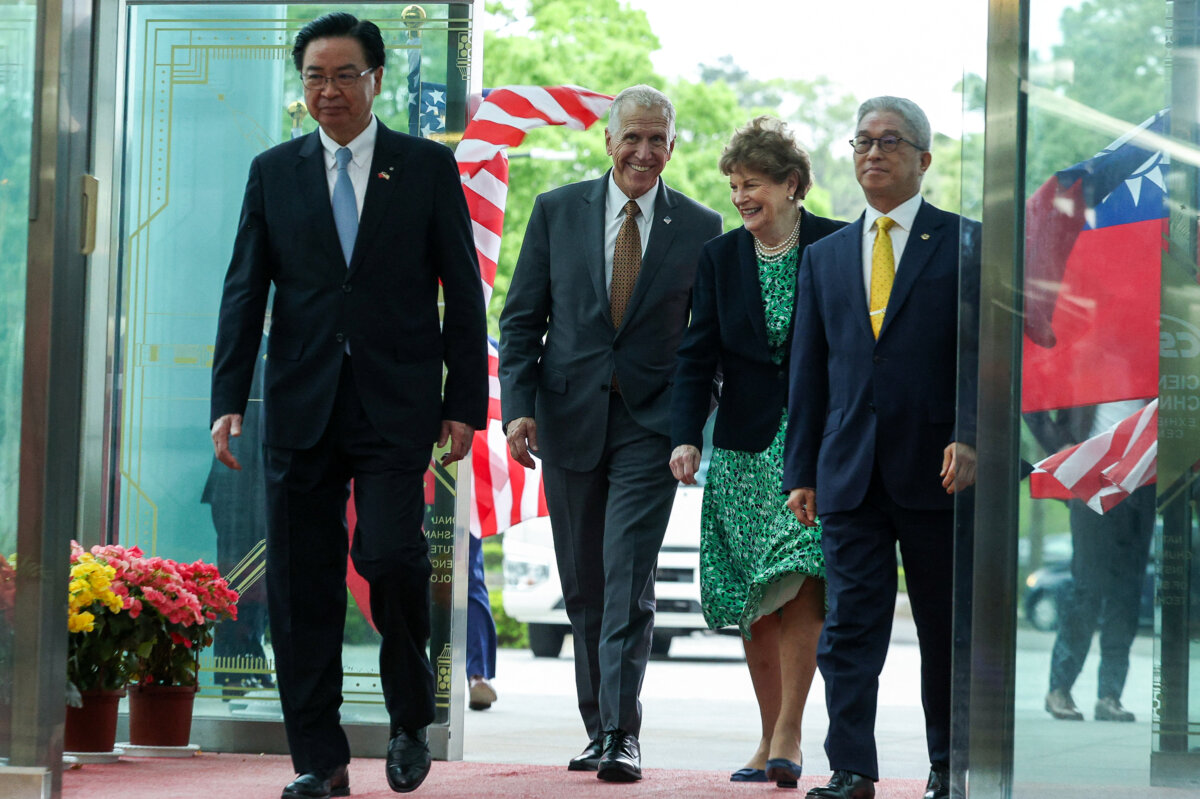
Washington would do better to take a Reaganesque approach to Beijing, shining the light of democracy on communism and its disastrous crusade. When democracies act individually with respect to China, Beijing can punish them individually. This has successfully beat down recognition of Taiwan to just a handful of small countries today. It would be harder for Beijing to punish all at once, especially if America led the way.
All democracies should therefore act more assertively against the CCP, including through individual incremental actions where joint action is impossible. Whenever the regime sanctions officials in democratic countries for supporting democratic Taiwan, democratic governments should provide a positive counterweight such as state honors and invitations, for example. All countries, especially democracies given their values, should watch each other signalling in this way and eventually and with one voice recognize Taiwan diplomatically. Those that fail to do so should experience higher tariffs from the others. This is in their joint national interests even if the CCP attempts to make it in their individual interests to recognize Beijing rather than Taipei. In game theory this is called a repeated prisoner’s dilemma, the solution to which is gradually increasing cooperation. The national security of the democracies eventually depends upon their unified and assertive approach to the CCP.
Protecting Taiwan from the CCP’s crusade is not only for some abstract ideal of democracy and human rights, though it is that too; it is also in the long-term national security interests of the United States and our allies. If the CCP were allowed to take Taiwan—including, for example, without firing a shot as in Hong Kong—the CCP would have more people, capital, and technology under its control. The regime could use its increased power to threaten the next victim. It could keep going until it reached the islands of Japan, Guam, Diego Garcia, and the Azores. The world would be less safe, less free, and China’s military would creep ever closer to American shores. To stop that threat requires a stronger America and more united allies.
Views expressed in this article are the opinions of the author and do not necessarily reflect the views of The Epoch Times.
 Friends Read Free
Copy
Facebook
Tweet