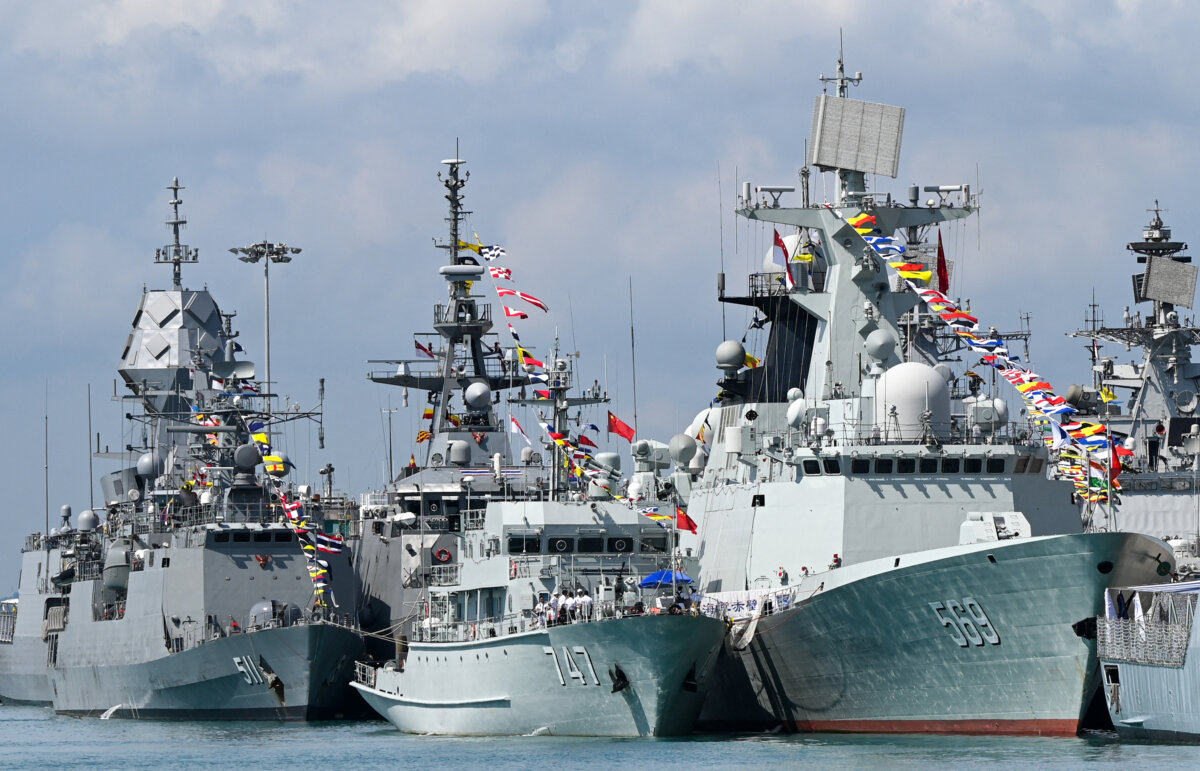

This is the first segment of a two-part series examining China’s dual-use maritime fleet, focusing on its development, capabilities, and integration with the People’s Liberation Army. Read Part II here.
Commentary
The Chinese Communist Party (CCP) and the People’s Liberation Army (PLA) view “military-civil fusion” (MCF) as a critical national strategy to leverage China’s vast commercial shipping fleet and shipbuilding dominance to augment military sealift capabilities, especially for large-scale operations such as a potential Taiwan contingency.
MCF treats Chinese commercial shipping as a strategic reserve, allowing the PLA to mobilize thousands of civilian vessels for various missions and to blur civilian-military lines, thereby enhancing power projection without relying solely on dedicated warships.
Let us examine China’s dual-use maritime fleet in terms of its development, capabilities, and integration with the PLA.
The Strategic Tablesetting
China’s dual-use maritime strategy is rooted in the military-civil fusion doctrine, formalized under CCP leader Xi Jinping and elevated to a national strategy in 2015–2017. MCF legally obligates state-linked commercial enterprises to design, build, and operate vessels to PLA specifications, enabling rapid requisitioning without costly purpose-built military hulls.
The legal foundation rests on China’s National Defense Mobilization Law (2010), Shipping Law amendments, and PLA General Logistics Department directives requiring vessels in specific categories—Roll-on/Roll-off (Ro-Ro) ferries, container ships, bulk carriers, multipurpose vessels—built after 2015 to incorporate military-grade structural reinforcements, ramp/deck configurations, communications suites, and rapid conversion capability.
The state achieves this through direct subsidy, preferential financing for compliant builders, and integration of PLA liaison officers within major shipping conglomerates.
Commercial Arsenal Platforms
The Zhongda 79 containerized arsenal ship represents the most operationally radical application of MCF principles.
Development: As a 97-meter feeder container ship, it is entirely unremarkable in appearance—the kind of vessel transiting every major port globally by the hundreds daily. Its conversion at the Hudong-Zhonghua shipyard (the same facility producing Type 055 destroyers and Type 075 LHDs) is therefore deliberate and significant.
Capabilities: The retrofitted systems reportedly include containerized vertical launch systems capable of housing up to 60 missiles across multiple warhead types—anti-ship cruise missiles, land-attack cruise missiles, potentially hypersonic glide vehicles, and surface-to-air missiles. Supporting systems include phased-array radar for fire control, close-in weapon systems for terminal defense, decoy launchers for electronic/infrared countermeasures, and electromagnetic catapult systems capable of launching drones or potentially light fixed-wing aircraft.
PLA Integration Role: The Zhongda 79 is best understood not as a one-off experiment but as a proof-of-concept prototype for an entirely new class of distributed maritime strike. Its operational doctrine draws on the concept of “systems-within-systems,” in which conventional warships serve as command nodes while expendable or deniable commercial hulls deliver massed fire.
The strategic value is enormous. In a Taiwan Strait contingency, dozens of such vessels could be pre-positioned in commercial shipping lanes—in peacetime posture—before transitioning to combat roles within hours. They would be extraordinarily difficult to preemptively target without triggering an international incident, as they operate under civilian registry and international maritime law protections until the moment of activation.
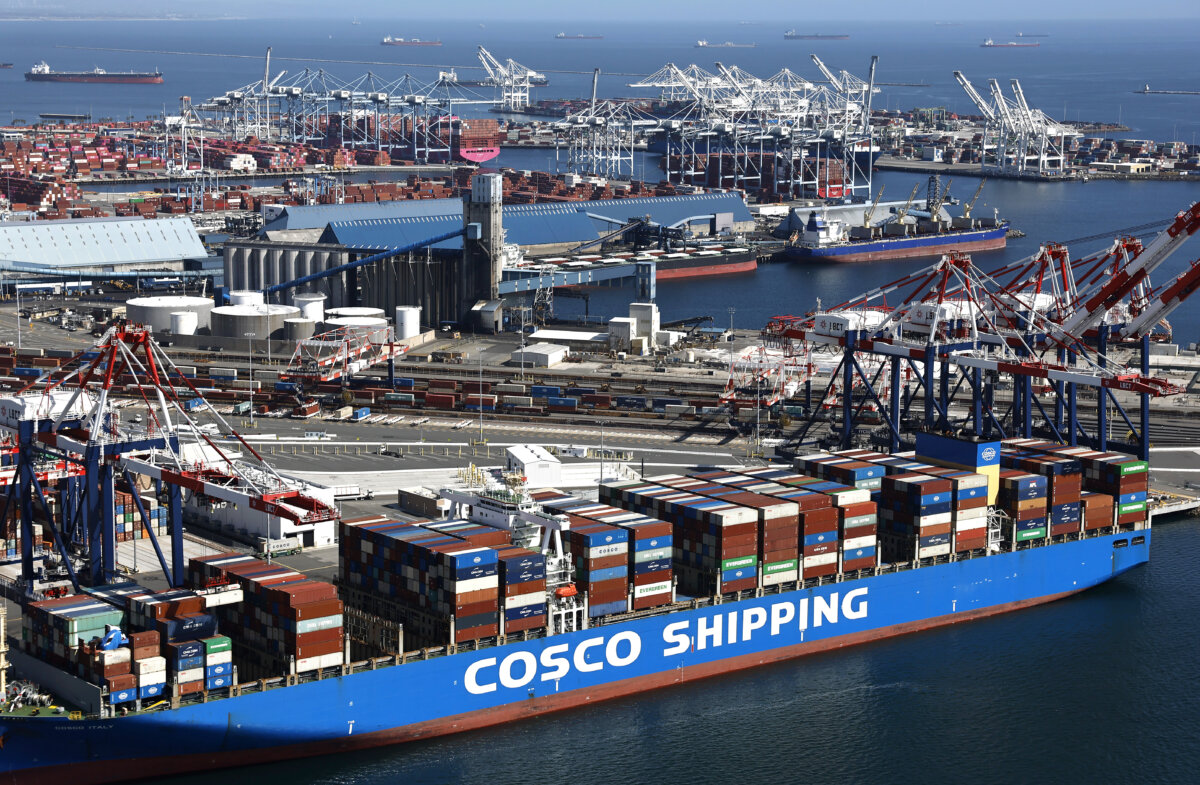
The broader implication is a potential conversion architecture applicable to hundreds or thousands of China’s container vessels. Even converting 1 percent of COSCO’s fleet to this standard would represent a missile capacity exceeding most mid-sized navies’ entire inventories.
Roll-On/Roll-Off Sealift Fleet
There are two main producers of Ro-Ro vessels in China: Bohai Ferry Group and COSCO Shipping Ferry Company.
The Bohai Ferry Group Ro-Ro Fleet
Development and Institutional Structure: This is not a civilian company with military connections—it is a military logistics unit with a commercial cover enabling peacetime revenue generation, operational practice, and political deniability.
The vessels in this fleet range from approximately 14,000 to over 36,000 gross tons and are built to carry 200 to 300-plus vehicles and 1,500 to 2,500-plus troops or passengers simultaneously. Construction specifications include reinforced vehicle decks capable of bearing the weight of main battle tanks and infantry fighting vehicles (IFVs), extended hydraulic stern and bow ramps designed for shallow-draft beach approaches, and structural features enabling temporary pier or causeway connections for over-the-shore discharge in the absence of port infrastructure.
Operational Testing and PLA Exercises: These vessels have participated in documented PLA amphibious exercises continuously from at least 2020 through 2025, with drills concentrated off the coasts of Guangdong and Fujian provinces—the primary staging areas for any cross-strait operation. Exercises have involved loading and offloading tanks, IFVs, self-propelled artillery, logistics trucks, and personnel. In some exercises, vessels have conducted simulated beach approaches and direct ramp discharge onto improvised landing zones, replicating conditions on Taiwan’s western coastal plains.
Roles and PLA Augmentation: The Bohai fleet addresses the single most critical constraint on PLA amphibious capability: organic lift capacity. The PLA Navy’s dedicated amphibious fleet—including Type 071 LPDs and Type 075/076 LHDs—represents impressive recent construction but remains numerically insufficient to transport and sustain a force large enough to defeat Taiwan’s ground defenses, establish a lodgment, and maintain lines of communication simultaneously.
Conservative estimates suggest the PLA Navy’s organic amphibious fleet could lift perhaps 25,000 to 35,000 troops in a first wave. The Bohai Ferry Group’s vessels alone could add tens of thousands of additional troops and hundreds of armored vehicles in subsequent waves, drastically compressing the timeline between initial assault and force buildup to operational density.
The COSCO Ro-Ro Fleet
Development: The 15,000- to 23,000-ton COSCO Shipping ferry Ro-Ro vessels represent a parallel strand of dual-use development oriented toward longer-range sealift rather than the Bohai Group’s shorter-hop ferry model. These ships are notable for hydraulic stern ramps engineered specifically for at-sea deployment of amphibious vehicles and craft—enabling vehicle discharge without entering port or beaching, a critical capability for assault echelons operating against defended or damaged port infrastructure.
PLA Integration: COSCO’s institutional relationship with the PLA is pervasive. COSCO Shipping Holdings is a state-owned enterprise under direct CCP supervision, with CCP political commissars embedded at the corporate level and aboard vessels. Since 2019, COSCO Ro-Ro vessels have participated in documented PLA exercises involving beach landings and long-distance transport missions. Their global footprint—COSCO operates terminal assets in dozens of ports worldwide—also gives them pre-positioned logistics infrastructure in potential operational theaters.
Broader COSCO and General Commercial Fleet
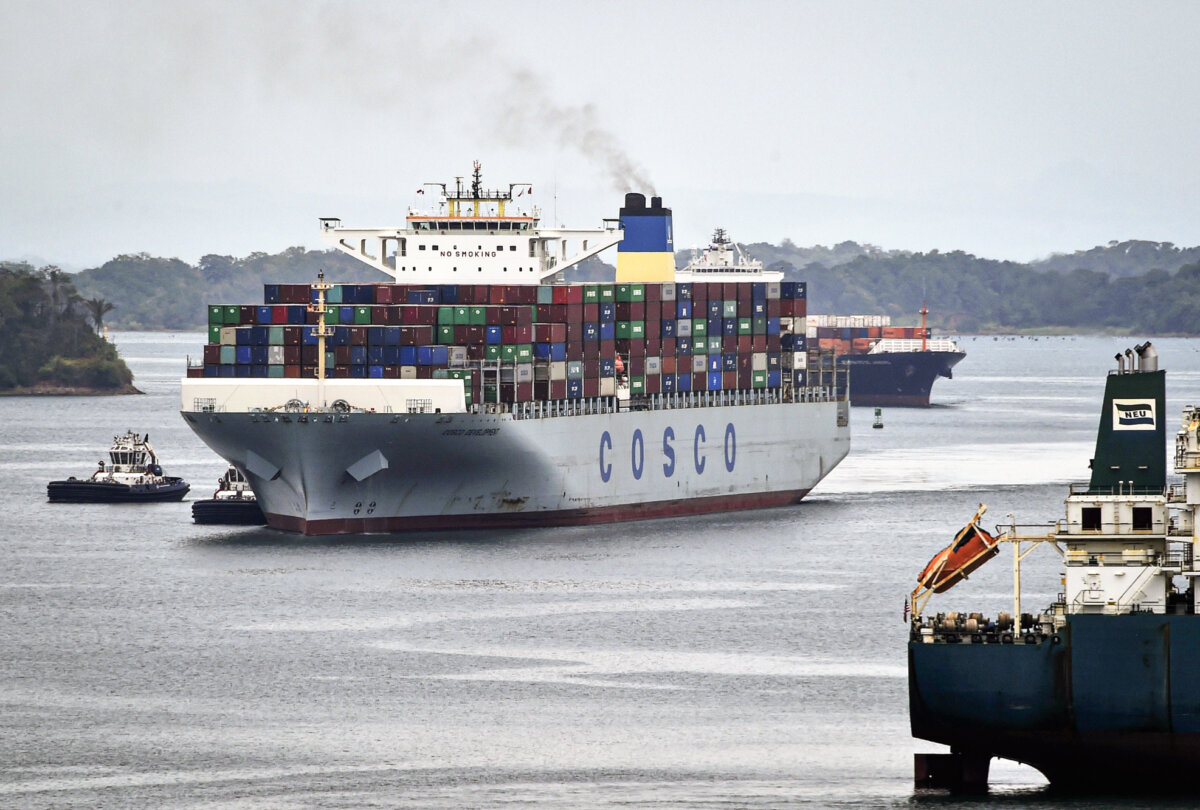
China’s broader commercial fleet represents a mobilization asset of staggering scale. China- and Hong Kong-flagged container ships and dry bulk carriers alone number more than 4,000 vessels. When the full Chinese-controlled fleet is considered—including vessels flagged in convenience registries but beneficially owned by the Chinese state or state-linked entities—the number is substantially higher.
Military-Standard Construction: Post-2015 construction requirements mean an increasing proportion of this fleet is built to military mobilization standards, including reinforced hull structures, standardized military connector points for ramps and cranes, communications equipment compatible with PLA military frequencies, and fuel/provisions storage designed for extended independent operation without port calls. Some vessels have been tested for underway replenishment operations with PLA Navy warships—a capability previously restricted to purpose-built naval auxiliaries.
Modular Combat Systems: The Zhongda 79 precedent suggests the broader container fleet is a latent arsenal. The International Organization for Standardization container standard means that any vessel capable of carrying 20- or 40-foot containers could, in theory, host containerized weapons systems with minimal modification. This includes not only missile launchers but containerized electronic warfare suites, signals intelligence platforms, drone launch and recovery systems, and modular command posts.
Political Control Mechanisms: The presence of CCP political commissars aboard COSCO vessels is operationally significant. It ensures that in the event of mobilization orders, civilian crew compliance is politically enforced and communications security maintained. It also means these vessels function as persistent intelligence platforms, with crews reporting maritime domain awareness data to PLA channels during routine commercial operations.
This ends Part I of this series. Part II will cover the vast array of vessels supporting the People’s Armed Forces Maritime Militia and concludes with an integrated operational assessment of the dual-use maritime fleet.
Read Part II here.
Views expressed in this article are the opinions of the author and do not necessarily reflect the views of The Epoch Times.
 Friends Read Free
Copy
Facebook
Tweet
Friends Read Free
Copy
Facebook
Tweet