
Commentary
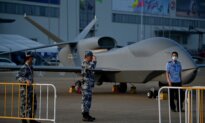
China’s air force has established its first presence overseas. The China-Laos Joint Support and Training Center at Ban Keun Airport is just about 30 miles from the country’s capital, Vientiane.
In the 1960s and 1970s, the CIA used the airport to fight communism in the country. Now, the communists have set up camp there. The trend looks bad.
The new Chinese facility is ostensibly intended to train Laotian military pilots, “strengthen practical cooperation between the two militaries,” and “safeguard regional peace and stability.” It will likely train Laotian pilots on Russian and Chinese trainer jets with light-attack capabilities.
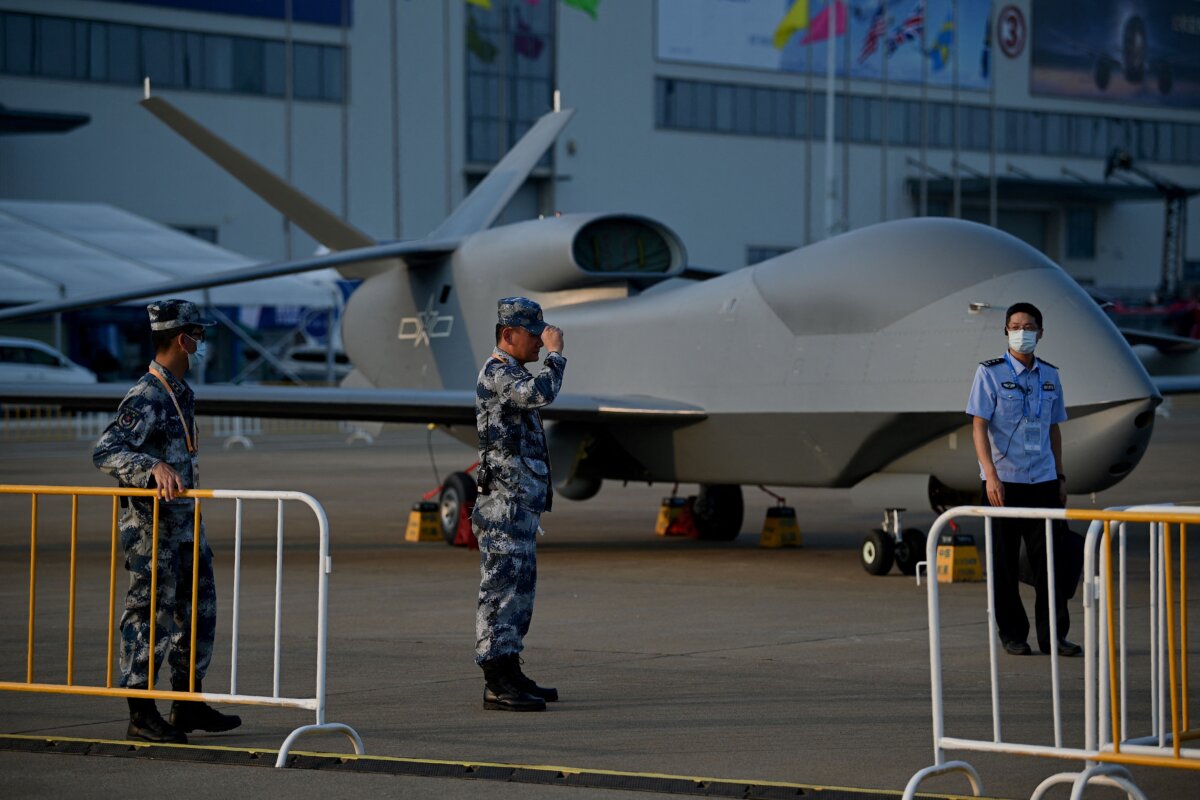
However, a runway expansion is apparently underway and could eventually provide China’s larger, more sophisticated military and surveillance aircraft with a logistics base in Southeast Asia.
The People’s Liberation Army (PLA) already has naval facilities in Djibouti and Cambodia, and a counterterrorism base in Tajikistan near Afghanistan. China shares a border with Laos and exerts so much economic and diplomatic influence that Laos has sometimes been called a “vassal” of Beijing.
The development of the PLA’s Laotian facility into a military base would not be surprising if that is what Beijing wants, for example, in exchange for lighter debt payments. Laos is trying to escape a debt trap, largely of China’s making, that, along with Laos’s landlocked status, contributes to its economic problems.
Laos has a relatively new railway to China’s Yunnan Province, built with the help of a $480 million Chinese loan in 2016. Some Laotians hope that the railway, controlled by China, would make Laos into a “connectivity hub” for the rest of mainland Southeast Asia. However, in the long run, the railway will more likely just provide Chinese importers and exporters with easier access to Southeast Asian ports and markets.
Laos is also in hock to China through much larger hydropower and electric transmission grid loans it took between 2012 and 2017. These resulted in an oversupply of domestic electricity.
Laos never became the “battery of Southeast Asia” it had hoped to be. Instead, the country is now mired in loan payments on about $17 billion in public debt. In 2020, it sold 90 percent of its national electric grid operator to a Chinese state-owned company.
Beijing’s promotion of such “hubs” in the past, for example, in Sri Lanka, similarly resulted in unsustainable debt, the relinquishment of an entire Sri Lankan port to China for 99 years, and domestic political chaos.
A concern with China’s growing influence in Laos, should the country ever democratize and seek to depart from Beijing’s sphere of influence, would be the risk posed by the PLA’s increasing military proximity and influence over Laos’s military leadership. This is the most significant threat of the PLA’s expanding presence in Laos to Laotian advocates of democracy and human rights.
The PLA’s presence in Laos also increases China’s military pressure on two neighboring countries: Thailand and Vietnam. The sovereignty of both is arguably being encroached upon by Beijing’s influence not only in their capital cities, but also in all the countries they border.

This is unlikely to stop Bangkok, typically independent and pragmatic in its foreign relations, from continuing to draw closer to Beijing economically, diplomatically, and militarily. The facility will also reduce the likelihood that Bangkok will allow the United States to use Thailand for operational purposes if a war over Taiwan breaks out.
Vietnam is fighting a rearguard international legal and public relations battle against Beijing’s attempt to take over the entire South China Sea. The latter attempt has included prominent Chinese wars or battles against Vietnam in 1974, 1979, and 1988.
The PLA has since vigorously and in some cases used military force to block Vietnamese attempts to exploit oil, gas, and fishing resources in the South China Sea. With the new PLA facility, Vietnam’s capital city of Hanoi is now surrounded by Chinese air facilities not only in the Yunnan, Guangxi, and Hainan provinces of China, but also across the border in Laos. Vietnam’s military has likely taken note.
The Chinese Communist Party’s influence in Laos is critical from a resource perspective for two other reasons. First, Laos could serve as a backup to Burma (also known as Myanmar) for importing heavy rare-earth element ores. China refines about 99 percent of heavy rare-earth elements and uses its near-monopoly on processing as leverage against the United States and Japan during negotiations.
Second, Laos is a member of the Association of Southeast Asian Nations (ASEAN) and a potential veto player, along with Cambodia, against Beijing’s influence over that international group. Either country can block ASEAN decisions, which require consensus among all members. This is useful to Beijing when some ASEAN members, such as the Philippines and Vietnam, seek to use the organization to denounce China’s expansive claims in the South China Sea.
The United States should consider countering the new military facility in Laos by raising tariffs and economic sanctions on the country. The current average U.S. tariff on Laos is just about 8 percent, so there is plenty of latitude to make the point: Those countries that enable the biggest global threat to democracy do not do so consequence-free.
Views expressed in this article are the opinions of the author and do not necessarily reflect the views of The Epoch Times.
 Friends Read Free
Copy
Facebook
Tweet