
Commentary
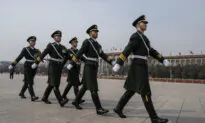
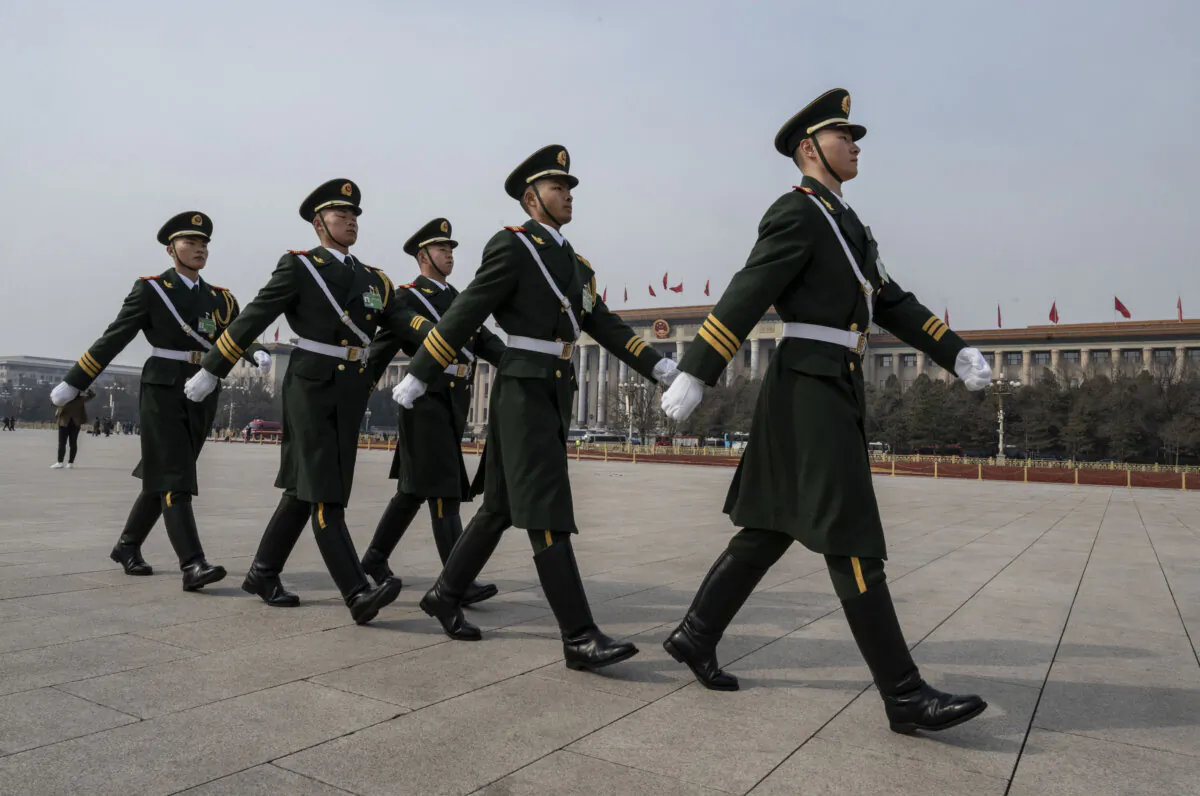
The CCP’s first revision of China’s National Defense Mobilization Law in 16 years carries serious implications for U.S. national security. It calls for faster and larger mobilization, which would compress U.S. and allied decision-making timelines while increasing the volume of forces they would need to counter. Built-in supply-chain resilience would weaken sanctions, blockades, and technology denial as coercive tools, while the mobilization of civilian artificial intelligence and technology would erode U.S. advantages in the technological domain. Through the new law, the CCP is taking a whole-of-society approach to national defense, as it has previously done to promote economic competitiveness.
China’s top legislature, the Standing Committee of the 14th National People’s Congress, voted on Aug. 28 to adopt the revised law. The 14-chapter, 82-article revision takes effect on Oct. 1 and is the first update since the law was adopted in February 2010.
For the first time, the law defines national defense mobilization as state measures taken when China’s sovereignty, unification, territorial integrity, security, or development interests are threatened. These measures enable a rapid transition between peacetime and wartime by converting economic and social strength into national defense capabilities.
The inclusion of “development interests” broadens the law’s potential triggers beyond traditional territorial or military contingencies to include economic security, technological resilience, supply-chain integrity, and overseas interests.
Under the revised law, Beijing can convert personnel, transportation, communications, energy, healthcare, and media resources into wartime assets under strict state control. All Chinese men aged 18 to 60 and women aged 18 to 55 are required to perform national defense support duties during mobilization. The size and composition of reservist call-ups will be determined by the State Council and Central Military Commission, a provision that brings a much larger share of the population within the legal framework of wartime support.
The law replaces older reserve terminology with a more flexible “backup personnel” system. Personnel will be pre-assigned to active-duty units, reserve forces, or militia organizations and will be subject to stricter rules once mobilization is declared.
The state’s authority over civilian resources is also expanded from temporary requisition to include permanent expropriation with compensation. The law also establishes clearer procedures for stockpiling, calling, distributing, and managing strategic material reserves from multiple sources.
The revised law directs the state to promote the use of advanced technologies in mobilization and to develop capabilities in emerging fields. Although it does not name specific technologies, artificial intelligence, drones, robotics, and satellite communications could play a larger role as Beijing develops military applications in these sectors.
The law also creates a dedicated data-service guarantee system that authorizes the lawful collection and use of mobilization-related data while requiring data-security protections. In addition, it mandates security assessments of military-product industrial and supply chains, greater standardization of production, and the socialization of maintenance support.
The revision also clarifies the division of responsibilities between military and civilian authorities. Local governments at the county level and above, along with military organizations, will conduct mobilization work according to their respective duties. National and local defense mobilization commissions will oversee organization, leadership, and coordination.
By incorporating Xi Jinping Thought on Strengthening the Military and China’s holistic national security concept, the statute strengthens Communist Party leadership over the mobilization system. Much of the revision codifies institutional changes already underway since 2019. These include the establishment of National Defense Mobilization offices at the provincial, municipal, and county levels beginning in 2022, as well as adjustments to military–civil coordination following the 2015 People’s Liberation Army (PLA) reforms.
Analysts see the revision’s preparatory measures as tied to Chinese leader Xi Jinping’s drive to fulfill his “historic mission of national unification.” While Taiwan is building whole-of-society resilience, China is cultivating “offensive resilience” that is intended to allow its military operations to proceed despite obstacles and international sanctions.
Beyond the advantages it provides Beijing, the revised law underscores the importance of U.S. and allied industrial readiness, munitions stockpiles, and surge capacity.
Support for Ukraine has already exposed constraints in U.S. and European defense production. A peer-level contingency in the Indo-Pacific would place far greater demands on those systems. China’s improved ability to convert civilian industry, transportation assets, skilled personnel, and dual-use technologies into wartime resources could allow it to generate combat power, sustain operations, and absorb attrition on a scale that the United States and its allies must be prepared to counter.
At the same time, the United States remains the world’s leading military power, and the CCP’s new domestic law does not eliminate any existing U.S. advantages. The U.S. military has decades of combat and power-projection experience across multiple theaters, while the PLA has not fought a war since its conflict with Vietnam in 1979. Recent conflicts between India and Pakistan, which used Chinese-made HQ-9 air defenses and PL-15 missiles, have also raised questions about the battlefield performance of Chinese-exported weapons.
The broader U.S. military advantage remains substantial. The U.S. Navy operates 11 nuclear-powered aircraft carriers, compared with China’s three conventionally powered carriers. The U.S. submarine fleet is entirely nuclear-powered, while China’s remains mostly conventional. Washington possesses a nuclear arsenal roughly ten times the size of Beijing’s and operates more than 750 overseas military facilities, compared with China’s handful. The United States also anchors a global treaty-alliance network that includes NATO, Japan, South Korea, Australia, and the Philippines, while China’s only official ally is North Korea.
The law does not itself alter the military balance. Its significance lies in showing that Xi is preparing China institutionally for a possible move against Taiwan and for the defense of the Chinese mainland if such a move triggers a wider conflict.
Views expressed in this article are the opinions of the author and do not necessarily reflect the views of The Epoch Times.
 Friends Read Free
Copy
Facebook
Tweet