
Commentary
This series, “Communist China Would Sacrifice Its Own Troops to Conquer Taiwan,” examines the most likely strategy of the Chinese Communist Party regarding its potential invasion of Taiwan, including the willingness to sacrifice its own soldiers. Read part one here.
Disrupting US Reinforcement Corridors
Photos released by Japan’s Ministry of Defense show 18 J-15 fighters on the deck of the Liaoning and about eight on the Shandong during the June drills. These J-15s, which launch from ski-jump ramps, are no longer in production and are being gradually phased out.
China is now focusing on testing catapult-launched variants, such as the J-15T (carrier-based multirole fighter) and J-15D (electronic warfare variant), for its newest carrier, the Fujian.
The design philosophy of Soviet-era aircraft carriers was to extend air defense coverage farther from the coastline—not to conduct offensive airstrikes from the sea. Consequently, the limited air wings of the Liaoning and Shandong can serve only a minor, harassing role in actual combat.
The U.S. Navy’s carrier strike groups possess formidable air defense capabilities and could neutralize the threat posed by China’s older carriers. However, doing so would still divert U.S. attention and resources. Before the United States can ensure maritime and air dominance beyond the First Island Chain, it must first eliminate China’s carrier groups.
Until that happens, U.S. aircraft—fighters, bombers, airborne warning and control systems (AWACS), and tankers—remain at risk of intercept or harassment by J-15s. U.S. warships are also vulnerable to attacks from Chinese surface vessels and submarines. The United States would need to destroy all J-15s, disable the carriers and their escorts, and aggressively hunt down Chinese submarines before it could entirely shift its focus on defending Taiwan.
During this crucial window, China could use its carriers to stall and distract the U.S. Navy, buying as much time as possible to support its invasion of Taiwan.
The moment war begins, key straits such as the Miyako Strait and the Bashi Channel could be swiftly sealed off by the United States and its allies. Chinese supply ships and naval reinforcements would be unable to cross the First Island Chain. Any People’s Liberation Army (PLA) vessels already operating beyond the chain would be effectively cut off from returning to their base. By then, their role would all be reduced to that of decoys or sacrificial units.
Suicide Missions: Frigates, Submarines
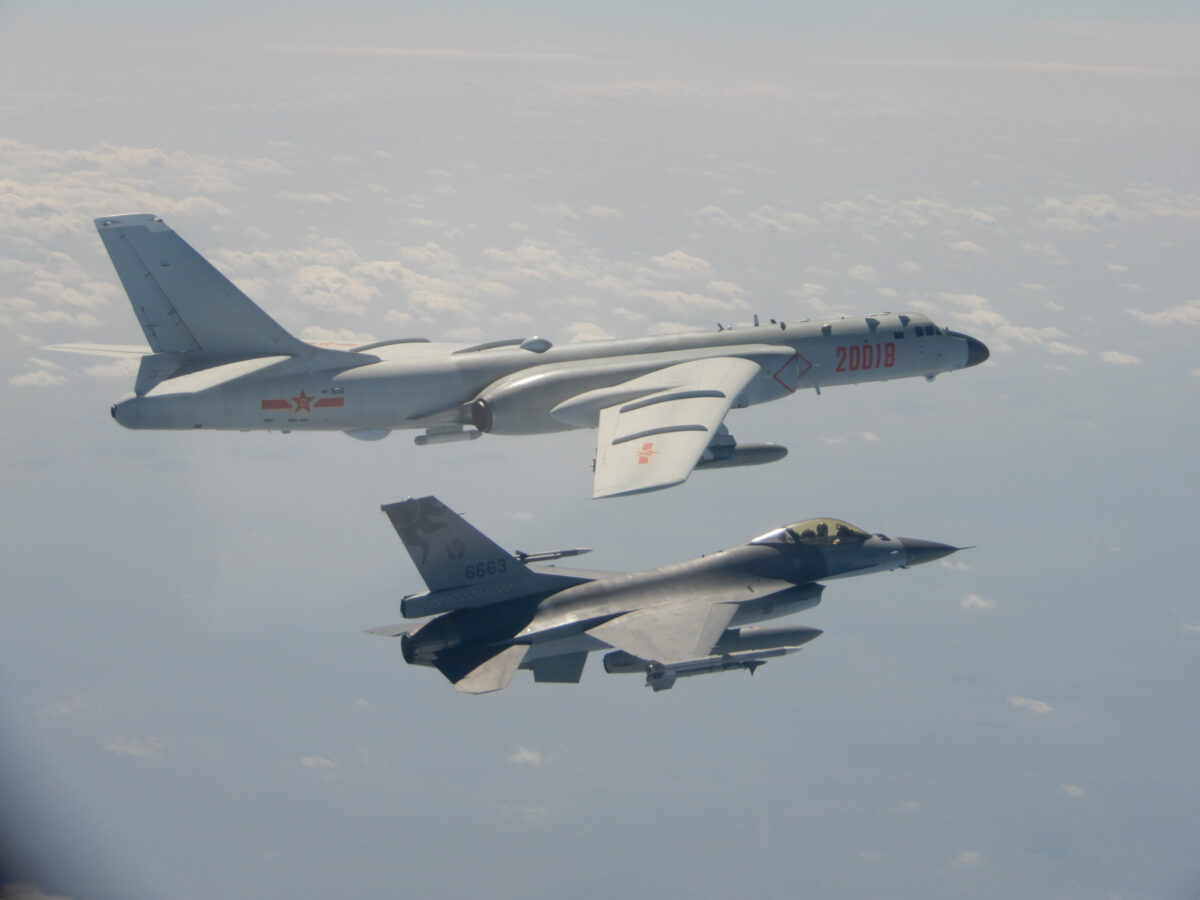
Before launching an assault on Taiwan, China’s carrier groups would likely be positioned beyond the First Island Chain. If the PLA’s amphibious assault forces have already assembled at that point, frontline aircraft could be forward-deployed along the coast, and the Rocket Force would appear ready to strike. The deployment of carrier groups to distant waters would strongly indicate that war is imminent. These signs would not go unnoticed by the U.S. military.
U.S. bases would first face a potential saturation missile attack. Carrier groups would simultaneously have to defend against China’s DF-17, DF-21D, and DF-26 anti-ship ballistic missiles. Meanwhile, China’s Type 054A frigates might break formation and act as the first wave of sacrificial attackers, charging toward U.S. fleets to launch anti-ship missiles in suicide-style strikes.
The Type 054A carries the HQ-16 surface-to-air missile, which offers significantly weaker capabilities than the HQ-9 system. Even the HQ-9 has been exposed for its shortcomings during the latest India–Pakistan conflicts. These frigates lack credible missile interception capability and, in high-end warfare, are essentially expendable. They may be repurposed as high-speed missile platforms for sacrificial or one-way attacks.
At least five Type 054A frigates were involved in the recent Chinese naval exercise, with four of them operating beyond the First Island Chain. The frigates are equipped with the outdated YJ-83 anti-ship missile, a system that Iran and the Houthis in Yemen have already used—and repeatedly intercepted by U.S. and allied forces.
The PLA likely doesn’t expect these frigates to inflict real damage; their purpose is more likely to serve as decoys to draw U.S. airstrikes away from the Liaoning and Shandong, buying these carriers a few more minutes of survival. They may also work in tandem with China’s land-based anti-ship missile batteries to create temporary distractions for U.S. naval forces.
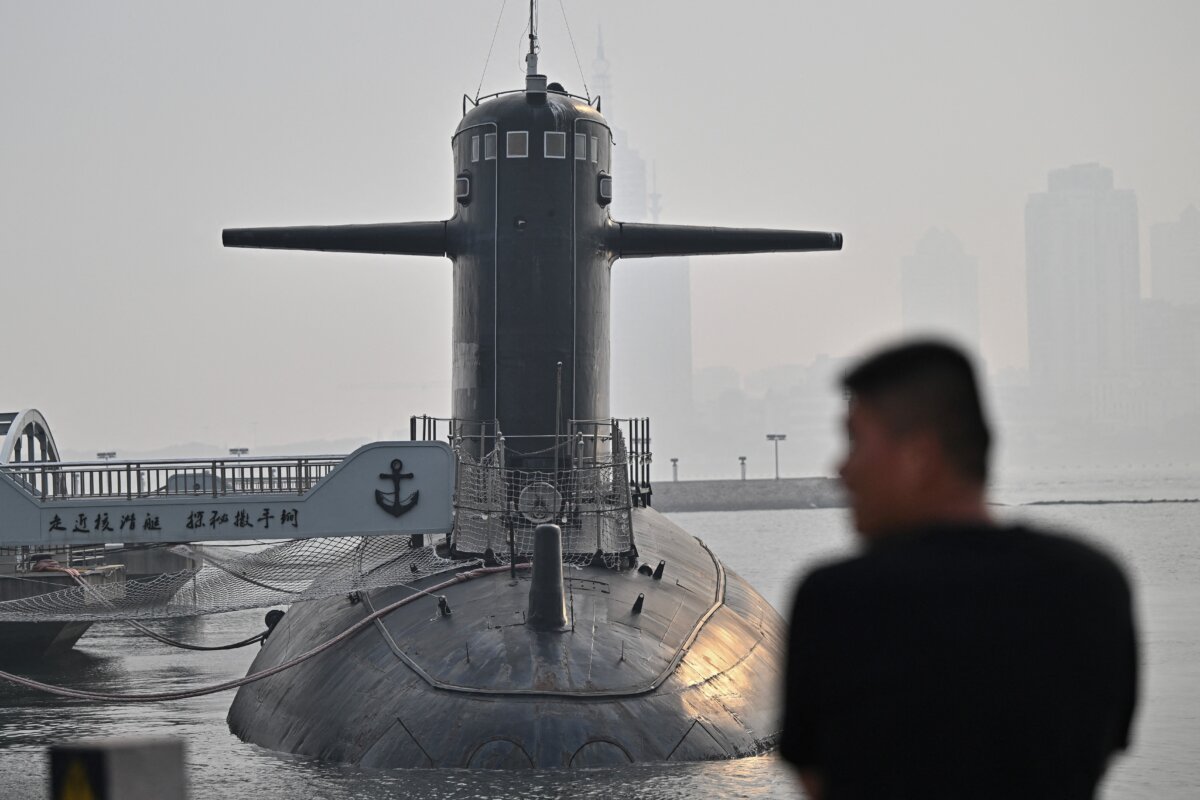
Chinese submarines are inferior to their American counterparts. Their ability to effectively escort or protect carriers is limited. Nevertheless, they may still be tasked with high-risk attacks on U.S. warships. In most cases, however, they’re likely to be detected and neutralized before reaching firing range—serving again more as a distraction than a direct engagement.
China’s Type 055 and Type 052D destroyers are equipped with advanced anti-ship missiles, including the YJ-18 and, for the Type 055, the ballistic YJ-21. These longer-range systems may be used if combat ensues. Additionally, these destroyers carry China’s most effective air defense missile, the HQ-9, which is crucial for protecting aircraft carriers. Consequently, they must stay close to the carrier group and cannot be deployed for independent operations.
Should war break out, the PLA’s destroyers deployed beyond the First Island Chain would be cut off from resupply and unable to retreat, leaving them doomed to eventual destruction by U.S. air power.
How US Military Might Respond to PLA’s Decoy Strategy
In recent years, the U.S. military has repeatedly validated its anti-ship capabilities through live-fire exercises. Among the most lethal weapons is the Quick Sink munition, a type of precision-guided bomb designed to strike ships at or below the waterline, causing rapid flooding and sinking. Delivered by aircraft, these bombs have proven highly effective.
During the July 2024 Rim of the Pacific (RIMPAC) exercise, the U.S. military tested various ship-launched and air-launched anti-ship missiles against a decommissioned U.S. Navy amphibious assault ship. Every missile hit its mark. The final blow came from a B-2 stealth bomber, which dropped a precision-guided bomb that sank the ship within minutes.
The Israeli Air Force’s successful strike doctrine against Iran—developed under U.S. guidance—is a lighter version of what the United States can unleash itself. With superior weaponry, surveillance, and strike capabilities, the U.S. military can swiftly eliminate PLA Navy ships beyond the First Island Chain, provided it receives timely intelligence and pre-positions its forces accordingly.
Typically, U.S. forces would initially employ long-range anti-ship missiles to disrupt the radar and communication systems of Chinese ships, rendering them ineffective in combat. Subsequently, precision-guided munitions, including the Quick Sink weapon, would be utilized to deliver the final blow.
The CCP does not evaluate combat losses or operational costs like the U.S. military, suggesting that soldiers are regarded as expendable. The PLA Navy units designated for deployment beyond the First Island Chain are not expected to engage in naval battles to win; rather, they serve as sacrificial assets intended to distract and delay U.S. forces.
For the soldiers aboard these ships, the odds of survival are low. If they want to avoid becoming cannon fodder, surrender may be their only real option. Waiting until their vessel is hit or sunk drastically reduces the chance of survival, making them dependent on rescue efforts from U.S. or Japanese ships.
Due to operational constraints, China cannot deploy all of its destroyers beyond the First Island Chain. A significant portion will be required to escort amphibious landing forces targeting Taiwan and to maintain maritime defense in the Yellow Sea, East China Sea, and South China Sea. As a result, China may instead increase deployments of Type 054A frigates and diesel-electric submarines, assigning them to suicide-style missions.
These platforms are easier to detect and identify. Chinese submarines attempting to slip through the Miyako Strait face a high risk of early detection. The Type 054A frigates, with their distinctive profiles and relatively limited stealth, are even easier to spot and track.
Japan is expected to play a critical role. China’s repeated incursions and provocations near Japanese islands have heightened Tokyo’s alertness and preparedness. Japan would support U.S. counterattacks if Chinese forces were to attack Japanese bases. The weaponry chosen for such a battle should include F-35A fighter jets, Aegis destroyers, submarines, and land-based anti-ship missile systems. This coordinated response would significantly accelerate the destruction of the CCP’s naval forces.
Views expressed in this article are the opinions of the author and do not necessarily reflect the views of The Epoch Times.
 Friends Read Free
Copy
Facebook
Tweet
Friends Read Free
Copy
Facebook
Tweet