Commentary
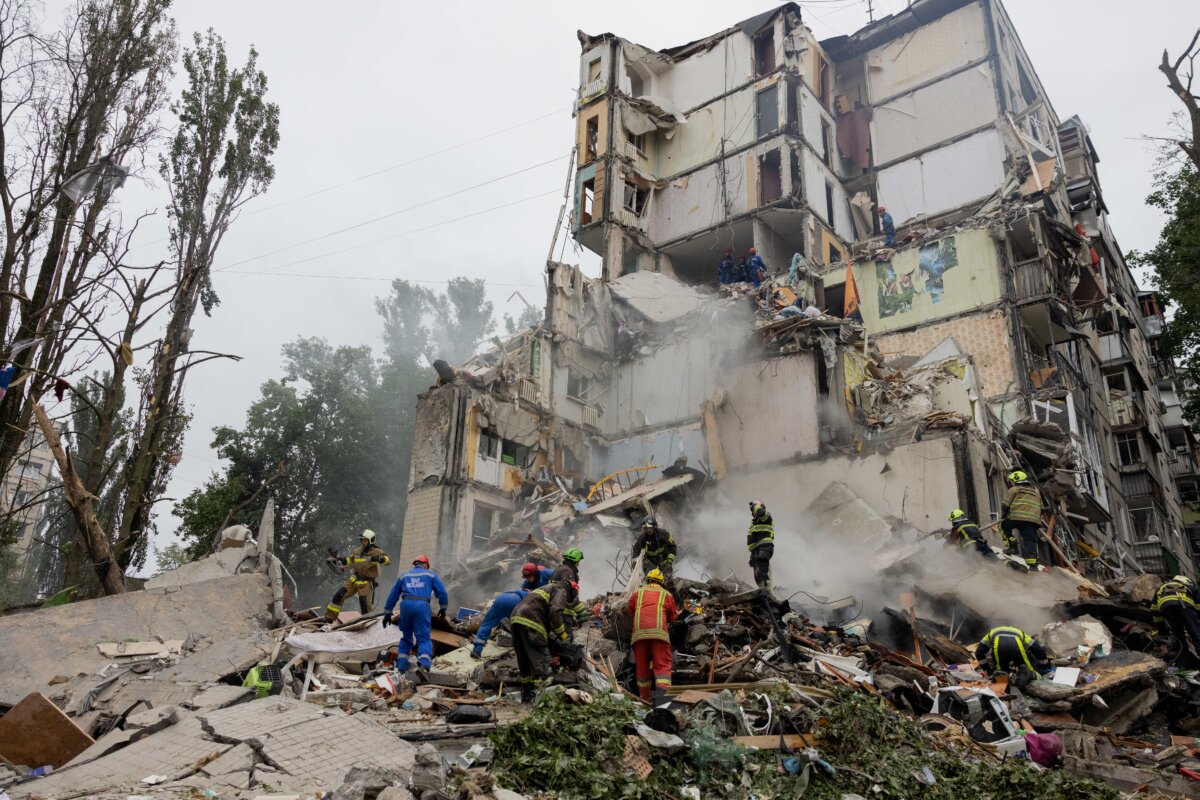
It is about to become obvious that Russian President Vladimir Putin has committed an error of historic proportions in unleashing an aggressive war on Ukraine and provocatively ignoring the Trump administration’s genuine efforts to give Russia a way to withdraw from this barbarous misadventure with something to show for it.
Ever since the disintegration of the Soviet Union in 1991, there was a legitimate curiosity about the extent to which the Russians would consider these secessions to have been legitimate. Moscow has effectively regained its influence over Belarus, and probably possesses as much influence as it wishes over the largely Muslim former Soviet republics of Kazakhstan and Kyrgyzstan, to Tadzhikistan, Turkmenistan, and Uzbekistan. The small Baltic republics of Estonia, Latvia, and Lithuania have vanished into NATO, and although it is unlikely the alliance would really consider an attack upon Riga to be an equivalent provocation to an attack upon London or Paris or Berlin or New York, it is difficult to conceive circumstances in which even a semi-rational regime in the Kremlin would directly assault any member of the NATO alliance.
Russia has less than half of the population of the Soviet Union and a GDP smaller than Canada’s, and although it is a formidable nuclear military power, most of its equipment has not performed well either in Ukraine or in the recent conflicts in the Middle East, and the Russian army has been very unimpressive in Ukraine. They clearly expected to take Kiev within a few days and reoccupy the entire country within a month, and although the NATO powers have effectively provided the equipment and ordnance and paid the bills for Ukraine, Russia has conspicuously failed to come close to winning the war after three and a half years and has suffered over a million casualties and more than 50,000 desertions.
There is some basis to Russian skepticism about Ukraine’s status as a sovereign country. It was never defined a jurisdiction until set up by Lenin as the Ukrainian Soviet Republic in 1917. Ethnically, Ukraine is chiefly composed of people ultimately of Polish, Lithuanian, Tartar, or Russian ancestry, and it has been a lengthy and not entirely completed process of creating a uniform cultural entity. As an independent country since 1991, Ukraine was, until this admirable performance in the current war, a failed state riddled by corruption, unable to rebuff excessive foreign and particularly Russian interference, which has been sufficiently persistent to avoid a solid consensus between the attraction of Russia and the desire of Ukraine to join the West. The Western option appears clearly the country’s preference, especially after this often brutally conducted war.
There is always at least one Russian leader in each century who aspires to be a great expander of the territory of Russia, from Ivan the Great to Peter the Great to Catherine the Great to Stalin. It would be surprising if a man in Putin’s position and with his Soviet KGB background did not have the ambition of resurrecting Russia as a great Eurasian power whose influence reached into Western Europe. And Russia is not without grievances over some of the promises made to the last Soviet leader, Mikhail Gorbachev, regarding Western restraint and expanding the NATO alliance eastward. President George H.W. Bush urged the merits of Ukraine continuing in affiliation with Russia, and his Secretary of State, James A. Baker, took it upon himself to tell Gorbachev that with the reunification of Germany, NATO would not advance one inch farther to the east.
I was one of those who felt that NATO had to accept Poland into its membership, as Britain, France, and Canada had gone to war in 1939 in defence of Poland, and there is a Kosciusko or Pulaski Boulevard in many U.S. cities. Poland, the land of Chopin and Joseph Conrad, aspired to be with the West. Even more important, given Germany’s historic difficulty in determining whether it was an Eastern or Western-facing nation, the eastern border of Germany should not be an open window to the east—Germany must be comfortably encased by strong and respectful Western allies. But all of the former Soviet satellite countries successfully sought entry to NATO, the bitter experience of Russian domination fresh in their recollections. The Russian assault upon Ukraine has produced the entry of the long self-declared neutrals, Finland and Sweden, into NATO also.
President Trump deserves credit for having the insight to recognize that war aims in Ukraine should include not just repelling Russia’s attempt to seize and occupy that country, but also to swiftly create the conditions in which Russia sees the wisdom of joining the West and extracting itself from the potentially lethal embrace of China.
The one act the Russians could take that would be a significant inconvenience strategically to the West, would be to allow some of China’s surplus population to exploit the resources of Siberia—which Russia has failed to do apart from oil—on a royalty arrangement that would shore up the Russian standard of living while reducing it to a vassal state opposite the Middle Kingdom. This in turn would enable China for the first time to become a resource-rich country.
This is the principal reason why President Trump sought a compromise, for which he was widely reviled for being supposedly seduced by the Kremlin.
Putin’s cavalier rejection of Trump’s overtures has finally ensured that he will receive a well-deserved comeuppance. President Trump will address the isolationists in his own party regarding his success in persuading NATO countries of the virtues of devoting up to 5 percent of their GDPs to defence. This will enable him to sell the Europeans and Canadians very advanced military hardware that they can then give to Ukraine, which will enable it to make the Russian civil population as familiar with the vagaries of war and especially the bombing of civilian areas as the Ukrainians themselves have become. And there isn’t one country in the world that wouldn’t rather have a clear trading relationship with the United States than with Russia, given that the American GDP is 15 times as large. Meanwhile, Putin cannot doubt that America’s secondary sanctions—advising countries that violated U.S. sanctions on Russia that they would forfeit access to the American market—will quickly deter the Kremlin economically. Putin is going to have to negotiate pretty thin gruel for Russia in exiting the Ukraine war now.
The real strategic objective of the United States and its genuine allies is to peacefully advance the Western world, which stopped only 250 kilometres east of the Rhine until the dissolution of East Germany and the Warsaw Pact. It is now at the eastern border of Poland, and will move 1,200 kilometres farther to the east when the Ukraine war satisfactorily ends. The objectives then will be to reinflate relations with Russia and to help guide Ukraine into the West and endow it with institutions of good government.
Russia’s invasion of Ukraine is about to be revealed, as it deserves to be, as a total failure.
Views expressed in this article are the opinions of the author and do not necessarily reflect the views of The Epoch Times.
 Friends Read Free
Copy
Facebook
Tweet
Friends Read Free
Copy
Facebook
Tweet