Commentary
President Trump has outsmarted the Iranians, who appear to have counted on their supposedly incontestable mastery of the Hormuz Strait to frighten and intimidate oil-consuming countries, including many that until recently had been assumed to be American allies, and the Americans themselves, with the specter of high oil and gasoline prices. Despite the overwhelming military victory of the United States and Israel in the war, the ruling clique in Tehran had evidently concluded that the American receptivity to peace discussions was, in effect, the Americans suing for peace, and that the conditions stipulated by Trump for peace were just window-dressing for his domestic jingoistic supporters.
The world has largely forgotten what it is like to have a dispute between countries where one side has a systematically inaccurate notion of the motives and level of commitment of the other. It was inconceivable to Adolf Hitler that a pacifistic idealist like Britain’s Neville Chamberlain and an evasive cynic like France’s Edouard Daladier could be so swiftly replaced in belligerent determination and cunning by Winston Churchill and Charles de Gaulle (even though it was several years before the Free French could have a significant impact on the war).
Hitler had also underestimated Roosevelt, viewing him as an overmedicated and severely handicapped president who relied on White House staff to push him in his wheelchair. When Roosevelt told Congress weeks after the 1941 Pearl Harbor attack that in 1943, the United States would produce 75,000 tanks and 125,000 aircraft—more than 10 times Germany’s aircraft production—Hitler dismissed this as “in no way possible.” (These and the other targets Roosevelt listed were in fact exceeded.)
In the Cold War, Stalin had been able to measure for himself the determination and astuteness of Churchill and Roosevelt and the practically unlimited military power of the combined Anglo-American countries, including the Commonwealth, which fielded armed forces of 25 million and gigantic navies and air forces. (When Adm. Nimitz’s U.S. Pacific Fleet put to sea in the last months of the Pacific War, with 25 battleships and 100 aircraft carriers, it carried nearly 5,000 aircraft and 400,000 men.) And of course, the United States developed and used the atomic bomb and maintained a substantial lead over the USSR and other countries in military applications of atomic and thermonuclear weapons throughout the Cold War. As Stalin demonstrated in the Greek Civil War, the Berlin Airlift, and the Korean War, he wanted no part of direct combat with the United States, as he knew how ruthlessly he himself would deploy the military power of that country if he had it.
The Iranian leadership appears to have been self-indoctrinated with some concept of the inevitable victory of militant Islam, of the moral inferiority of the Christian world, and of the enviable death of martyrdom in the course of smiting the non-Islamic infidels. The fact that people like Osama bin Laden loudly claimed their wish to die heroically as martyrs, but hid like moles for years to avoid such a fate, has perhaps prevented this from coming true. These factors are in addition to gross overconfidence about their moral superiority and a tactical genius at every stage of combat with the West—even when they are routed in fact. These militant Islamists are more philosophical about their physical demise than is clear from their conduct. Ariel Sharon, when he was prime minister of Israel, ended the suicide bombings in Jerusalem and Tel Aviv by ordering the killing of the head of Hamas after each such incident.
The Iranian leaders also seem incapable of recognizing the vulnerability of their position until they are overwhelmed by it. Trump presumably proposed negotiations because he thought there was a possibility the Iranian leaders would recognize that they were defenseless against the United States and Israel, and he thought that by engaging in negotiations he might get his critics to cease accusing him of being a warmonger. Such critics, as well as most of the American national political media, are now so morally bankrupt that they have no take on any public policy issue, domestic or international, except Trump hate. So, having demanded negotiations, they then opposed them.
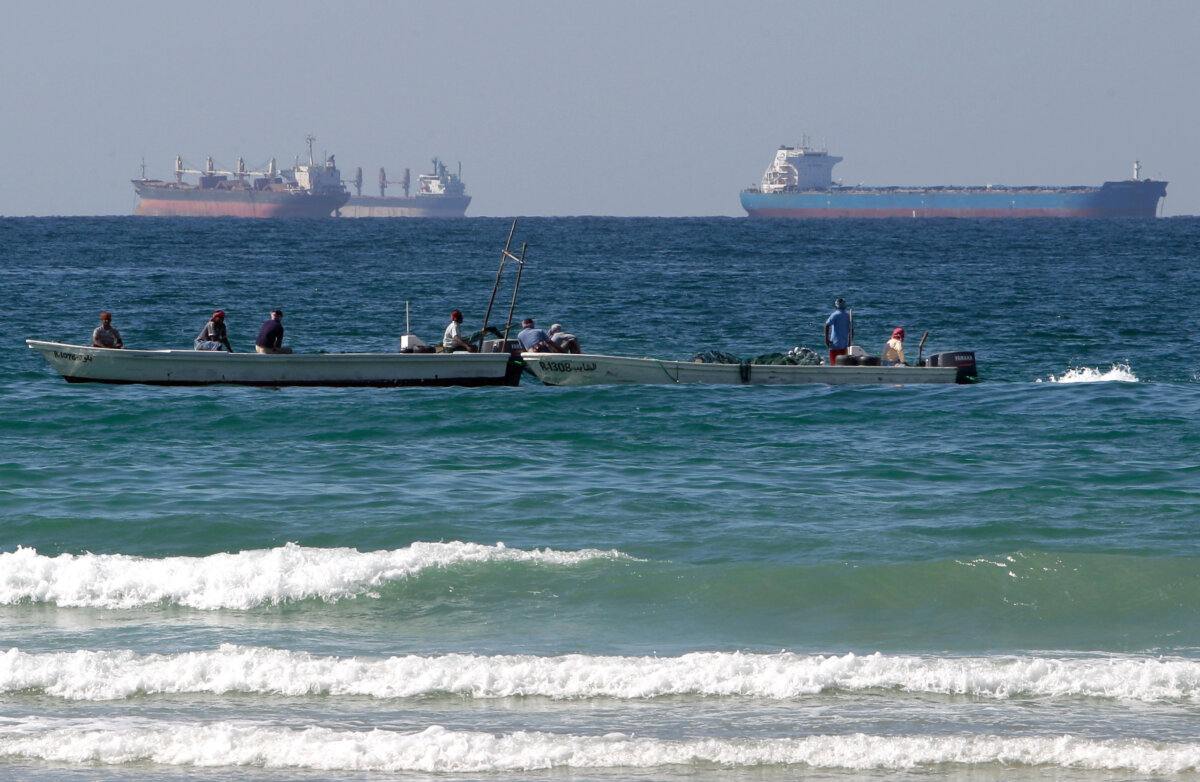
The Iranians requested Vice President Vance as the chief U.S. negotiator because they credulously believed that Trump’s administration and political following were sharply divided and that Vance would rush to make concessions. Though Trump appears a better tactician than a strategist and sometimes makes it up as he goes along, and while he may have underestimated the ability of the Iranians to use oil prices to make up for their military defeat, he showed the skill of a high-level New York commercial real estate negotiator by turning the tables and announcing that no ships would leave or enter Iranian ports and that the U.S. Navy would begin clearing mines out of the Hormuz Strait.
By the time the current cease-fire ends on April 21, the passage of non-Iranian-destined or originated vessels in and out of the Hormuz Strait should have begun again, if at less than normal volumes. Next week, Iran will be in a state of economic strangulation while there is clear relief in sight for those dependent on Gulf oil and sensitive to the world oil price.
It is a double win for Trump that most of Iran’s oil goes to China and that Iran and Venezuela supplied approximately half of China’s oil. It will be refreshing to see China urging concessions on Iran while America’s wobbly European allies scramble to rebuild relations with Washington in its new role as gatekeeper of the Hormuz Strait and the chief arbiter of the world oil price.
The United States and Israel are free to return to active combat, practically unopposed, if and whenever they wish. The correlation of forces is so one-sided that there was never a serious possibility of American defeat, and for the critics to proclaim and welcome defeat will not be a becoming posture when this war is successfully over and the price of gasoline in the United States has returned to normalcy.
Nixon was a chess player and Reagan was a poker player, and Trump alternates between them. But they have all been good at what they did and had the winning formula for their times.
Views expressed in this article are the opinions of the author and do not necessarily reflect the views of The Epoch Times.
 Friends Read Free
Copy
Facebook
Tweet
Friends Read Free
Copy
Facebook
Tweet