
Commentary
In supporting the concept of a pipeline corridor across Canada, Prime Minister Mark Carney shifted from his predecessor’s approach to oil and gas exports. Carney so far has shown signs of recognizing that if Canada could expand oil and gas exports into overseas markets, the nation wouldn’t be as vulnerable to tariffs and other trade clashes with the United States.
In 2023, 97 percent of Canada’s crude oil exports went to the United States, as did nearly 100 percent of the natural gas exports. Meanwhile, Canada purchased nearly $20 billion worth of foreign crude oil, most of which came from the United States.
It’s remarkable that Canada has such a significant imbalance in energy imports and exports, considering Western Canada has some of the most abundant oil and gas reserves on the planet. The primary reason for this problem is the lack of pipelines to transport oil and gas products to Eastern Canada and deep-water ports. The Trans Mountain pipeline expansion and the newly opened LNG terminal in Kitimat, B.C., will ease some of the export issues, but not by much. Eastern Canada will continue to source most of its oil and gas from foreign tankers and the United States.
Carney has called multiple meetings of Canada’s premiers since assuming office to try and create a united front in dealing with the ongoing trade war with the United States. Instead of building consensus, however, the premiers appear to be drifting farther apart on where they stand on pipelines. B.C. and Quebec have consistently been opposed to new pipelines, and now they have been joined by Manitoba Premier Wab Kinew, who has rejected an interprovincial pitch to build an energy corridor. Although provinces don’t have the constitutional ability to block interprovincial pipelines, they can hinder the process, and Carney isn’t eager to try to force consensus and mire himself in battles with more premiers.
It’s time that Carney takes a new approach to pursuing a national energy corridor. Rather than trying to woo premiers bound by ideology and their political interests, he should be reaching out directly to Canadian citizens on the matter.
The late Ralph Klein of Alberta was arguably one of the most successful premiers in Canadian history, and he never hid his secret to success. He said he would find out what people want and then get in front of the parade. If Carney wants to get premiers on board with his vision, he must build national support for it.
Polling has indicated that 75 percent of Canadians support an East/West energy corridor across the country, which would contain pipelines. Even in Quebec, where pipeline support has traditionally been the lowest in Canada, 60 percent of people support new pipelines. Carney must foster and expand that support for pipelines so that citizens begin demanding it of their provincial leaders.
Anti-energy activists have been allowed to dominate the narrative about oil and gas infrastructure for decades. They have framed pipelines as intrusive, dangerous, and environmentally damaging when nothing could be further from the truth. While the Trudeau government didn’t take an overtly anti-pipeline stance, it was content to let pipeline opponents spread misinformation unchecked. The federal government must actively begin correcting the record on pipelines.
To begin with, pipelines are safe. There are over 840,000 kilometres of pipelines in Canada, and 99.999 percent of the product within them is transported safely. The original Trans Mountain pipeline was built through B.C. 75 years ago, and even with that old technology, it has never had a serious leak. While petroleum products are safely transported by rail, it’s not as safe as pipelines, as the Lac-Mégantic disaster demonstrated.
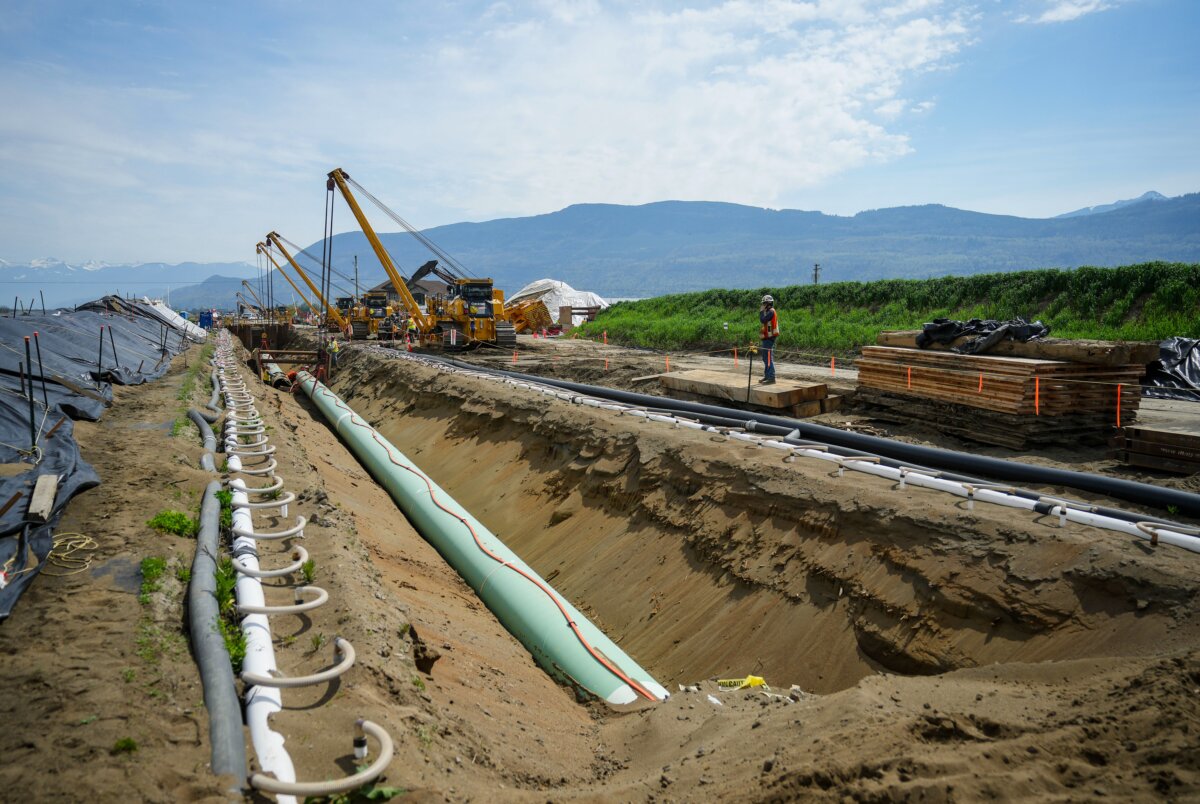
Pipelines are not intrusive. Opponents often use pictures of Russian or Alaskan pipelines built above-ground due to permafrost to give the impression that all pipelines are like that. Most pipelines are buried, and people drive and farm over top of them every day without even knowing it. A small road has a larger environmental footprint than a major buried pipeline.
Just saying that a new energy corridor is in the national interest isn’t enough. The government must inform citizens of the direct correlation between pipelines and prosperity. People need to be reminded of the social programs and employment that the oil and gas industries fund. The benefits of the revenues must be highlighted.
If the government campaigns to Canadians on the costs and benefits of new pipelines, support for the lines will grow. As support grows, premiers actively hindering new pipelines will find themselves on the wrong side of public support. The only thing more important to most politicians than getting elected is getting re-elected. Pragmatic premiers will pivot when the tide of public sentiment demands it.
If the Carney government creates a parade of support for a national energy corridor, rest assured, Canadian premiers will jump in front of it.
Views expressed in this article are the opinions of the author and do not necessarily reflect the views of The Epoch Times.
 Friends Read Free
Copy
Facebook
Tweet
Friends Read Free
Copy
Facebook
Tweet