Commentary
The Nordic countries are often recognized for being leaders in democracy, human rights, and freedom of speech. Sweden set a precedent by removing public censorship as early as 1766, a move that, although later partly reversed, became a milestone that influenced the growth of modern information laws worldwide. Over time, Denmark, Norway, Finland, and Iceland also adopted strong constitutional protections against speech restrictions.
Traditionally, bans on free speech in the Nordic countries have only applied to issues such as espionage, defamation, child pornography, and incitement to violence. As a result, when U.S. Vice President JD Vance delivered a speech in February criticizing Europe’s failure to defend its heritage of liberty and explicitly condemning Sweden for violating free speech, some reacted with disbelief. However, just weeks earlier, the conviction of Salwan Najem, an Iraqi Christian refugee, had been upheld. Najem had been found guilty of provocation against Muslims after he participated in public burnings of the Quran.
Many Scandinavians also agreed with Vance’s critique because broad interpretations of “hate speech” laws have long raised concerns that Nordic political and cultural elites’ aggressive embrace of multiculturalism and political correctness is leading to creeping authoritarianism.
Specifically, critics state that hate crime laws suppress legitimate speech and punish political dissent. In Denmark, for instance, there are strict limits on public statements that threaten, insult, or degrade groups based on race, religion, or ethnicity, with penalties such as fines or up to two years in prison. And in recent years, several people have faced legal action for making controversial statements, including satirical or critical comments about the country’s immigration policy. Similarly, Norway’s comparable Penal Code Section 185 has been used to silence disapproving opinions on both immigration and religion.
Furthermore, Finland’s legal system limits free expression not only through a hate speech law, but also via a still-enforced 19th-century law against blasphemy. For instance, in 2012, Jussi Halla-aho, a member of the European Parliament representing the anti-immigrant True Finns Party, was convicted for linking Islam to pedophilia. Highlighting the tension between free speech and legal accountability, Halla-aho, who now serves as the speaker of the Finnish Parliament, has claimed that his prosecution suppressed political criticism of the country’s immigration policies.
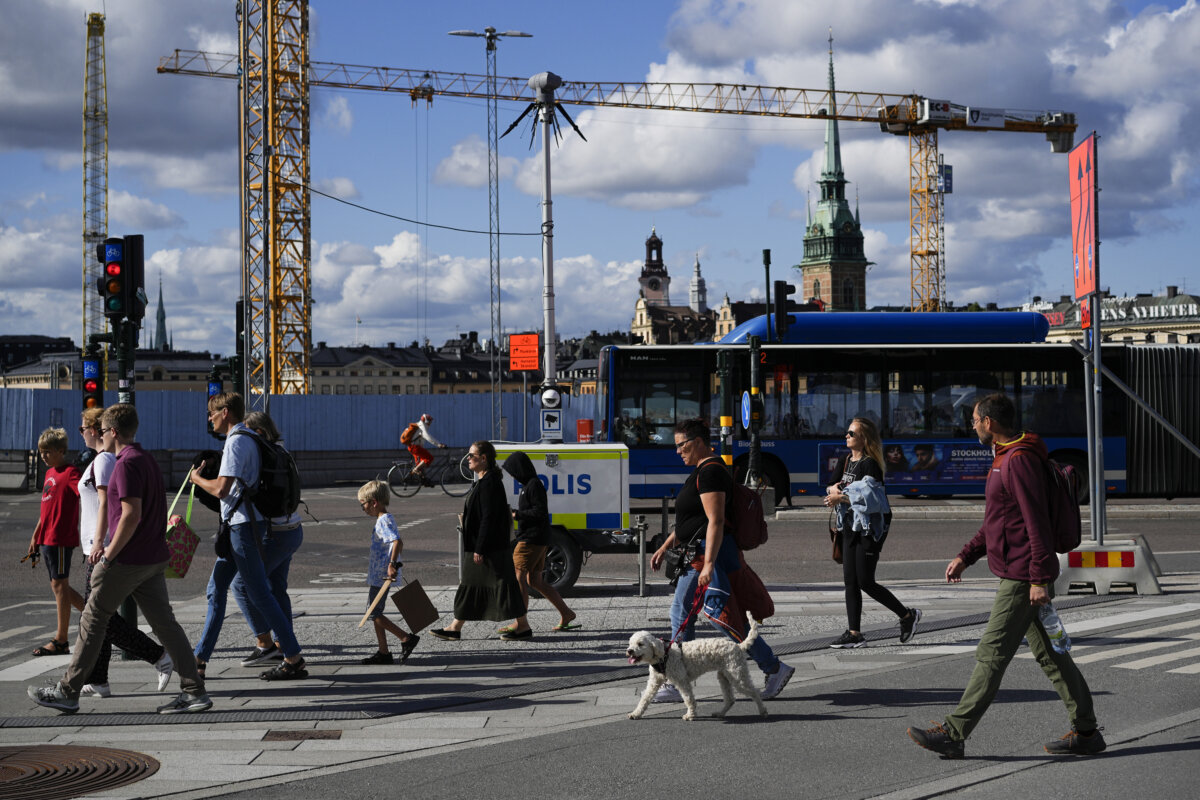
As the birthplace of modern press freedom, Sweden has drawn significant attention for its developments. The country’s constitution offers strong protections against pre-publication censorship, but changes have allowed for broader interpretations of its already strict hate speech law, permitting prosecutions to take place after publication. For instance, in 2017, a 70-year-old woman was sued for hate speech after posting comments on Facebook that expressed a “disparaging view of refugees” in relation to public order disturbances caused by migrants.
Recently, Sweden has faced controversies that highlight tensions between the country’s free speech protections and its regulations aimed at ensuring public safety and safeguarding minority rights. In 2023, the country’s espionage law was amended in ways that raised concerns, including concerns about whistleblower protections, and the Public Order Act was modified in a manner that threatens assembly rights. And in 2024, over-moderation of social media drew attention for forcing the removal of lawful content.
Thus, throughout the Nordic countries, a common challenge is striking a balance between protecting societal values and defending individual rights. The growth of social media has made this issue even more complicated as governments attempt to regulate online content without violating constitutional limits. Here, speech regulators can also collaborate with the European Union, which has enacted the Digital Services Act, a law that greatly limits free speech online.
Furthermore, what is even more troubling is the potential for self-censorship driven by social pressure and legal consequences. In the Nordic countries, which have a long history and deeply rooted culture of political and religious conformity dating back to the 16th century, this risk is greater than in other European countries with more liberal societal traditions, such as the Netherlands. This is especially true when it comes to topics such as immigration and religion, but there are signs that harsher opinions are beginning to affect other areas as well. For example, in July, Sweden criminalized verbal abuse of public officials in ways that have raised concerns about how this could affect artistic political expression, such as stand-up comedy.
In summary, self-censorship combined with legal restrictions suggests that the Nordic countries are shifting their focus from prioritizing individual freedom to prioritizing group harmony. The challenge for these countries is thus to refine their legal frameworks so that free speech is only limited when necessary, balancing their autocratic historical legacy with modern realities. This underscores the fundamental philosophical difference between Europe, which emphasizes collective safety and social harmony, and the United States, which focuses on individual liberty. Additionally, since the Nordic countries serve as democratic models, the development there could reshape the future of free speech in Europe, as well as democratic standards worldwide.
Views expressed in this article are the opinions of the author and do not necessarily reflect the views of The Epoch Times.
 Friends Read Free
Copy
Facebook
Tweet
Friends Read Free
Copy
Facebook
Tweet