
Commentary
One of my ongoing complaints about contemporary politicians, considered as a class rather than as individuals, is how poorly educated they appear to the disinterested observer.
I do not mean that they lack credentials. Many possess degrees from prestigious institutions. Nor do I mean that they are unintelligent. Politics, after all, is a demanding craft, and there is no shortage of able and industrious men and women who practice it.
What I mean is something more elementary and, for that reason, more disquieting: So many appear ignorant—in the strict and literal sense of the word—of what was once called “general knowledge.”
They appear unfamiliar with the shared body of historical, literary, cultural, and civic knowledge that an educated person could once reasonably be expected to have: a knowledge of the main points of history, the foundational inheritance of Western civilization, the major political debates, the canonical texts, and the key events that have shaped society.
Knowing about these things is not a sign of elitism, but of participating in a shared culture. One can strongly disagree on policy while still understanding the Magna Carta, the Federalist Papers, or the broader course of the Enlightenment as the foundational movement of our age.
One does not expect politicians to be specialists, let alone paragons. But it isn’t unreasonable to expect them to have a broad understanding of the general contours of modern history.
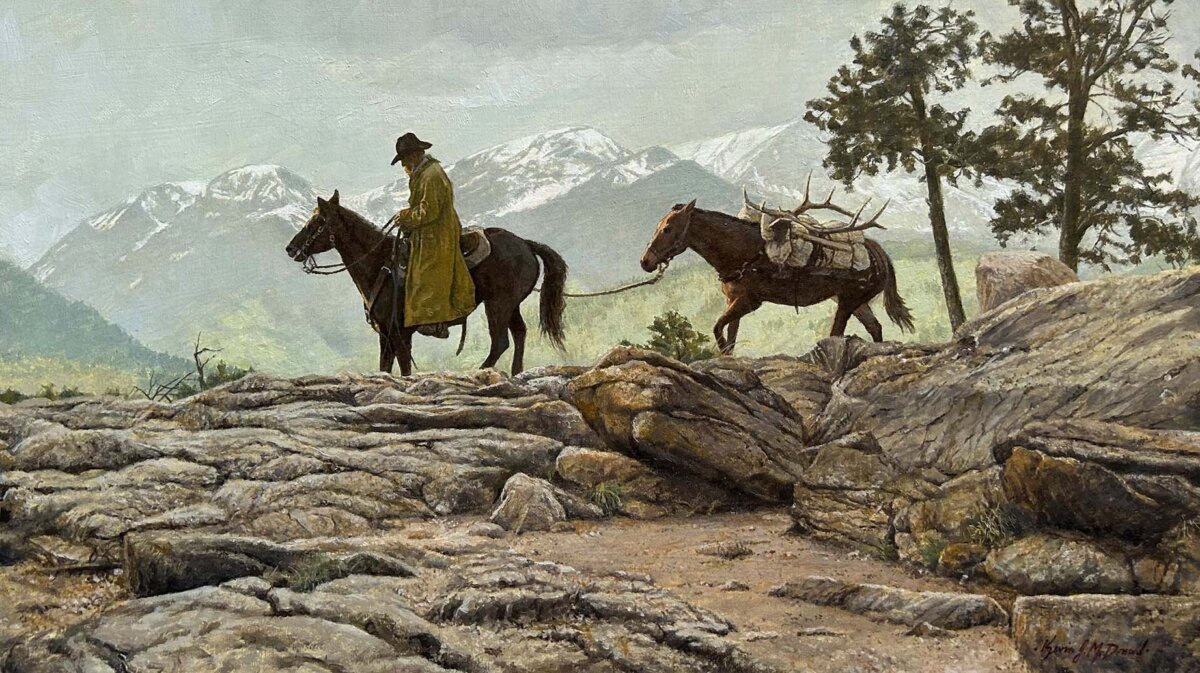
Yet today, this idea seems quaint. Consider, for example, the recent public debate surrounding U.S. Secretary of State Marco Rubio’s use of the word “cowboy” at the recent Munich Security Conference. When the term was dismissed as a relic of Western aggression, the critics overlooked what was once a common understanding: that the horse was introduced to the Americas by Spaniards in the 16th century and that the term itself is derived from the Spanish vaquero tradition. This oversight is particularly ironic, given the rich Hispanic history of the American West.
Similarly, “Western culture” was treated as though it were a single, coherent ideology of domination. But it is nothing of the sort. It is a long, unruly, and self-critical conversation that has unfolded not as a program of oppression but as an argument about truth, justice, authority, and the good life. It has produced empires as well as the moral and philosophical resources to condemn them. It has generated power, and the principles by which power is restrained, challenged, and sometimes overthrown.
Reducing this vast and internally contested inheritance to a caricature is not serious criticism. It is a flattening of history that substitutes posture for understanding.
Nor is the problem uniquely American. In Britain, former Justice Secretary Dominic Raab has frequently invoked the Magna Carta as a foundational emblem in support of his proposed Bill of Rights reforms.
Yet Magna Carta is not a slogan, but the beginning of a long and intricate constitutional development, refined over centuries through reinterpretation, statute, and judicial practice. To extract it as a symbolic endorsement for a narrow modern objective—without reckoning with its full legal genealogy—is historical cherry-picking. It is to treat a great text as a prop rather than an inheritance. Such appeals do not show respect for history but rather its instrumentalization.
What we are witnessing on both sides of the Atlantic, as well as on both sides of the aisle, is a dangerous and widespread historical and cultural amnesia.
Missing is what liberal education once deliberately formed: a sense of context, proportion, and continuity; a recognition that our arguments did not begin yesterday and will not end tomorrow.
A liberal education is an invitation to enter a conversation that spans centuries, civilizations, and cultures. Its aim is not indoctrination but illumination, not certainty but understanding. It does not train students to win arguments but rather to think well about the enduring questions that define the human condition.
Politicians formed in that spirit would hesitate before issuing sweeping judgments about entire civilizations. They would recognize that inherited terms carry layers of meaning, shaped by centuries of use; that the words one uses carry histories; that the concepts one mentions have genealogies; and that the traditions one criticizes have internal coherence and development.
The problem, I repeat, is not limited to any single party, individual, or nation. It signifies a wider shift in education itself.
Universities are increasingly emphasizing technical skills and ideological conformity over broad understandings. Students learn to critique systems but not necessarily to understand how those systems originated. They become familiar with moral condemnation but not with the habits of nuanced historical analysis. They gain fluency in current jargon while remaining unfamiliar with the intellectual traditions that have shaped the institutions to which they belong.
The result is a political class that excels in performance but lacks depth. Sound bites now replace meaningful debate. Historical analogies are used carelessly without any true historical understanding. Complex ideas are reduced to simple moral binaries. In such an environment, ignorance flourishes.
It is worth taking a moment to reflect on the word “ignorance.” Ignorance is not only the absence of knowledge but, more concerningly, a lack of self-awareness. It involves developing the habit of confidently speaking on subjects one knows nothing about. This is what is most alarming. Mistakes are inevitable in political life. However, an indifference to the accumulated wisdom of the past is much more perilous.
The stakes are more than just theoretical. Free societies rely on a governing class with a strong sense of history. It is dangerous for legislators to create laws that will influence institutions that they rarely fully understand, to invoke constitutional principles whose philosophical roots they have never explored, or to discuss foreign policy without understanding the cultures and regions involved. Essentially, we have too many politicians who wield power without the requisite intellectual depth.
What might an alternative look like? A politician shaped by a genuine liberal education would recognize that they are part of a tradition that they did not create. They would approach inherited ideas with curiosity rather than blind condemnation. They would recognize that Western civilization, like any other, is a tapestry of successes and failures, wisdom and foolishness. And, most critically, they would avoid the temptation to reduce that complexity to partisanship.
Such a recovery will not come easily. It requires, among other things, a reorientation of education itself away from mere utility and toward significance, away from ideological formation and toward the disciplined pursuit of truth. It requires, in other words, a renewed commitment to the kind of general knowledge that once marked an educated person.
In an age of technological acceleration and social fragmentation, the questions that confront our political leaders are not merely technical. They are, as they have always been, moral and philosophical. What is justice? What is freedom? What is the good life for a human being?
These are not questions that can be answered by consultants or algorithms. They demand historical awareness, intellectual discipline, and a steadfast commitment to the truth.
If politicians seem poorly educated, it is because they so often are, regardless of the credentials they might hold. And until we recover a richer understanding of what education is for, we will continue to elect representatives who speak loudly, pronounce confidently, and yet remain, in the most literal sense, ignorant.
Views expressed in this article are the opinions of the author and do not necessarily reflect the views of The Epoch Times.
 Friends Read Free
Copy
Facebook
Tweet
Friends Read Free
Copy
Facebook
Tweet