
This is a segment of a six-part series analyzing how the Chinese regime conducts its modern influence operations. Read part 1 here and part III here.
Commentary
A hiring manager watches a candidate answer questions over video. In the corner of the screen, a widget renders a running assessment: engaged, anxious, evasive. Down the hall, an administrator pitches software that promises to detect “frustration” in remote exams. At an airport, a vendor claims it can flag “hostile intent” from faces in a crowd.
The pitch is consistent across sectors: turn expression into readout, turn the readout into a decision. Measure how people feel, then systems can predict what they’ll do.
The trouble is that the measurement is contested—and once it is treated as authoritative, it can do damage even when it’s wrong.
The Promise That Won’t Stay in Its Lane
Emotional recognition is usually sold as a narrow capability: Classify facial movements, tone of voice, posture, or text signals into emotion categories. In practice, it rarely stays narrow. An organization that acquires a number claiming to represent “agitation” or “deception” has gained a governance tool—one that is easy to score, rank, automate, and justify after the fact.
This is why the underlying science matters. The strongest critiques aren’t about whether machines can detect facial movements. They’re about the leap from movement to inner state. The American Psychological Association’s reporting captures the core objection: Facial movements are not a stable “language” that can be read like text, and context does much of the work in what a face “means.”
A major review from the Association for Psychological Science likewise warns against inferring emotion directly from facial movements, emphasizing limits and context-dependence rather than a universal, clean mapping.
That gap—between what vendors imply and what the research supports—widens quickly in real deployments.
Where China Comes In
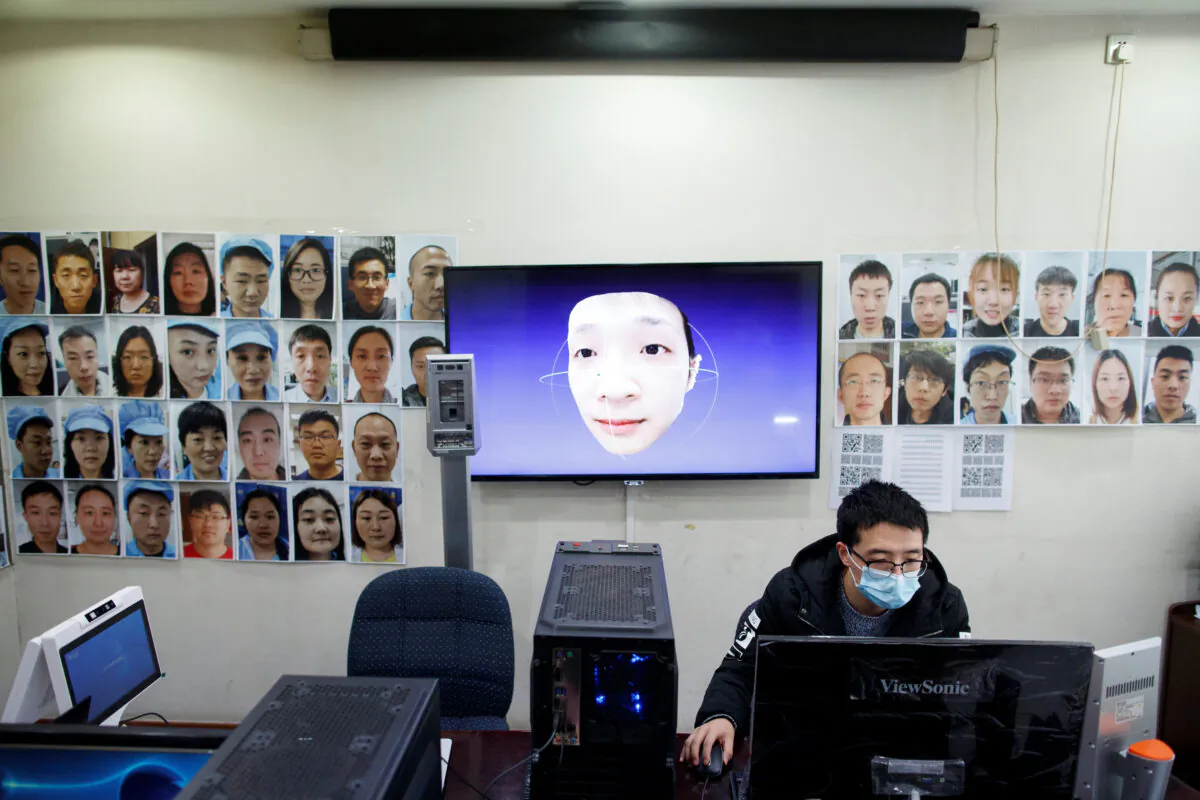
China matters here for a simple reason—it has both market incentives and governance incentives to drive emotional recognition from demo to routine. The technology is marketed not only as consumer analytics but also as public security infrastructure.
At China’s major surveillance trade shows, emotional recognition has been promoted as a crime-prevention tool to be integrated alongside face recognition and other behavioral analytics.
Reporting based on the 2019 China Public Security Expo described “emotional recognition” as a prominent theme among vendors selling surveillance and policing systems. A detailed trade-press account of that same expo describes emotion monitoring as part of a broader “smart surveillance” sales pitch, with major firms and public security stakeholders present.
Rights groups have cataloged the ecosystem in more formal terms. UK-based human rights organization ARTICLE 19’s “Emotional Entanglement” report documents a “burgeoning market” for emotional recognition in China and discusses its use cases across public security and education, warning that the technology’s underlying assumptions are disputed and that its human rights implications are severe.
The point is not whether every claim in a brochure is true; it is that a large state with strong incentives for “stability maintenance” is actively interested in turning disputed inferences into administrative responses.
The Lab-to-Street Problem
Even if one accepts that expression and emotion are meaningfully related, the operational question remains: Can systems assess reliably in the wild?
“In the wild” is where theory meets daylight, cameras, and culture. A survey focused on facial emotional recognition under uncontrolled conditions highlights familiar failure modes: lighting changes, occlusion, pose variation, uneven camera quality, and the basic fact that people display differently even when they feel the same thing.

One reason China’s reported testing has drawn scrutiny is that such tools appear to be used in high-control settings. A report citing BBC coverage describes emotion-detection systems tied to facial recognition being tested in Xinjiang police settings, aimed at interpreting detainees’ emotional state.
Even setting aside the specifics of any one pilot, the broader pattern is consistent: The more coercive the setting, the more it becomes a justification tool. A number on a screen can change how an interrogation proceeds, even when the number is wrong.
Scale Changes the Risk, Not the Validity
A practical case for emotional recognition is rarely about reading individuals perfectly. It is about collecting enough signals to build a usable picture among target groups, cohorts, neighborhoods, campuses, and demographic slices.
At the population scale, even noisy signals can become statistically useful. A system doesn’t need to be right about every face if it can detect shifts in an aggregate response curve: which content makes a segment linger, rewatch, comment, or share; which messages elevate engagement across a cohort; how reactions differ across age and sex categories.
Group-level emotional recognition is an active area of research aimed at estimating collective affect from multiple partial cues, including faces, body posture, and scene context. Work in this area is explicit about the distinction between individual emotion and group emotion—the target is often a collective state that can be approximated from imperfect signals, especially when the sample size is large.
Regardless, aggregation does not settle the validity question. It can stabilize a signal without guaranteeing that the signal is what it claims to be. A model might be tracking proxies that correlate with arousal in one context and misfire in another. The “in-the-wild” performance gap remains, because it is rooted in conditions and meaning, not just in sample size.
What scale does is change the risk profile. Even a modest statistical edge at the segment level can become operationally powerful when it is fused with identity systems and treated as actionable intelligence.
When Inference Plugs Into a Machine Built to Act
The most consequential technology in Xinjiang is not a single sensor; it is the architecture that drives and legitimizes response.
Human Rights Watch’s reverse-engineering of the Xinjiang police mobile app connected to the Integrated Joint Operations Platform (IJOP) describes how authorities aggregated many data streams and used them to generate alerts and investigative leads—often based on lawful behavior treated as suspicious. IJOP is the CCP system that makes a disputed signal matter by giving it somewhere to go: into a fusion platform that produces lists, flags, and enforcement activity.

Researchers writing about emotional artificial intelligence in crime and policing emphasize this institutional hazard: The evidence base for effectiveness is weak, while the intrusion and downstream consequences can be severe, even before accuracy is debated. That warning fits a China context especially well because the broader system already prioritizes preemption: Detect anomalies, flag risk, and act early.
Demographic Calibration Becomes Demographic Leverage
Emotional recognition systems are often justified with a promise of calibration: Use enough data, segment it properly, and account for demographic variation so the model is more accurate. On paper, that sounds like responsible engineering.
In practice, demographic segmentation creates two effects: reducing errors and strengthening profiling capacity.
The National Institute of Standards and Technology’s work on demographic effects in facial recognition documents differences in error rates across demographics and highlights how image quality interacts with those differences. Broader work on bias in facial analysis has likewise examined how training data imbalances and design choices can lead to uneven performance across categories such as age and gender.
The profiling effect is harder to defend. Once a system explicitly corrects by age, sex, and national origin proxies, it also builds a toolkit for differential treatment across those attributes. That toolkit makes audience-level steering easier.
Policy Is Beginning to Draw Boundaries
Europe has moved further than the United States in codifying these risks. The EU Artificial Intelligence Act—Regulation (EU) 2024/1689—places restrictions on emotional recognition in sensitive contexts such as workplaces and education, reflecting concerns about coercion, asymmetry of power, and contestability.
Whatever one thinks of Europe’s regulatory choices, the underlying logic is direct—these are settings where people cannot meaningfully opt out, and where a system’s claims about inner state can be difficult to challenge, even when they are wrong.
What Can Be Said Responsibly?
Emotional recognition systems can detect patterns in faces, voices, and text. In some narrow, voluntary contexts, that may be defensible as assistive technology or research. But inferring inner emotion reliably across contexts and cultures remains contested, and “in-the-wild” deployment introduces persistent sources of error.
The China-specific concern is less about mystical mind-reading and more about scale and architecture: a large ecosystem pushing emotional recognition into policing and education; reported testing in high-control environments; and, most importantly, data-fusion systems designed to turn ambiguous signals into action.
Next: That architecture—identity resolution, sensor coverage, and data fusion—and why, in China’s model, the platform that operationalizes the signal can matter more than the sensor itself.
Read part 1 here and part III here.
Views expressed in this article are the opinions of the author and do not necessarily reflect the views of The Epoch Times.
 Friends Read Free
Copy
Facebook
Tweet
Friends Read Free
Copy
Facebook
Tweet