Commentary
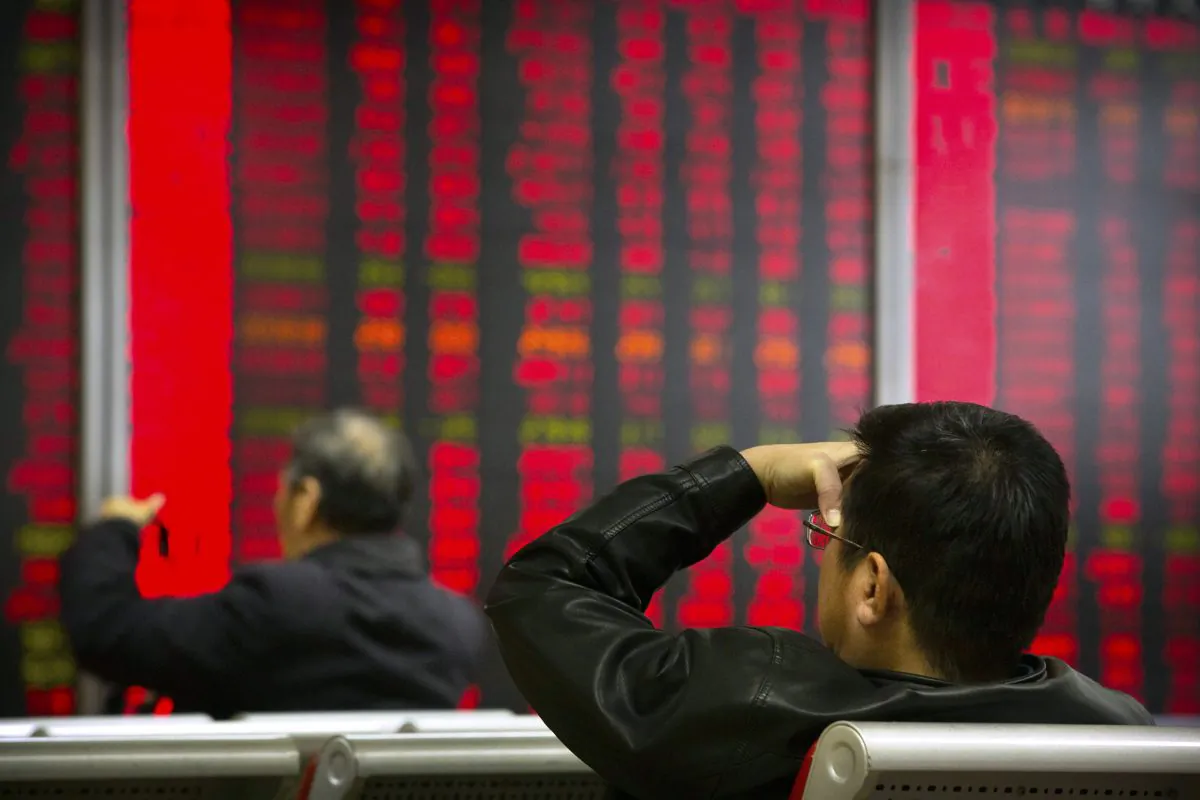
China has more than 530 billionaires with a total net worth of $2.2 trillion, plus another 5.3 million millionaires. Amid its own financial stress, the regime is assembling bespoke tax squads targeting some of these high-net-worth (HNW) individuals. Nearly all of them are coming under increased tax burdens.
Washington can weaken the regime in Beijing and strengthen the democracies by enabling easier transfer of HNW family wealth from China to the United States and our allies.
Already in 2025, a record $807 billion flowed from China. This will likely encourage even more capital flight as the tax burden falls on fewer shoulders.
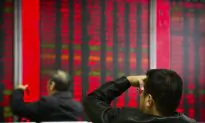
Last year, China’s deficit was $1.9 trillion. Twenty-one of 33 regions across the country take in less than half of what they spend. This is largely due to a mix of mutually reinforcing negative economic factors, including the aforementioned decline in foreign investment, falling property values, construction halts, unemployment, deflation, and fewer land sales by local governments to developers.
Beijing and local regime officials in China are now addressing their deficits by raising taxes and tightening tax enforcement, which tends to reduce growth and increase capital outflows, creating a downward spiral.
The regime’s need is high. Recent reports indicate that it lacks sufficient funds to pay some of its employees. So it is increasing taxes and enforcement against the wealthiest members of society, including their assets held abroad.
“Asked whether the effort to collect taxes from wealthy individuals’ overseas investments might finally make it possible to pay salaries again, a deputy party secretary in a city in the central Henan province — who hasn’t been paid anything for a year — demurs,” according to Bloomberg News on Sept. 27. “Given the government’s debt load, that money won’t be coming to payroll, the official says.”
This raises the question of how such officials are paid: Could it be corruption or criminality?
In 2024, reports emerged of local officials in China who kidnapped businessmen for ransom as a way to balance local government income and expenditure.
At the national level, the means are more refined and effective. Hong Kong, foreign brokerages, and offshore trusts are no longer safe from the taxman. The beneficiaries of offshore trusts have a deadline in late October to pay up or face additional fees.
Corporations are also under the knife, including for back taxes. More than 100 were ordered to pay up in the first two quarters of 2026. State-owned enterprises are not exempt. In June, national auditors in China alleged that the state-owned Bank of China had engaged in tax evasion.
The big picture is a broad increase in taxes on anything the Chinese Communist Party (CCP) considers old, established, and, therefore, vulnerable. It is the CCP’s tried-and-true strategy of “hostage capitalism” targeting fixed, immovable assets.
In the context of such instability and rising taxes, the United States and other market democracies have an opportunity not only to encourage but also to court China’s HNW individuals to move their assets and families out of the reach of rogue officials and the CCP. This is consistent with U.S. national security interests. If HNW individuals remain in China, their assets can be taxed and used by the CCP against the democracies.
The good news is that the regime’s tax-haul overdrive will increase pressure on China’s wealthy to engage in capital flight and emigration, weakening the CCP and strengthening the economies into which HNW individuals move.
As indicated by the $807 billion in capital flight in 2025, many people in China are already voting with their dollars and getting their money out as the gates swing shut, the screws tighten, and China becomes a money sump with no exit.
The resulting long-term capital flight from China and an increasingly risky environment for foreign direct investment (FDI) could be a greater boon for FDI in stable market democracies, including the United States, the European Union, Japan, Australia, and Singapore, if new policy measures are enacted to further facilitate this flow.
Democracies should encourage China’s wealthy to put their money somewhere safer than in China, including through new digital and legal avenues if necessary. HNW individuals should be provided with foreign passports if they can demonstrate that they are permanently moving their wealth and family members outside of China. This demonstrates a preference for the values of markets and democracies over the lack of such values promoted by the CCP.
Chinese families who permanently move their money and family members to democracies will, on balance, reduce the CCP’s power by transferring it to those democracies.
Views expressed in this article are the opinions of the author and do not necessarily reflect the views of The Epoch Times.
 Friends Read Free
Copy
Facebook
Tweet
Friends Read Free
Copy
Facebook
Tweet