
Commentary
It is perfectly normal and healthy that in an electoral democracy a government should be voted out of office after 16 years in power. One of the complaints often heard in such democracies is that “they are all the same,” “they” being members of the political class of whatever political party.
But there is benefit in a change of government personnel irrespective of all else, for those who remain too long in power come to think of that power as their right, and the citizenry as their servants rather than of themselves as servants of the citizenry.
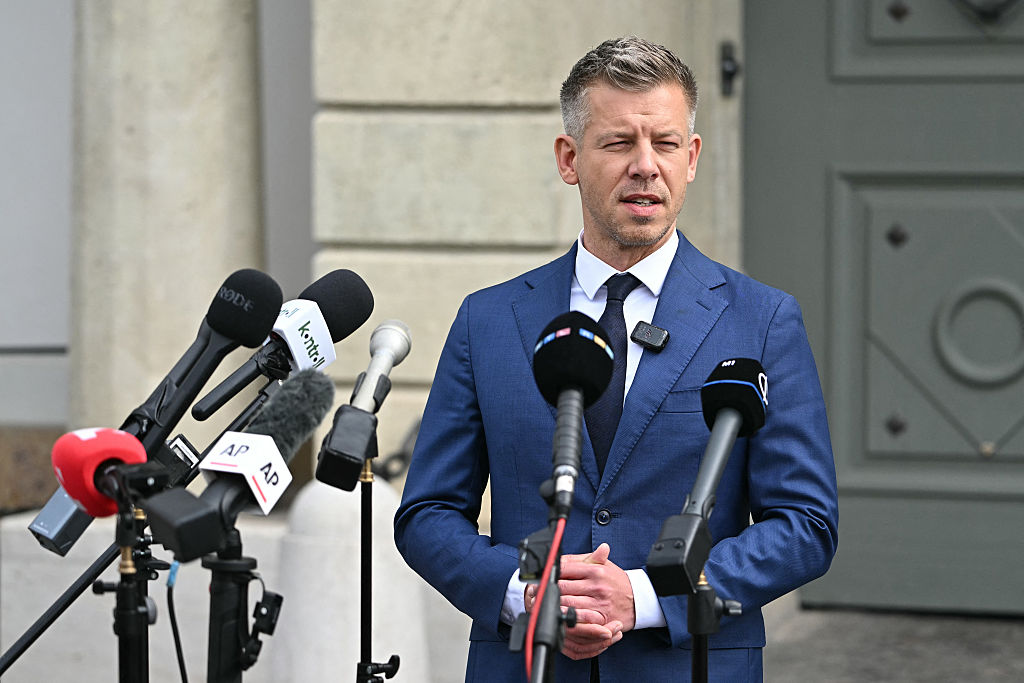
The recent removal from power by election of Viktor Orban in Hungary after so long as prime minister (and his full acceptance of the defeat, despite accusations that he was like an authoritarian dictator) was perfectly normal. He had been replaced by a man who is no fire-eating radical, Peter Magyar, a young man who was, until comparatively recently, a supporter of the leader he has replaced.
The electorate, according to polls, was concerned about the state of the economy and the level of corruption in the country. Governments that come into power promising to eradicate corruption often reveal themselves to be no different in this respect from the previous; the fruits of corruption are distributed to different people, that is all.
The new prime minister differs greatly from the old in two attitudes: firstly, to the war in Ukraine and, secondly, to the European Union. Unlike Orban, he is no friend of Russian President Vladimir Putin’s, and unlike Orban, he is more likely to do the European Union’s bidding in order to gain access to the latter’s funds. One important question is whether he will be forced to change Hungary’s attitude to mass immigration, opposition to which was a source not only of Orban’s conflict with the European Union, but also of his long domestic popularity.
His policy was regarded as xenophobic, but this was an unjustified slur. Xenophobia is a hatred or fear of foreigners as such, ex officio, and on my visits to Hungary, I found none of this. I met, for example, a Kurdish physiotherapist well integrated into Hungary, and a Moroccan academic likewise, who did not complain of personal antagonism to them. Other foreign residents whom I met did not complain of it either. A desire to protect a small country from the effects of mass immigration that have been seen in Sweden (a country of similar size of population), for example, is not xenophobia; it might on the contrary be regarded as both prudent and as a manifestation of love of one’s country. It is part of the malign legacy of Hitler and the Nazis that love of one’s country is now felt by many European intellectuals to be inherently vicious and aggressive. But love of one’s country is not the same as hatred of everyone else’s, although it is true that patriotism can sometimes degenerate into such hatred.
The European Union’s attitude to mass immigration is contradictory. It regards ethnic and cultural diversity as good in themselves, as if what existed before was lacking some important ingredient that such diversity will automatically bring.
But although it is true that societies that are hermetically sealed from outside influence are likely to stagnate, most European societies were never like this. Even in the 18th century, when travel and communication were incomparably more difficult than they are now, Scotland, England, and France, for example, profoundly influenced one another. They were dynamic societies without mass external repopulation.
The second argument of the European Union is that aging populations with sub-replacement birth rates need immigrants to sustain their growth. This is not an entirely false argument. It is a fact that the ratio of the economically active population to the dependent adult population has been declining, and soon, in some countries, there will be only two active people for every dependent adult. That will place a great burden on the active population.
Despite this, welfare states maintain large numbers of working-age people in economic inactivity. The current British welfare state, for example, has created as many invalids as World War I. It pays large numbers of people to do nothing while importing cheap labor. This has predictably bad consequences.
But there is a more important point to be made. To speak of immigrants as immigrants, and as nothing else but immigrants, as if the fact of their immigration is the only significant thing about them, reveals such a lack of interest in immigrants as people that it is almost chilling in its inhumanity. It is also condescending.
Immigrants are not just immigrants; they are human beings with different purposes, cultures, desires, philosophical ideas, and so forth. It follows from this that some immigrants may be assets to receiving countries, while others may be liabilities. Some may come to work, others to rejoin their families, yet others to take advantage of social security and other benefits. At any rate, what immigrants come to countries with is as important as what they find there. Moreover, it is obvious that if they are of a very different culture from and even a culture incompatible with the receiving country, but are allowed to arrive in large numbers, there will arise the baleful effect of ghettoization. A small number are easily assimilable; a large number may be indigestible.
A word of caution is necessary: No one can foresee the future with complete assurance. What seems impossible today proves possible tomorrow, and vice versa. Still, we can act upon only what seems on reflection most likely to happen.
But there is a profound contradiction in the European Union’s attitude to mass immigration, as revealed by its criticism of Hungary under Orban: that Hungary was not taking its share of the burden of immigrants and supposed asylum seekers (the difference is often so slight as to be undiscernible). This suggests that, at some level, the European Union’s political class knew that mass immigration is not simply an undiluted benefit but may bring problems with it that outweigh its benefits. To adapt slightly Dorothy Parker’s ironic jingle:
Oh, life is a glorious cycle of song,
A medley of extemporanea,
Immigration’s a thing that can never go wrong,
And I am Marie of Romania.
Finally, in all the criticism of Hungary, I never saw anyone ask whether the immigrants themselves wanted to go to Hungary. Probably, most would have wanted to go if there was nowhere else in Europe willing to take them. They were thus regarded not as human beings at all, but as mere accounting units. I need hardly comment that this is no tribute to the humanity of the European political class.
Whether Magyar will be able to resist the pressure of that class remains to be seen.
Views expressed in this article are the opinions of the author and do not necessarily reflect the views of The Epoch Times.
 Friends Read Free
Copy
Facebook
Tweet
Friends Read Free
Copy
Facebook
Tweet