Commentary
“A gallon of water is worth $150 in a Las Vegas casino hot tub and only 20 cents growing lettuce for the same casino.” I’ll never forget my shock at that statement during a Xeriscaping conference in Phoenix some 20 years ago.
The speaker, a Las Vegas city bean counter, was explaining the various values of water put to different uses. As a farmer in the audience, I was stunned by a couple of things. First, that the city bureaucracy measured water value to this degree. Second, that the relative value derived from the analysis didn’t consider hard-to-quantify things such as eating versus soaking.
I’ve never forgotten my shock and dismay at the time, realizing that in such a competition, the lettuce will never gain respect or favor. The hot tub will win every time. Further, people in hot tubs vote and lettuce plants don’t. With analysis such as this driving public policy, lettuce doesn’t have a chance.
The American Farmland Trust, in cooperation with the Natural Resources Conservation Service, released a comprehensive Cost of Community Services study in October 2025. I first became aware of these kinds of studies decades ago when Virginia’s Piedmont Environmental Council released its first one. At the time, local governments were looking at farmland as a taxable asset not carrying its share of the governance burden. And most localities continue carving up farmland into residential blocks as if it’s the solution to everything.
When a house-and-lot family paying $1,500 in annual property tax found out that a nearby 100-acre farm paid the same amount, the residential family cried foul. Local politicians, always prowling for additional taxes, began looking at low-tax farmland with greedy eyes. Desperate to maintain farmland as greenspace, the Piedmont Environmental Council undertook an exhaustive study to find out what taxable entities paid in relation to the government services they required.
Amazingly, they found that farmland, even at its low rate, subsidized residential taxpayers. In other words, the cost of governing residential property exceeded the taxes received; the cost of governing agricultural land was substantially lower than the taxes generated. Agricultural land and commercial property was the goose laying the golden egg. Surprise, surprise.
This makes sense intuitively because cows and corn don’t require schools and prisons. But now a nationwide in-depth analysis arrives at an empirical comparison that validates the intuition.
This most recent national compilation of local Cost of Community Services studies, which I like to call the cost of governance, confirms a national consistency. This is critical because local governments routinely do all they can to encourage residential development. As it turns out, this is a vote-getting scheme more than it’s a fiscally appropriate scheme.
According to this report, compiling 176 individual county assessments from around the United States, the median Cost of Community Services for business and commercial properties is 30 cents on the dollar. Hang with me here. This means business properties contribute a dollar for every 30 cents of governance cost.
Agriculture is 37 cents. Again, agriculture’s $1 in taxes requires only 37 cents in government costs.
Are you ready for residential? It’s opposite the other two, costing $1.16 for every dollar in taxes contributed. The lopsided tax bite is obvious. While each of these counties had a different ratio—some remarkably so—the overall message is clear: Agriculture and businesses subsidize residential development.
The problem is that trees and businesses don’t vote.
The conclusion is compelling enough to dispute common assumptions among local policy makers. Here I quote from the October report, which lists these misperceptions:
“1. Open lands—including productive farms and forests—are an interim land use that should be developed to their ‘highest and best use.’
“2. Agricultural land gets an unfair tax break when it is assessed at its current use value for farming or ranching instead of at its potential use value for residential or commercial development.
“3. Residential development will lower property taxes by increasing the tax base.”
Although development creates more tax revenue than farmland, it is a net economic loss to the government’s balance sheet.
“[Cost of Community Services] studies conducted over the last 40 years show working lands [farmland] generate more public revenues than they receive back in public services,” the report concludes.
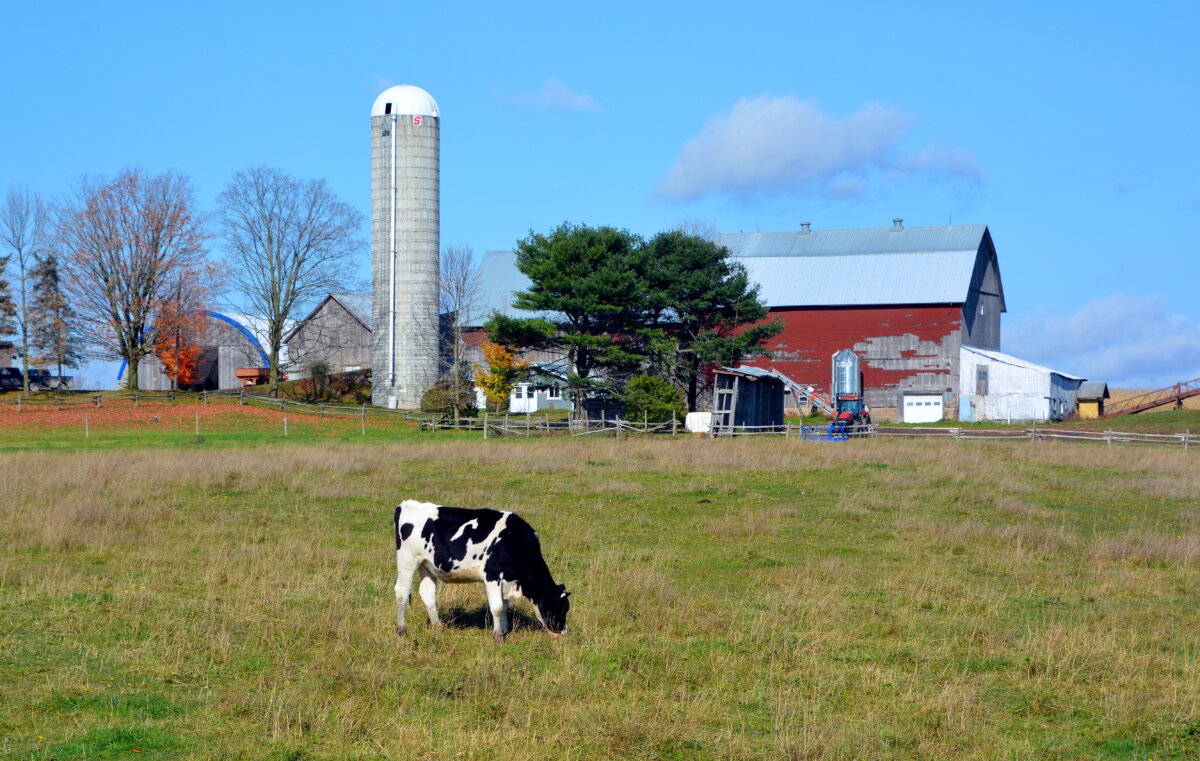
When I disputed our county’s reassessment last year and went through the appeal process, the assessor looked at our forested mountain acreage on the map and said, “Do you know how many houses you could put on that mountain?” This is the mentality among local government officials, and it rightly infuriates farmers like me.
Anyone looking at these figures understands the unfairness toward farmers—and businesses too, for that matter. What could be done to stop the unfairness?
I see two options. First would be to eliminate most government services, especially public education. Privatize it; let parents pay for education just as they pay for cars and cruises. Localities don’t need to have recreation departments and subsidized libraries. I could go on, but I’m sure I’ve alienated half the readership already, so I’ll stop. The point is this isn’t going to happen.
The second option is to bring it all into equilibrium by dropping the tax rates on commercial and farm properties while raising them substantially on residences. This is an equally hard row to hoe because residential people vote. This is the lopsided reality. Perhaps if open voting proceeds the way the liberals would like, I could walk in with a hundred chickens in tow, each scratching a voting card, to create some balance at the ballot box.
The current news cycle breast-beating about the troubled farmer—tariffs, exports, fertilizer costs, drought, disease—never seems to have time to address this most basic cultural economic malady: unfair taxation. As a group, farmers are overtaxed and underrepresented, which creates quite a conundrum to fixing gross unfairness.
I wish I had a quick and workable answer. But for today, perhaps it’s enough to let folks know how lopsided things are out here in farm country. Just thought you should know.
Views expressed in this article are the opinions of the author and do not necessarily reflect the views of The Epoch Times.
 Friends Read Free
Copy
Facebook
Tweet
Friends Read Free
Copy
Facebook
Tweet