
Commentary
The October 2025 cease-fire in the Gaza Strip may one day be remembered not as the end of a war, but as the start of a different experiment in conflict resolution. A year of relentless military strikes and unspeakable civilian loss has now given way to an equally audacious plan—not a treaty, but a blueprint.
In place of political compromise, we are seeing capital alignment. The Gaza Strip is not just being rebuilt; it is being wired into a geoeconomic corridor that could reframe how the world manages war.
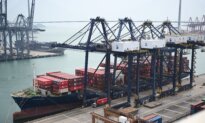
At the summit in Sharm el-Sheikh, Egypt, earlier in October, leaders from the United States, Israel, Egypt, and several Gulf states gathered with a rare unity of purpose. They sought to not simply keep the cease-fire intact, but to make it self-sustaining—by altering the stakes. And at the center of this strategy lies the India–Middle East–Europe Economic Corridor. Launched in 2023 as an alternative to the Chinese regime’s Belt and Road Initiative, the corridor’s ambitions had stalled with the return of violence in the region. But the logic never went away: to link Indian ports to Europe through the Gulf and Israel, threading through precisely the geography now being pacified.
Back in June, I had argued that the sporadic, surreal posts from President Donald Trump about a “Gaza Riviera” were not just rhetorical flair. They were signals: hints at a new geopolitical alignment in which the Gaza Strip’s position made it too strategic to remain a battleground. That framing was controversial then. But the documents surfacing about the proposed Gaza Reconstitution, Economic Acceleration, and Transformation Trust plan offer unmistakable confirmation. The plan envisions a demilitarized Gaza Strip governed not by militants or factions, but by a technocratic committee with international backing. The investment model is conditional: Funding flows only when land titles are formalized, weapons surrendered, and governance benchmarks met. At the legal core is a Jersey-style arbitration framework—offshore in design, global in ambition.
Trump’s 20-point Gaza Strip plan, released days ago, is built around this logic. It doesn’t just respond to war; it seeks to render future wars unprofitable. The first phase of reconstruction, estimated at $20 billion, targets water, power, and hospitals. But the longer horizon includes ports, rail, manufacturing zones, and smart cities, each designed to make the region indispensable to regional trade. A proposed “MBS Ring” highway would link the Gaza Strip to Saudi and Israeli logistics spines. There is rumored to be an Elon Musk electric vehicle assembly site. The Gulf states are pledging capital not out of charity, but calculation, hedging against Iranian influence, securing transit dominance, and aligning with U.S. strategic interests.
But for all its ambition, this is a fragile structure.
The financial scale alone is daunting. The Gaza Strip’s rebuild cost is estimated at more than $70 billion, up from $50 billion just months ago. Clearing rubble could take a decade. Humanitarian needs are immediate, but infrastructure timelines are long. Any disruption—political, security, or financial—could stall the flow. Conditionality clauses mean that even a single violation could freeze donor disbursements. The region has seen such cycles before.
More urgently, the security architecture remains unresolved. The Hamas terrorist group has been militarily degraded, its leadership decimated, and its territorial control largely erased. But it has not surrendered. While it has agreed to cede administrative control in some areas, it rejects full disarmament. Israel, for its part, insists that disarmament must be immediate and total. Proposals for weapons buy-backs or an international stabilization force are untested in this terrain. And the figure floated to oversee technocratic governance—former British Prime Minister Tony Blair—carries mixed credibility in the Arab world.
Meanwhile, external threats persist. Iran’s proxies could sabotage corridor nodes. Egypt’s internal dynamics remain volatile. And within the Gaza Strip, displaced communities may reject a reconstruction they had no role in shaping. The political legitimacy of imported governance is not assured, no matter how well-capitalized.
Yet the logic of speed is understandable. The longer this pause drags without delivery, the more likely it is to unravel. Trump and his Gulf partners are racing not just against time, but against memory, trying to replace images of rubble with ribbon cuttings before skepticism hardens into opposition.
If this strategy works, it may redefine how conflict zones are approached: not through lengthy negotiations or external troop deployments, but through capital structures, corridor logic, and economic indispensability. The tools of modern peace may no longer be found in Geneva, but in trade maps and investment contracts.
What is unfolding in the Gaza Strip is a wager on geoeconomics over geopolitics. And it is happening not because political actors suddenly trust one another, but because they now believe that money may succeed where diplomacy failed. Whether that bet holds, and whether it delivers dignity as well as development, will shape not only the Gaza Strip’s future, but perhaps also the future of how peace itself is brokered.
Views expressed in this article are the opinions of the author and do not necessarily reflect the views of The Epoch Times.
 Friends Read Free
Copy
Facebook
Tweet
Friends Read Free
Copy
Facebook
Tweet