
Commentary
Imagine if airlines couldn’t fly nonstop between the East and West coasts. Instead, all flights would have to stop in the middle of the country so customers could catch another airline’s plane for the last half of the trip. That would be a frustrating inconvenience, and it would make coast-to-coast trips costlier and far less common.
That’s just a hypothetical for airlines—but that’s exactly how the U.S. freight rail industry currently works.
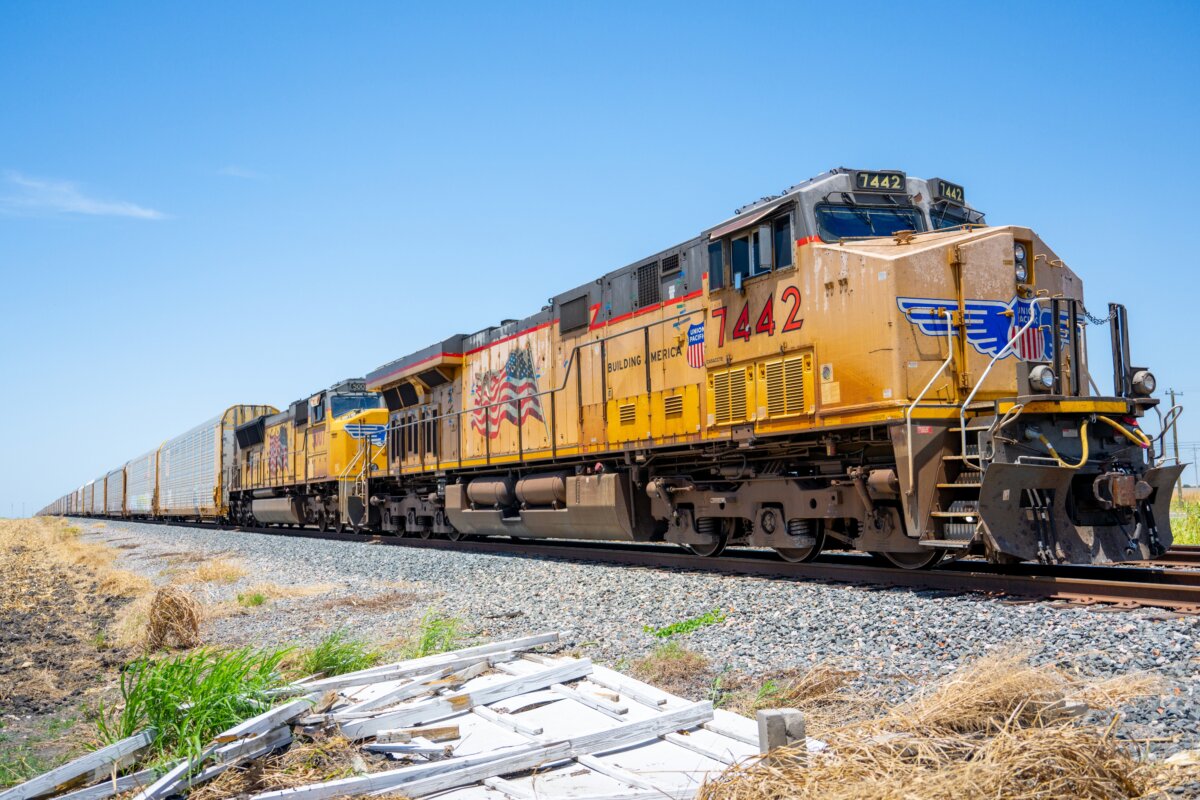
Today, no single company operates a transcontinental railroad across the United States.
Currently, when coast-to-coast rail freight reaches central hubs near the Mississippi River, the freight must pass from one rail operator to another. Congestion at those interchanges routinely adds a day or even multiple days to transit time.
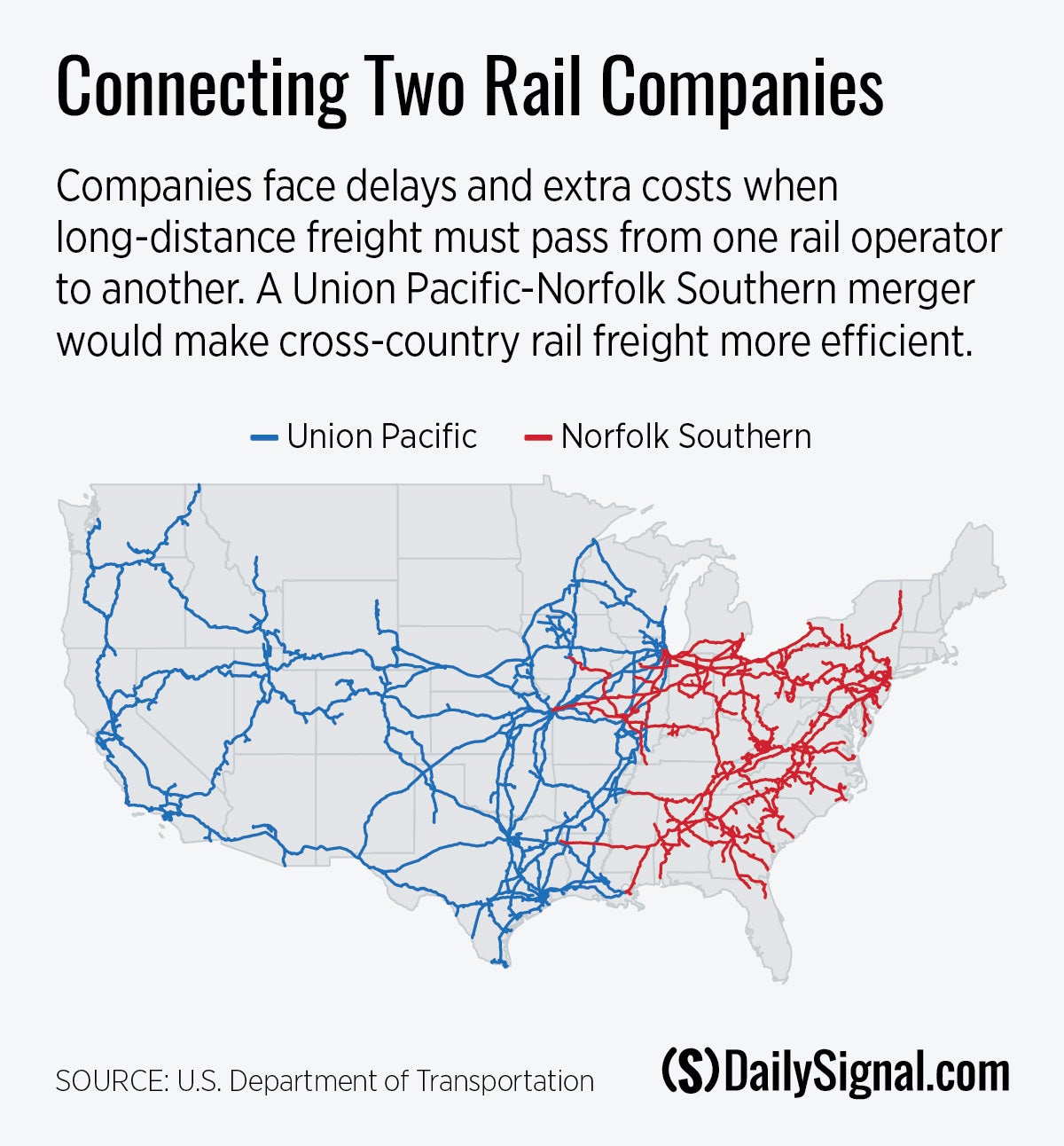
But that could change if U.S. regulators allow a proposed merger between the Union Pacific and Norfolk Southern railroads—a merger the Trump administration has signaled some support for.
Norfolk Southern is one of two dominant railroad companies in the eastern U.S., while Union Pacific is one of the dominant companies out west. (There are also two major north-to-south railroads in the central U.S. and many hundreds of regional and short line railroads.)
Now, federal regulators on the five-member Surface Transportation Board are set to consider the proposed merger of the two.
If regulators approve the consolidation, goods will flow more freely across the country, and U.S. industries will become more interconnected, cost-effective, and competitive.
Removing the barrier between east and west would give Americans better access to the abundant and diverse natural resources and industries spread across the land.
For example, manufacturers could move steel from Pennsylvania to Idaho without long, costly delays in Chicago.
Farmers could move grain from the Washington Palouse to Jacksonville, Florida, without the logistical and administrative hassle of dealing with two cross-country freight companies.
Exporters in the West would have easier access to the port of New York and New Jersey, and exporters in the East would have easier access to the port of Long Beach.
The proposed merger makes all the sense in the world.
There’s almost no geographic overlap in the areas where Union Pacific and Norfolk Southern currently operate. Because the two companies don’t compete in the same region, their merger would bring greater interconnection of the United States’ freight rail lines without reducing the number of rail companies competing in the west or in the east.
Union Pacific and Norfolk Southern do, however, compete against Canada’s transcontinental railroad companies, which carry products between the Atlantic and Pacific Coasts and into the central United States.
Union Pacific and Norfolk Southern also compete against trucks, which have different advantages and disadvantages for moving freight. Sending freight by truck is faster and offers more flexibility, especially over short distances, because of the United States’ highly interconnected road system. But moving freight by rail tends to be more cost-effective the farther it travels—except when it’s forced to pass through a cumbersome interchange along the way.
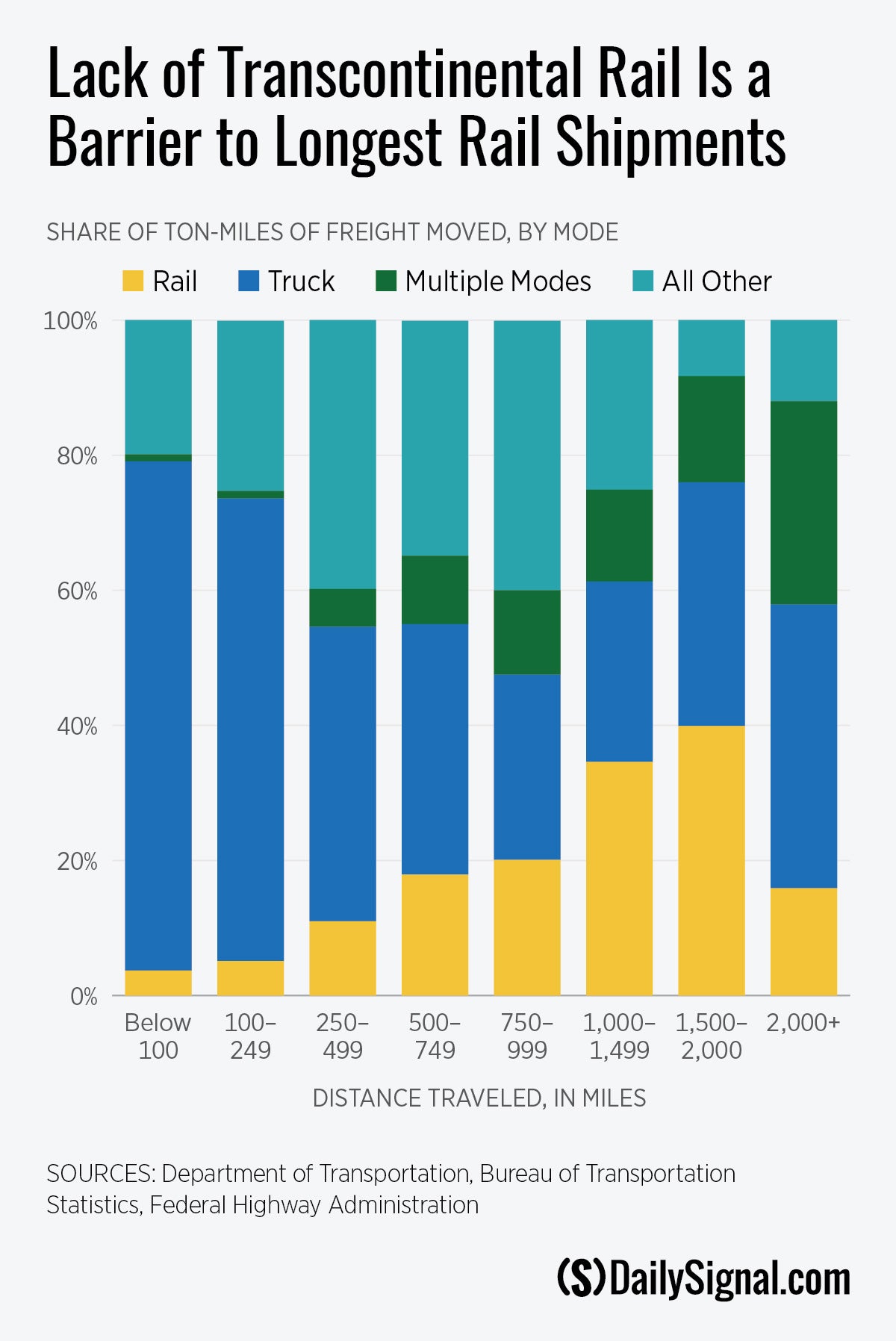
Trucks dominate short-distance travel, accounting for 75.4 percent (by ton-miles) of freight that travels less than 100 miles, compared with just 3.7 percent for rail. But for freight traveling 1,000 to 2,000 miles, rail accounts for a higher share of ton-miles than trucks: 36.2 percent compared with 29.6 percent.
However, rail’s advantages evaporate for the longest trips, as nearly all rail trips of 2,000 or more miles must cross an interchange point. As a result, rail accounts for just 15.9 percent of ton-miles of freight traveling more than 2,000 miles, compared with 42 percent carried by trucks. (An additional 30.1 percent travels by multiple modes.)
A united transcontinental railroad company would increase the volume of cross-country freight, resulting in widespread benefits.
A freer flow of goods across the country would help bring down the price of American-made goods for both domestic and international consumers. Retirement accounts would get a boost as stocks in railroad companies, manufacturers, and other industries would jump.
A transcontinental railroad company would also positively affect the United States’ roadways by leading the trucking industry to shift toward shorter hauls, where it has a natural advantage. A shift away from long-haul trucking would help reduce congestion and lead to safer travel for highway drivers.
Reducing the ton-miles of freight carried on U.S. highways would also reduce wear and tear on roads, lower maintenance costs, strengthen the highway trust fund, and reduce pressure for higher gas and income taxes.
Regulators shouldn’t stand in the way of a deal that would benefit American workers and consumers. Instead, they should allow barriers to be torn down and let builders and innovators grow and flourish. A more perfect union should start with the Union Pacific Transcontinental Railroad.
Reprinted by permission from The Daily Signal, a publication of The Heritage Foundation.
Views expressed in this article are the opinions of the author and do not necessarily reflect the views of The Epoch Times.
 Friends Read Free
Copy
Facebook
Tweet
Friends Read Free
Copy
Facebook
Tweet