Commentary
Another dog died on the farm this week.
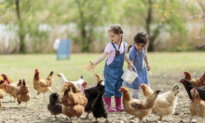
Juniper was my brother’s German shepherd. We stood around the grave crying, saying our final thoughts and prayers, and I found myself wondering whether farm life exposes my children to too much death.
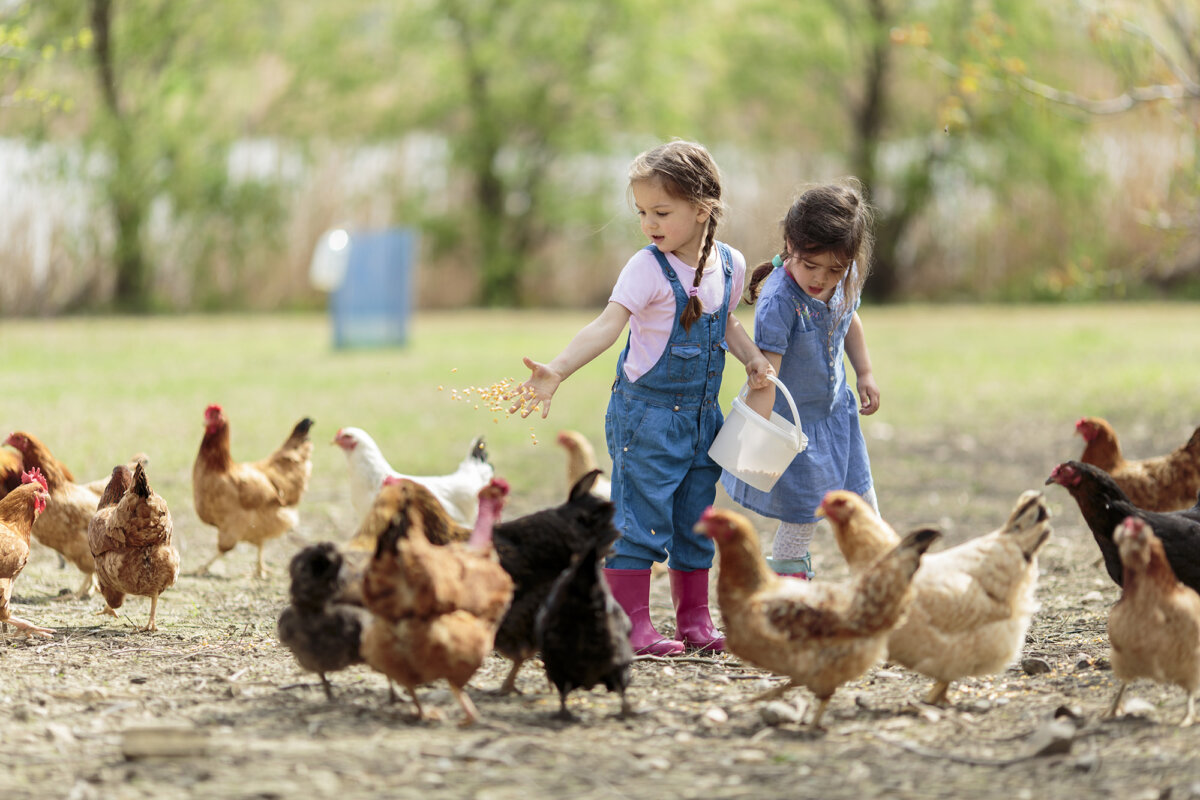
There is a lot of death here. Animals die during birth. Sometimes, mothers reject their babies. Sometimes, predators get through a fence. Sometimes, an animal gets sick and cannot be saved. Beloved dogs, cats, and horses eventually die. And then there are the animals we deliberately raise for food.
Earlier this year, my daughter went to Home Depot to buy plants for her garden. She had spent the day cleaning it up, preparing the soil, and imagining what she would grow. When we got home, we discovered that Juniper had killed her cat.
She was devastated.
Then, after she had calmed down, she said, “Let’s go to the greenhouse and pick out a tree to plant over her.”
So we did. We dug a hole and planted the tree when we buried the cat.
When we buried Juniper, we planted another tree over her grave. It was a genetically identical cutting from the same fig tree that had produced the tree planted over the cat. Juniper and the cat she killed will both feed fig trees that are genetically identical. In time, those fig trees will feed our family.
My children understand that death should not be wasted. The microbiology of a body should feed something else. What dies should return to the living world whenever possible.
The morning after we buried Juniper, my husband, Elias, got up early and loaded two cattle—Texas and T-Bone—along with four pigs into the trailer. He drove them to the processor.
When he came home, he told me that he had spent part of the drive thinking about why he had wept for a dog the day before, but felt only a tinge of something for the animals in the trailer that he was deliberately hauling to their deaths.
It was not that he did not know them.
He remembered when Texas was born. Texas was a Hereford bull calf, and we had high hopes for him. We had purchased his mother, and because he was unrelated to the other animals in our herd, we thought we might keep him as a breeding bull.
But Texas remained small and never seemed terribly interested in being a bull. The girls would be in heat right in front of him. Younger bull calves would be climbing all over them. Even the other cows would be jumping on them, while Texas sat nearby chewing his cud.
On a farm, a bull who is not doing his job costs money. We had known Texas and cared for him for two and a half years, but eventually the decision had to be made.
I felt much the same as Elias. Whenever we harvest animals, I pray over them and give thanks. There is always a little tightening somewhere in my body when we separate them from the herd and load them into the trailer. But it is not the same feeling as losing an animal that has lived as a companion.
Years ago, I spoke with Will Harris of White Oak Pastures about the difference between having a relationship with an individual animal and having a relationship with a herd.
When you have an individual relationship with an animal, you are responsible to that animal. When you have a herd relationship, you are responsible to the whole. Those responsibilities are not always the same.
Keeping Texas because we liked him would have meant supporting an animal that was not moving the genetics of the herd forward. A farmer cannot keep every calf, every piglet, or every aging animal simply because it has a name or because saying goodbye hurts. If we did, we would eventually have too many animals for the grass, the water, the land, and the farmer to support. Sentimentality toward one animal can become neglect of all the others.
That sounds harsh until you understand that nature is also constantly choosing for the health of the whole. The difference is that on a farm, the human being has accepted some responsibility for making those choices.
But what does watching all of this do to our children?
Does it make them resilient, or does it harden them? Does it teach them to respect life, or does repeated death eventually make death seem ordinary? I do not think those questions have one easy answer.
I was raised in a vegan family, so my relationship with death was limited. I was practically grown before I experienced the death of someone close to me. Nobody very close to me died when I was young. We had a few animals die, but mostly of old age—not after being hit by a car or through some other traumatic event.
The level of exposure to death my children have far exceeds what I experienced.
There is surprisingly little research that follows farm children over time and examines how repeated animal deaths affect them. We do know that children can form profound attachments to animals.
A large British study of more than 6,000 children found that the death of a pet was associated with more emotional and behavioral symptoms later in childhood, even after researchers accounted for other hardships. A pet’s death is not pretend grief simply because the one who died was not human.
Research involving children who raise livestock for 4-H has also found that they do real emotional work. They must reconcile caring for an animal every day with knowing that the animal may eventually be sold for slaughter. Some learn responsibility and gratitude. Others learn to distance themselves from their feelings. Much depends on what the adults around them teach them to do with their sadness.
Maybe that is the real issue. It is not only how much death children see. It is whether they are allowed to feel it.
If we tell children, “It was only a dog,” we teach them to distrust their love. If we laugh when they cry over a market animal, we may not be making them strong. We may simply be teaching them to hide tenderness from us. But if every death becomes a catastrophe from which they must be protected, we teach them something untrue about life.
Standing around Juniper’s grave, nobody hurried my children through their grief. We cried. We prayed. We remembered her. My daughter chose a tree for the cat she had lost, and together we planted it over her grave. The next morning, the work of the farm continued.
That does not look like desensitization to me. Desensitization would look like indifference to suffering, amusement at fear, or carelessness with the lives entrusted to us. Feeling differently about Juniper than we felt about Texas does not mean Texas’s life had no value. It means those relationships carried different promises.
Juniper’s purpose in our family was companionship. Texas’s purpose was first to become a breeding bull and, when that did not work out, to nourish people. We owed both animals food, water, safety, humane treatment, and protection from unnecessary suffering. But we did not owe them identical endings.
I have sometimes wondered whether veganism, as a whole, can be a trauma response to a poor relationship with death. I am not talking about people who choose a plant-based diet because of a health condition or because they believe that diet supports their well-being. I mean people who are vegan “for the animals,” as though refusing to acknowledge death can somehow make them separate from it.
Some people seem to have an unhealthy relationship with death. They treat it as an intolerable moral failure rather than one of the conditions of life. But death is not something we can escape. Life and death are two sides of the same coin.
Modern life allows people to eat meat without ever seeing an animal alive, throw food away without considering what died to produce it, and encounter death mostly through screens. Perhaps my children see too much death. But most children may see too little of it—and too little of the responsibility that should surround it.
My children know that hamburgers do not begin in plastic packages. They know that keeping animals alive requires daily labor, and that death can come even after we have done everything we know to do. They know there is a difference between killing carelessly and harvesting with gratitude. They know that love does not always grant us the power to prevent death.
They also know that a body can become part of another life. A cat can feed a fig tree. A dog can feed another fig tree. Those trees can eventually feed us. Death does not disappear, but it can be received, transformed, and returned to the living world.
Still, I do not want them to become hard. I want the twinge to remain. I want them to be capable of making necessary decisions without pretending those decisions cost nothing. I want them to understand that grief and responsibility can occupy the same body at the same time.
I still question how much death my children are exposed to. I still worry.
But I suppose that is what it is to be a mother.
Maybe the question is not whether farm life exposes children to too much death. Maybe the question is what kind of people we are teaching them to become in its presence.
Death will come into every child’s life eventually. On a farm, it simply does not hide. Our job is not to teach children never to grieve. It is to show them how to grieve without abandoning their responsibilities, how to carry responsibility without losing their tenderness, and how to understand that life and death are always part of the same living system.
Views expressed in this article are the opinions of the author and do not necessarily reflect the views of The Epoch Times.
 Friends Read Free
Copy
Facebook
Tweet
Friends Read Free
Copy
Facebook
Tweet