
Commentary
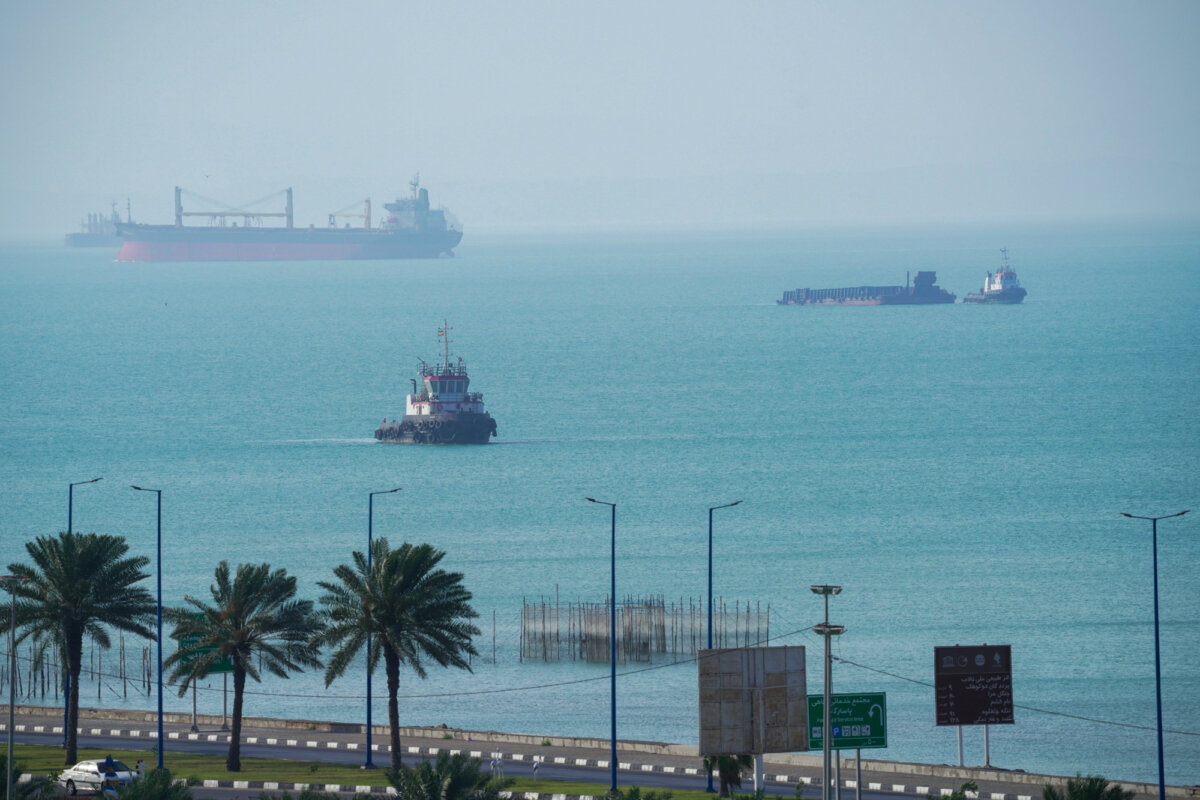
President Donald Trump and U.S. Central Command (CENTCOM) have announced the start of Project Freedom, a joint maritime operation to protect shipping transiting the Strait of Hormuz.
Their announcements were immediately followed by a host of “experts” claiming it was an impossible task or that the announcement was intended purely to make shipping “feel safe.” They based their opinions on the experiences of the late 1980’s tanker war when the U.S. Navy had twice as many ships.
Iran has exploited Western fears by stating that it can destroy any attempt to transit the strait without its permission. Tehran even issued a false claim that it had struck a U.S. Navy frigate near the strait. However, the reality is that the United States has the assets and expertise to protect shipping from Iranian attack.
In today’s world of multiple hi-tech surveillance platforms, broadband command-and-control systems, and joint operations, convoy protection in restricted waters is no longer determined solely by the number of ships. It isn’t a simple operation, but it is doable if Central Command applies the assets and rules of engagement (ROE) required for success.
In the 1980s, the U.S. Navy lacked the continuous 24/7 surveillance support and broadband communications and data links endemic to joint operations today. Ships could only react to what their own sensors and, when available, supporting airborne early warning and control system (AWACS) aircraft could detect. More critically, when confronted by a potential threat, their ROE required them to seek permission from Central Command headquarters in Tampa to engage. The USS Stark (FFG-31) suffered a cruise missile hit while requesting such permission.
As a component of Operation Epic Fury, Project Freedom’s assigned forces enjoy robust ROE that enables them to engage threats as they are identified. There is no need to seek permission from a watchstander 5,000 miles away. Time is life when the enemy draws near.
Today’s Arleigh Burke-class of guided missile destroyers (DDGs) in theater enjoy the surveillance and air support that their 1987–1988 predecessors lacked. Central Command enjoys air superiority over the Persian Gulf and the Iranian Coast. Unarmed and armed drones can and will surveil the likely Iranian drone, fast attack craft, and missile launch points posing a threat to them and the shipping they are protecting. A-10s and other strike platforms in the air can be called in to make the launch crew’s mission a suicidal one. To put it in a warfare context, CENTCOM today is focused on engaging the archers, while the Navy’s ships of the Tanker Wars era had to catch “the arrows,” a far more difficult task.
Since perfection doesn’t exist in warfare, the ship’s protectors must be ready to engage drones and missiles. The Arleigh Burkes can engage fast attack craft, ballistic, and cruise missiles. Of the last two, cruise missiles have a better record of success. To engage drones and fast attack craft, the on-station Amphibious Ready Group has armed helicopters and F-35s to engage them before they reach their targets. It may be necessary to embark anti-drone weapons- and Stinger-equipped Marine detachments on some ships to reinforce the convoy’s final layer of counter-drone and fast attack boat defense.
Naval mines may pose a problem, but modern mine countermeasure sensors and helicopters equipped with laser systems are optimal for detecting mines in the Persian Gulf’s shallow waters. However, as with the other threats facing ships in the Strait of Hormuz, discovering and sinking the minelayers will inhibit Iran’s mine operations and, more importantly, identify likely minefields in time to destroy, neutralize, or avoid them.
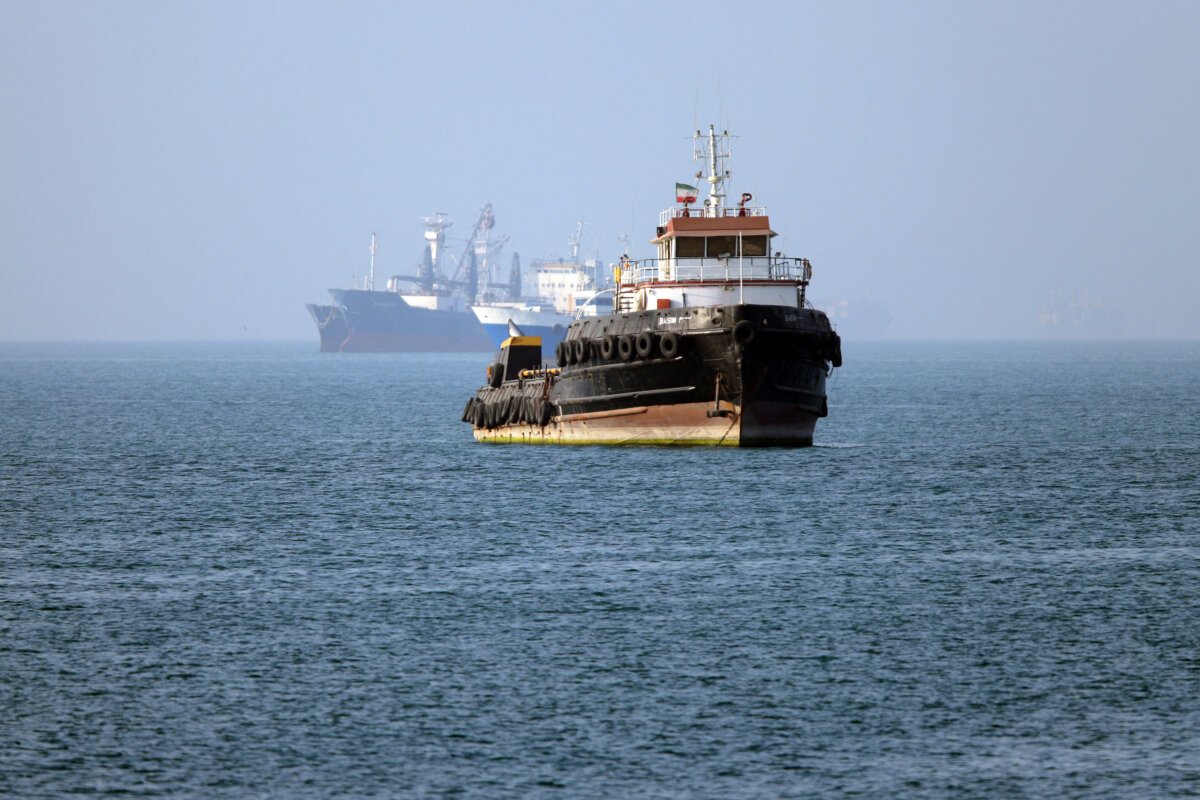
There is no single method for shipping protection. Convoying is the most common tactic, but in constricted waters with a comparatively short danger area, it is usually better to maintain a “Cordon Sanitaire” through which shipping will transit safely. That is particularly the case where naval mines might be a threat. It ensures a steady traffic through the “danger zone.” In this instance, it probably will feature the following:
- Mine Countermeasures units to ensure the “Cordon Sanitaire” is mine- and mini-sub-free.
- One to two Arleigh Burke class DDGs at a time to protect the cordon from air, missile, drone, and mini-sub attack.
- Continuous armed and unarmed unmanned aerial vehicle (UAV) surveillance of all likely cruise missile, drone, and fast attack boat launch points.
- 24/7 AWACS (E-2, E-3) surveillance of the entire area.
- Patrol the Cordon with A-10s, attack helicopters, and other strike aircraft with ROE that allow attacks against identified threats to the cordon.
While a Cordon Sanitaire appears defensive in nature, it can and should be offensive, with its air and UAV elements destroying any threats positioned to threaten it. The cordon must be protected 24/7 to prevent Iranian minelaying, positioning of mini-subs, or staging of assets to strike the cordon’s protective forces or the first ships to enter it.
Protecting shipping is never an easy task. The threats enjoy the initiative, much like insurgents, and denying them that advantage requires integrating continuous surveillance, high-speed communications, command and data flows, and ROE to ensure rapid responses to threats before they act. It is a complex operation that requires highly trained and well-prepared forces in order for it to be executed successfully.
However, despite the naysayers’ commentary, U.S. forces in the Persian Gulf have so far demonstrated that they can achieve that mission. Iran will launch attacks and may inflict some visible damage, but their days of blocking the strait should soon be over.
Views expressed in this article are the opinions of the author and do not necessarily reflect the views of The Epoch Times.
 Friends Read Free
Copy
Facebook
Tweet
Friends Read Free
Copy
Facebook
Tweet