
Commentary
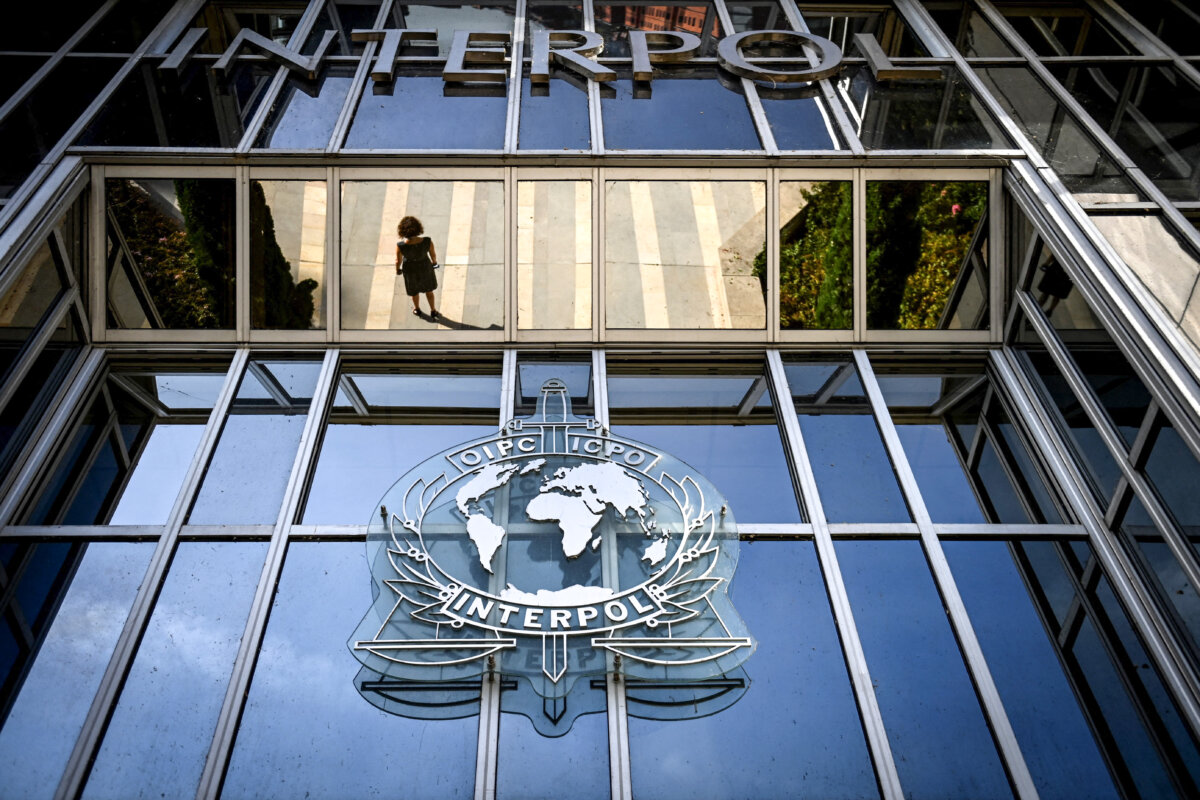
The growing influence of the Chinese Communist Party (CCP) over Interpol and Hong Kong’s role in hosting its General Assembly raise serious concerns that the organization is being used to target dissidents and legitimize political repression worldwide.
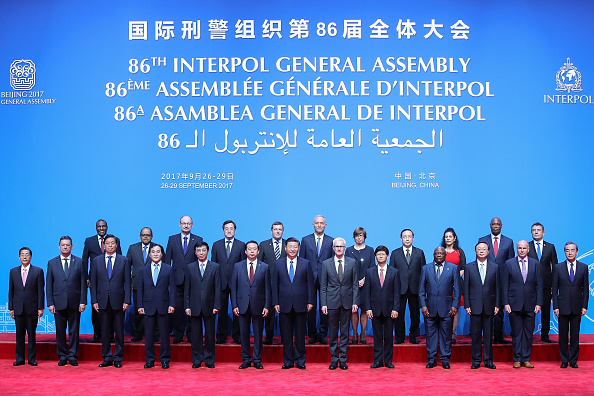
Hong Kong is set to host the 94th Interpol General Assembly in 2026. It will be the first time the General Assembly has been held in Hong Kong and the third time in China. The Assembly was previously hosted in Beijing in 1995 and 2017.
Ben Keith, a barrister at 5 St. Andrew’s Hill Chambers in London who specializes in Red Notices, said, “You’ve got one of the most repressive regimes and one of the world’s worst abusers of Red Notices holding the General Assembly.”
Red Notices are Interpol’s mechanism for requesting that member countries locate and provisionally arrest individuals for extradition or similar legal action.
In 2024, Interpol published 15,548 Red Notices and Diffusions. A total of 2,462 alerts were rejected, including 305 that violated Interpol’s Constitution, which requires respect for the U.N. Universal Declaration of Human Rights.
In 2025, total rejections rose to 2,550, with 558 involving human rights concerns. These rising numbers highlight growing concerns about the misuse of Interpol’s system for political purposes.
This occurs when a government files a request with Interpol claiming that someone is wanted for ordinary crimes, such as fraud, corruption, or terrorism, when the real motive is political. If approved, the individual can be detained at any border crossing in any of the 196 member states. Even if the notice is eventually canceled, they may have already been arrested, had their travel disrupted, lost employment, or faced deportation to the requesting country.
Russia and China are consistently cited as leading abusers of this process. Common targets include exiled opposition politicians, journalists who fled persecution, religious minorities such as Uyghurs and Falun Gong practitioners, business figures caught in political disputes, and ethnic diaspora activists.
Interpol’s own rules prohibit notices of a “political, military, religious or racial character,” and it rejects hundreds annually on those grounds. Critics argue that screening is insufficient, Interpol lacks the investigative capacity to verify the true motives behind every request, and even a temporarily active fraudulent notice can cause serious harm before it is removed.
In January, Hong Kong Commissioner of Police Joe Chow Yat-ming said that the event was an opportunity to “showcase positive stories about China, Hong Kong, and the [Hong Kong Police Force].” However, Hong Kong, now operating under the Beijing-imposed National Security Law, is one of the most aggressive violators of international human rights law, particularly in its arrests of protesters and dissidents.
From June 9, 2019, to March 2024, a total of 10,279 people were arrested in connection with protests, with 2,910 prosecuted and 1,475 convicted, according to government figures cited by Human Rights Watch.
The National Security Law took effect on June 30, 2020, and was expanded by the Safeguarding National Security Ordinance in March 2024. As of June 23, 2025, Hong Kong Chief Executive John Lee confirmed that 332 individuals had been arrested under security laws since 2020, with 165 convictions.
Conviction rates under the law are exceptionally high. Amnesty International reported in June 2025 that 91 percent of those charged under national security legislation since 2020 had been convicted. Bail was denied in nearly 90 percent of cases where charges were brought, with those denied bail spending an average of 11 months in pretrial detention.
A Hong Kong court sentenced pro-democracy media tycoon Jimmy Lai to 20 years in prison under the National Security Law on Feb. 9, concluding the city’s most high-profile national security prosecution after nearly five years.
Hong Kong has also pursued extraterritorial measures against activists abroad. In December 2024, the Hong Kong Police Force announced new arrest warrants and bounties of more than $127,000 each for six democracy activists living abroad and revoked the passports of seven activists, some of whom reside in the United States. In July 2025, the European Union strongly condemned extraterritorial arrest warrants issued by Hong Kong authorities targeting 15 pro-democracy activists, including, for the first time, an EU citizen.
The U.S. State Department in July 2025 characterized these actions in explicit terms: “The extraterritorial targeting of Hong Kongers who are exercising their fundamental freedoms is a form of transnational repression.”
Beyond formal arrest warrants, Hong Kong authorities have intensified harassment of the families of wanted activists, including the April 2025 arrest of the father of U.S.-based activist Anna Kwok, the first prosecution of a family member of an exiled dissident.
On the Interpol dimension, a 10-month investigation by the International Consortium of Investigative Journalists found that Chinese and Hong Kong authorities have weaponized Interpol Red Notices to target regime critics, prominent businesspeople, and members of persecuted religious minorities who have sought refuge overseas.
In an ironic twist, Meng Hongwei, who served as president of Interpol from 2016 to 2018, purportedly resigned in absentia in October 2018 after being secretly detained and accused by Chinese anti-corruption authorities of taking bribes. On Jan. 21, 2020, he was sentenced to 13.5 years in prison.
His election in 2016 was viewed as a success for China’s ambitions to gain influence within international organizations, and dissidents feared he would be used to track exiled opponents. Instead, the last communication from him consisted of two text messages sent on Sept. 25, 2018, from Beijing. The first read “wait for my call,” followed four minutes later by a knife emoji, apparently signaling danger.
His wife, Grace Meng, who was granted asylum in France, later argued that Interpol’s passive acceptance of his forced resignation under duress had encouraged authoritarian behavior: “Can someone who has been forcibly disappeared write a resignation letter of their own free will? Can a police organization turn a blind eye to a typical criminal offense like this?”
Hosting the General Assembly in Hong Kong—a jurisdiction that aggressively pursues dissidents abroad and has issued overseas arrest warrants for activists in exile—signals to authoritarian governments that Interpol is an acceptable instrument of political enforcement.
Views expressed in this article are the opinions of the author and do not necessarily reflect the views of The Epoch Times.
 Friends Read Free
Copy
Facebook
Tweet
Friends Read Free
Copy
Facebook
Tweet