
Commentary
As conflict in the Middle East fractures energy corridors and upends global trade, the Chinese Communist Party (CCP) is reverting to hoarding, a basic survival mechanism. Mirroring its behavior during the COVID-19 pandemic and its policy of denial for rare-earth elements in recent trade spats, Beijing is aggressively stockpiling essentials, slamming the door on exports, and turning inward.
This isn’t merely a reaction to market volatility; it’s a recognition that the global order the CCP exploited for decades is no longer as accessible. Beijing’s shift reveals a regime that is both ruthlessly strategic and profoundly fragile.
Energy Paranoia Is Realistic
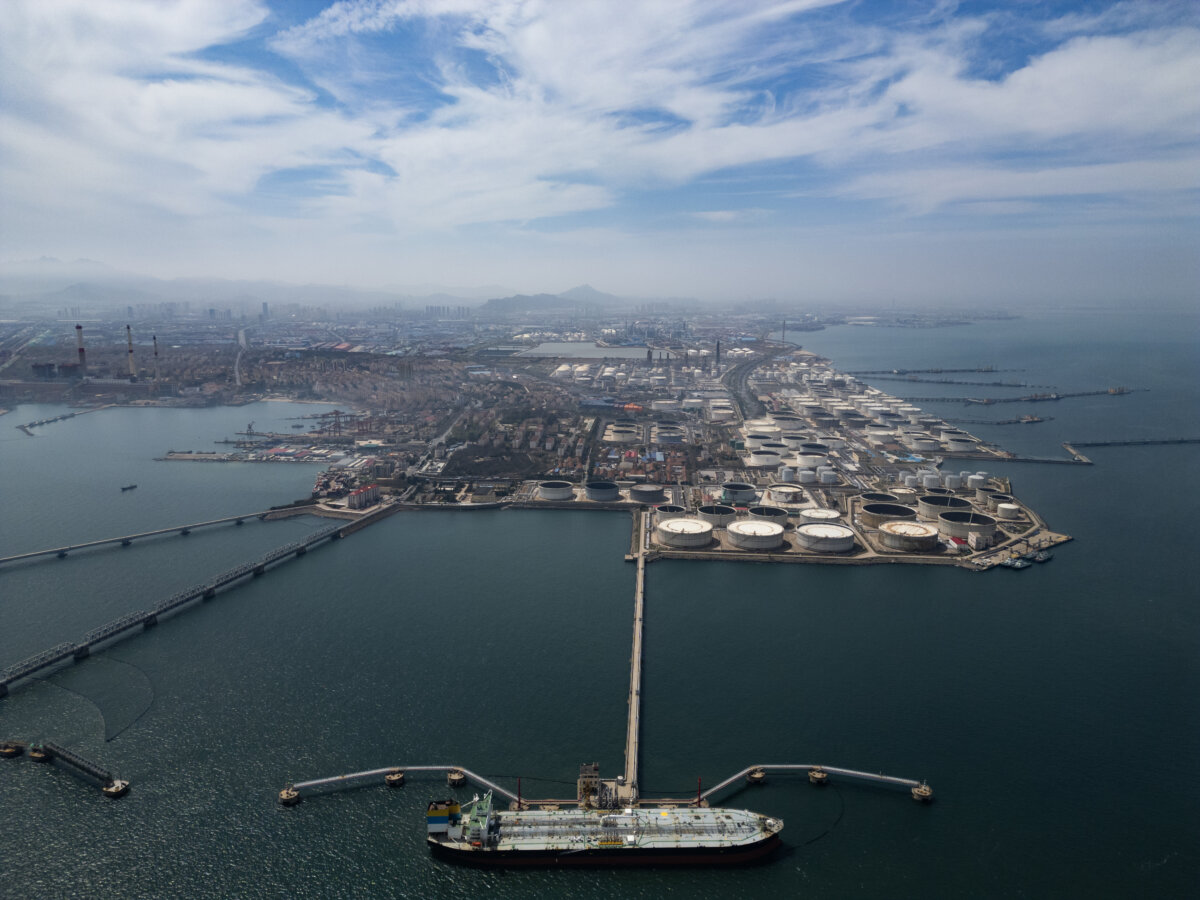
Chinese authorities see that the days of easy access to energy from Latin America to the Middle East are over. With the Strait of Hormuz under constant threat and controlled by the U.S. Navy, and oil sales inhibited by U.S. sanctions, Beijing is attempting to insulate itself from the imminent shortages that seem likely.
The regime has accelerated its strategic crude buildup, diverting more than 1.7 million barrels per day into its reserves in March alone. This aggressive accumulation has pushed total reserves to an estimated 1.2 billion barrels, providing a significant cushion against a potential maritime blockade. To further protect the home front, Beijing has clamped down on the export of refined fuels, effectively choosing domestic stability over international trade obligations.
Historically, Beijing was the destination for about 90 percent of Iran’s oil exports. Now, facing U.S. naval presence and a chaotic Middle East, the CCP is scrambling to buy, reroute, clandestinely buy, and store every drop of oil it can find, much of it coming from Russia. China’s shadow tankers are very busy these days.
Fertilizer Nationalism
Although oil keeps the machines running, fertilizer keeps the people from revolting. The Middle East is the heart of the global nitrogen and phosphate trade. With that heart failing, China has moved from being a global supplier to a resource hoarder.
Beijing has effectively banned the export of critical fertilizers, including phosphates and nitrogen blends, to prioritize its own soil. This has caused Chinese fertilizer availability in global markets to plummet by up to 40 million tons—a staggering 75 percent reduction. Despite being on track to produce 76 million tons of urea this year, the regime has issued zero new export permits for 2026, creating a massive supply-side standoff.
The CCP’s rationale is that food security comes first. By tightening its grip on these agricultural lifelines, Beijing is essentially exporting inflation to the rest of the world.
China’s Food Fragility Not Going Away
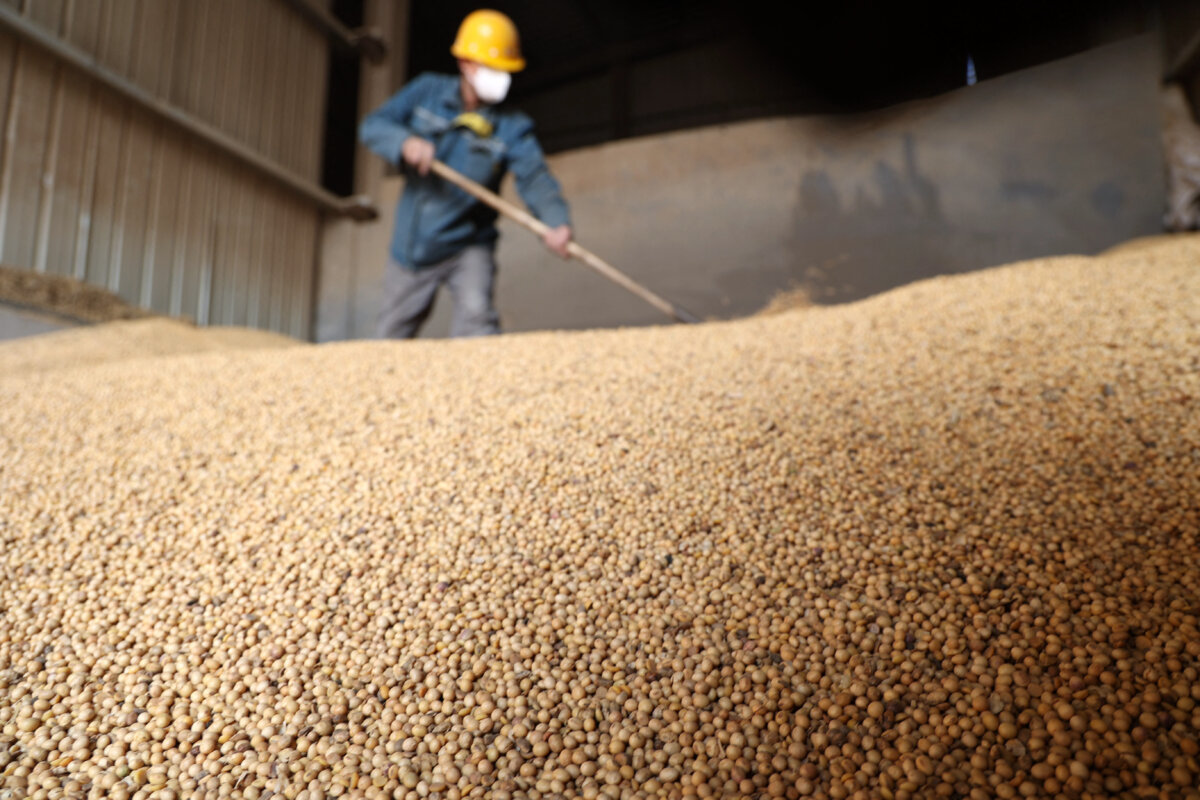
China’s dependence on global calories, especially for livestock feed, is a structural vulnerability. Hoarding can temporarily delay the consequences of a global food shortage, but it will not resolve the fundamental problem of dependence on foreign food sources.
For example, even with its efforts to increase domestic food production, the regime remains reliant on the United States and Brazil for soybeans to sustain its massive livestock industry. What’s more, Chinese food production is directly tied to natural gas and other energy inputs, which are heavily dependent on Middle Eastern sources.
Those sources are now less reliable due to regional instability.
Finally, China’s food fragility is exacerbated by systemic inefficiencies, making it one of the world’s largest food wasters—a liability that can turn from a nuisance into a trigger of social upheaval during shortages.
Geopolitical, Trade Realignments, Decoupling
Beijing’s hoarding is forcing nations to rethink supply chains and other uncomfortable decisions that may lead to decoupling from China. China is doubling down on Siberian energy to bypass the Middle East, cementing a “no-limits” partnership with Russia born of mutual desperation. India is facing its own fertilizer shortages and is now in direct competition with China for the same dwindling inputs, creating a new flashpoint between the two Asian giants. Meanwhile, the United States and Europe are responding by scrambling to secure alternative supply chains.
Recognizing that relying on a hoarding hegemon is a recipe for economic suicide, Western powers are increasingly focused on achieving strategic autonomy in raw materials and agricultural inputs.
Preparing for the Storm?
China is not just buying time; it is buying a future in which it no longer needs the West. By stockpiling fuel, restricting fertilizer, and securing food inputs, the CCP is preparing for a world of “resource realism.”
In the midst of a more forward-leaning U.S. foreign policy, Beijing is getting the message loud and clear. The era of China’s exploitation of globalization is over. For the CCP, in what is becoming a very stormy world, the focus is on domestic survival as key resources become less available.
Beijing is preparing for that storm.
Is the rest of the world?
Views expressed in this article are the opinions of the author and do not necessarily reflect the views of The Epoch Times.
 Friends Read Free
Copy
Facebook
Tweet
Friends Read Free
Copy
Facebook
Tweet