
Commentary
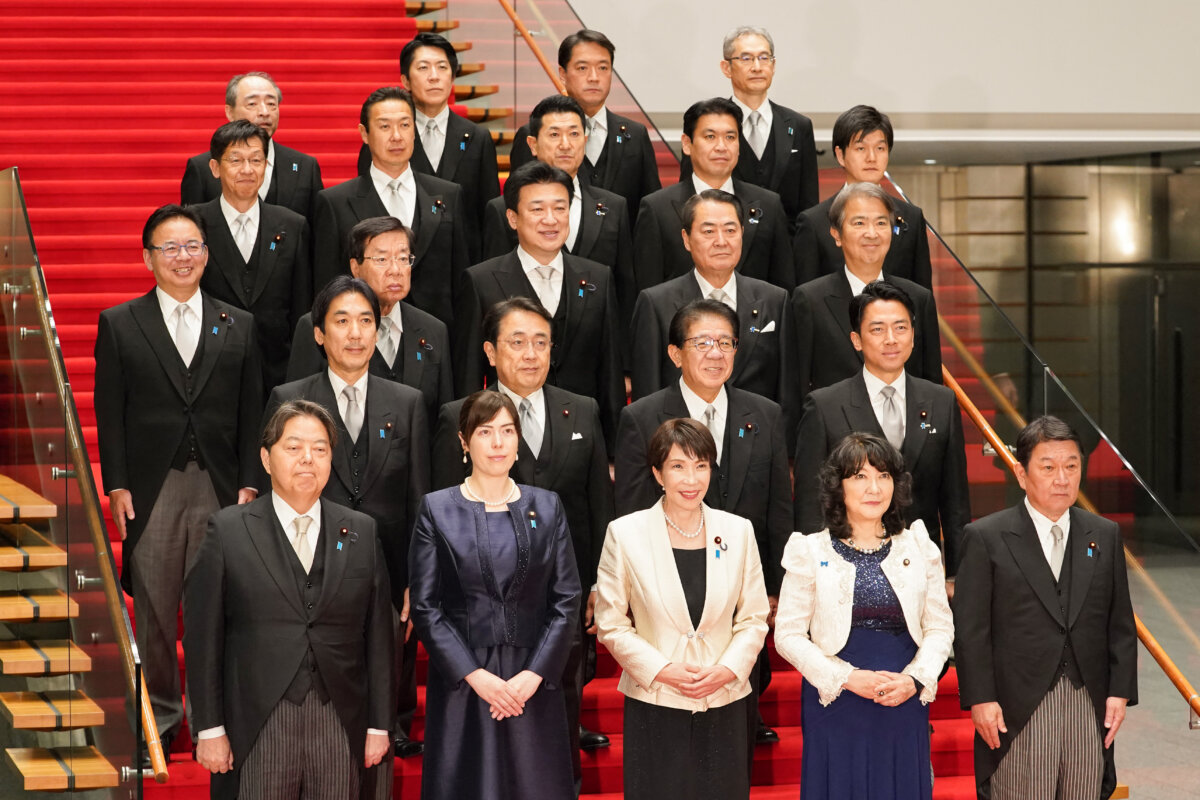
Since the National Security treaty was signed in 1951, Japan has depended on the United States for its national security. But that has been changing over the past 12 years, and that change accelerated on Feb. 8, 2026, when voters went to the polls in a snap election called by Japan’s first female prime minister, Sanae Takaichi. Long story short, the snap election delivered a historic landslide, giving her Liberal Democratic Party (LDP) its strongest majority in more than 70 years. This was no accident. After the decades-long LDP–Komeito partnership collapsed in late 2025, she cobbled together a more ideologically aligned alliance with Japan’s Innovation Party.
This realignment liberates Japan’s foreign policy from pacifist gridlock, transforming the 352-seat supermajority from a domestic victory into a strategic mandate to accelerate Japan’s defense buildup and to work on building a new regional coalition capable of countering China, as opposed to counting on the United States. This is very good news for U.S. citizens.
For decades, the United States, as the world’s policeman, enabled Japan to indulge in pacifistic tendencies, keeping its military spending at less than 1 percent of gross domestic product (GDP). However, China’s relentless aggression has forced a national awakening, and that spending is expected to reach its 2 percent GDP defense target ahead of schedule, resulting in a record fiscal year 2026 budget of 9.04 trillion yen (about $58 billion).
This record budget is a direct response to Beijing’s increasingly aggressive actions that threaten Japan’s core interests. That Takaichi takes the China threat seriously was demonstrated on the Nov. 7, 2025, session of Japan’s National Diet Budget Committee, during which she posited a hypothetical Chinese military action against Taiwan.
“If warships are used accompanied by the exercise of military force, then however you look at it, it could be a situation posing an existential threat to the country,” she said.
This blunt assessment, citing Chinese Naval forces attacking Taiwan as an existential threat to Japan, provoked fierce backlash from Beijing, including demands for a retraction, accusations of interference, and calls for retaliatory measures such as seafood import bans. Yet Takaichi did not back down. Her unwillingness to back down is indicative of Japan’s growing frustration over China’s aggressive and hostile actions.
These actions have included flooding the territorial waters of Japan with Chinese coast guard cutters, unilaterally declaring an air defense identification zone over Japan’s territory and then moving into to claim the resources, and numerous cases of economic coercion, including a recent threat to reestablish a ban on selling rare-earth elements and dual-use technology (civilian technology that can also be used for military purposes) to Japan.
But Japan is not alone. More than a dozen nations across the Indo-Pacific have suffered from China’s campaign to dominate exclusive economic zones (EEZ) and harass its neighbors. The Australian Navy has been subjected to intimidation, as well as enduring economic coercion. After calling for an independent COVID-19 origins inquiry in 2020, China imposed punitive tariffs on barley (more than 80 percent) and wine (more than 100 percent) and effectively banned coal, cotton, lobster, and other exports.
The Philippines has faced even more direct bullying in the South China Sea. Chinese vessels have repeatedly used water cannons, ramming, and blocking tactics against Filipino resupply missions at Second Thomas Shoal and other features. These actions included water cannon attacks that injured personnel and damaged vessels: clear violations of international maritime law.
Vietnam, Indonesia, Malaysia, and others report similar EEZ incursions, and Taiwan endures near-constant military drills and grey-zone pressure. Collectively, these nations have strong reasons to push back.
Takaichi is strongly positioned to lead those who want to push back. As head of the region’s most advanced and technologically powerful economy, she brings proven coalition-building skills. Her swift formation of the LDP–Japan Innovation Party alliance after the Komeito split demonstrated her ability to bridge differences and create stable partnerships under pressure. This domestic success translates naturally to the international stage, where she has already emphasized the importance of organizations such as the Quad and the Association of Southeast Asian Nations.
Takaichi’s penchant for coalition-building extends beyond expanding existing frameworks such as the Quad or CPTPP; she is now positioned to champion a new, Japan-led organization, the Free and Open Indo-Pacific (FOIP) vision. New Delhi’s initially favorable response to FOIP provides a golden opportunity to have a regional security and economic framework anchored by two of the region’s most powerful countries. While the FOIP, as initially described, does not mention China, one of its key principles is “respect for sovereignty and territorial integrity,” an implicit reference to China. Under Takaichi’s leadership, its raison d’être could be made explicit. Such a coalition—anchored by two of the region’s most powerful countries—would be immediately attractive to other countries that have been suffering from Chinese predations.
The coalition would pursue both economic and military cooperation to counter violations of international law. Not every member would need to join every action. Core functions could include:
- Trade and investment agreements that diversify supply chains in semiconductors, rare-earth processing, batteries, and critical minerals, reducing vulnerability to Chinese coercion.
- Coordinated economic responses: When China harasses one member, others could offer alternative markets, impose targeted tariffs, or support boycotts to impose real costs on Beijing.
- Military interoperability, including joint exercises, standardized equipment, intelligence sharing, and coordinated patrols in contested waters.
Even without India, potential members, Japan, the Philippines, Vietnam, Indonesia, Malaysia, Australia, South Korea, and Taiwan, already wield significant economic clout with roughly 750 million people and about 12 trillion dollars in combined GDP.
Adding India would make the coalition truly formidable. With 1.4 billion people and a 4-plus trillion dollar economy, India has a long history of conflict with China, especially along the Himalayan border, where the deadly 2020 Galwan clash occurred. New Delhi has powerful incentives to participate. Having India as an anchoring country would push coalition totals beyond 2 billion people and 16 trillion dollars in GDP, potentially creating a continental-maritime powerhouse that would stretch Chinese resources across multiple theaters and dramatically boost collective leverage.
This vision fits the reality that the United States is no longer willing or able to serve as the world’s policeman. Americans rightly demand that allies and partners be responsible for the lion’s share of defending their own national interests. In this Japan-led coalition, the United States would play a valuable advisory role with minimal financial commitment but would not become a full member.
By taking leadership and responsibility for their own security and economic interests, Japan, India, and other coalition countries can better protect their own interests than by relying on another country, no matter how well-intentioned. And if they want to counter China, a coalition of this nature is not optional.
The alternative is allowing China to continue its oft-illegal campaign of coercion and intimidation against countries that are individually too weak to effectively counter China. Takaichi’s decisive victory, her track record of forging effective partnerships, and her deadly serious assessment of Chinese military risks provide her impetus to take the lead in building such a coalition. Short of becoming a member of the coalition, which would run counter to the U.S. goal of having countries do more to handle their own security, the United States should do everything it can to help Takaichi succeed.
Views expressed in this article are the opinions of the author and do not necessarily reflect the views of The Epoch Times.
 Friends Read Free
Copy
Facebook
Tweet
Friends Read Free
Copy
Facebook
Tweet