
Commentary
On June 27, 2021, Harry Cope brutally attacked Brittany Sack, his common law partner, on Cunard Street in Halifax, Nova Scotia. A video recording documented a vicious, prolonged beating, during which Cope repeatedly punched and kicked Sack. Police officers found Sack lying on the ground with severe injuries to the left side of her bloodied and swollen face. In the emergency room, she was assessed as having a broken bone in her face, a possible break in her breastbone, pooling of blood under the skin of her breastbone, and significant swelling of her eye. After his arrest, a highly intoxicated Cope told police several times that he “smashed her in the face” and that she hit him, so he hit her back.
Unsurprisingly, Cope had experienced poverty and abuse during his chaotic, traumatic childhood. His father was a violent alcoholic. Harry Cope was 3 years old when his mother took him and left to escape the violence. Not long after, his father abducted him. Six months later he was back with his mother, who eventually obtained sole custody. Cope’s mother’s subsequent partners also abused alcohol, and one relationship was also violent. He was introduced to drugs by his father at age 10. He was bullied at school, struggled with learning disabilities, started using cannabis and alcohol on a daily basis, and dropped out after Grade 10.
Cope resorted to crime to support his dependency on prescription pills and street drugs. When he was 26, he and Sack had a baby boy, but they were unable to care for him due to their serious drug addictions. Prior to assaulting his girlfriend when he was in his mid-30s, Cope already had a lengthy criminal record, with convictions for significant violence, weapons, and breaching court orders. The sentencing judge noted that Cope is an employable, productive person when he is clean and treating his mental health challenges, but a danger to society when using drugs or alcohol.
When imposing sentences for crimes, judges carry out the difficult task of crafting an appropriate punishment that holds the offender to account while also considering his background and upbringing. A proper sentence takes into account the need to protect society by punishing wrongdoing and deterring others from crime, while also recognizing the unique vulnerabilities and rehabilitation potential of each individual offender.
However, in Canada, the already difficult task of judges is made even harder by race-based provisions in the Criminal Code.
In 1995, Parliament took note of the fact that nearly one-third of inmates in Canadian jails were aboriginal, while aboriginals made up only 5 percent of the population. Parliament amended the Criminal Code so that aboriginals would receive fewer and shorter jail sentences than other Canadians. Section 718.2(e) was added to the Criminal Code, requiring judges to consider “all available sanctions other than imprisonment that are reasonable in the circumstances … with particular attention to the circumstances of aboriginal offenders” (emphasis added).
Seventeen years later, the Supreme Court in R. v. Ipeelee asserted that “section 718.2(e) of the Criminal Code has not had a discernible impact on the overrepresentation of Aboriginal people in the criminal justice system,” and that “statistics indicate that the overrepresentation and alienation of Aboriginal peoples in the criminal justice system has only worsened.” The Court blamed “colonialism” and residential schools for the “lower educational attainment, lower incomes, higher unemployment, higher rates of substance abuse and suicide, and of course higher levels of incarceration for Aboriginal peoples.”
Making it even harder for judges to determine a proper sentence, Parliament added sections 718.04 and 718.201 to the Criminal Code in 2019. Section 718.04 requires judges to focus on denunciation and deterrence when sentencing an offender who abused a vulnerable person—especially someone who is female or aboriginal. Section 718.201 requires judges to consider “the increased vulnerability of female persons who are victims, giving particular attention to the circumstances of Aboriginal female victims” when sentencing an offender guilty of abusing an intimate partner.
Both Harry Cope and Brittany Sack are aboriginal Canadians.
When imposing sentence on Cope, the trial judge had instructions from the Criminal Code that victimizing aboriginal women and aboriginal intimate partners (like Sack) should lead to a harsher sentence that emphasizes denunciation and deterrence. She also had instructions from the Criminal Code that aboriginal offenders (like Cope) should not be jailed, or (if jailed) should receive a lighter sentence.
The judge imposed a five-year jail term. The Nova Scotia Court of Appeal reduced the sentence to three years, essentially ruling that the trial judge gave too little consideration to Criminal Code section 718.2(e), and too much consideration to sections 718.04 and 718.201.
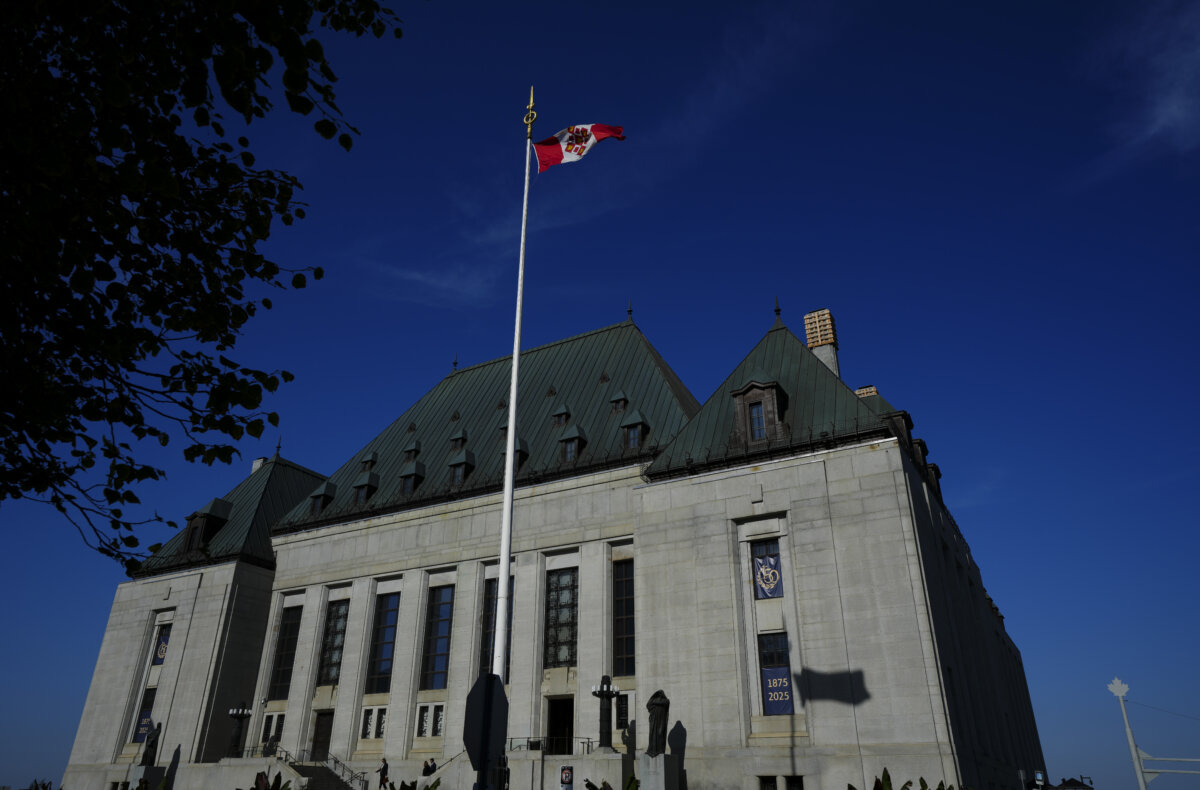
Faced with these contradictions, the Supreme Court of Canada rendered a judgment the length of a short book on Oct. 9, 2026. Using more than 45,000 words, the court issued a muddled, chaotic, and incoherent majority ruling as well as a lengthy dissent. Both the majority (which agreed with the Court of Appeal) and the dissent (which agreed with the trial judge) failed to bring clarity to the contradictory, race-based provisions in Canada’s Criminal Code.
In light of the fact that Canada’s judges have always been required to consider the unique circumstances of each crime, each victim, and each offender, why bother introducing race, ethnicity, or ancestry into the Criminal Code in the first place?
Tragic stories like the abusive and dysfunctional childhood of Harry Cope are not unique to any racial, ethnic or cultural demographic. In 159 years of Canadian history, millions of immigrants from Asia, Africa, and Europe, along with their Canadian-born children, have faced the loss of their language and culture. In the face of geography, climate, economics, technology, and time, no culture in Canada has survived unchanged. For most ethnic groups in Canada, what remains of their original culture is limited to costumes, songs, and dances, and sometimes a language and folklore. While Canada prides itself on being a mosaic (and not the American melting pot), every ethnic group in Canada has lost a great deal of its distinct original traditions as people from around the world integrated themselves into a shared Canadian culture and modern economy.
Grave injustices perpetrated by the Canadian government against Japanese, Ukrainian, and other Canadian immigrant communities has no doubt created intergenerational trauma. Yet reconciliation between Canadians of differing ethnicities can only come about when we focus on our shared humanity, not what divides us.
The road to hell is paved with good intentions. Those who support having race-based distinctions in the Criminal Code do so from a sincere desire to help aboriginal Canadians thrive and prosper. However, as the Supreme Court asserted in Ipeewee in 2012, the rates of aboriginal incarceration have increased since Parliament introduced race-based sentencing into the Criminal Code in 1995.
Treating Aboriginal Canadians differently from other ethnic groups in Canadian law has proven to be a colossal failure. Current laws, policies, and programs are obviously not helping aboriginal Canadians. It’s high time for Canada to embrace the principle of equal rights for all, special privileges for none.
John Carpay, B.A., LL.B. is President of the Justice Centre for Constitutional Freedoms (jccf.ca).
Views expressed in this article are the opinions of the author and do not necessarily reflect the views of The Epoch Times.
 Friends Read Free
Copy
Facebook
Tweet
Friends Read Free
Copy
Facebook
Tweet