
Commentary
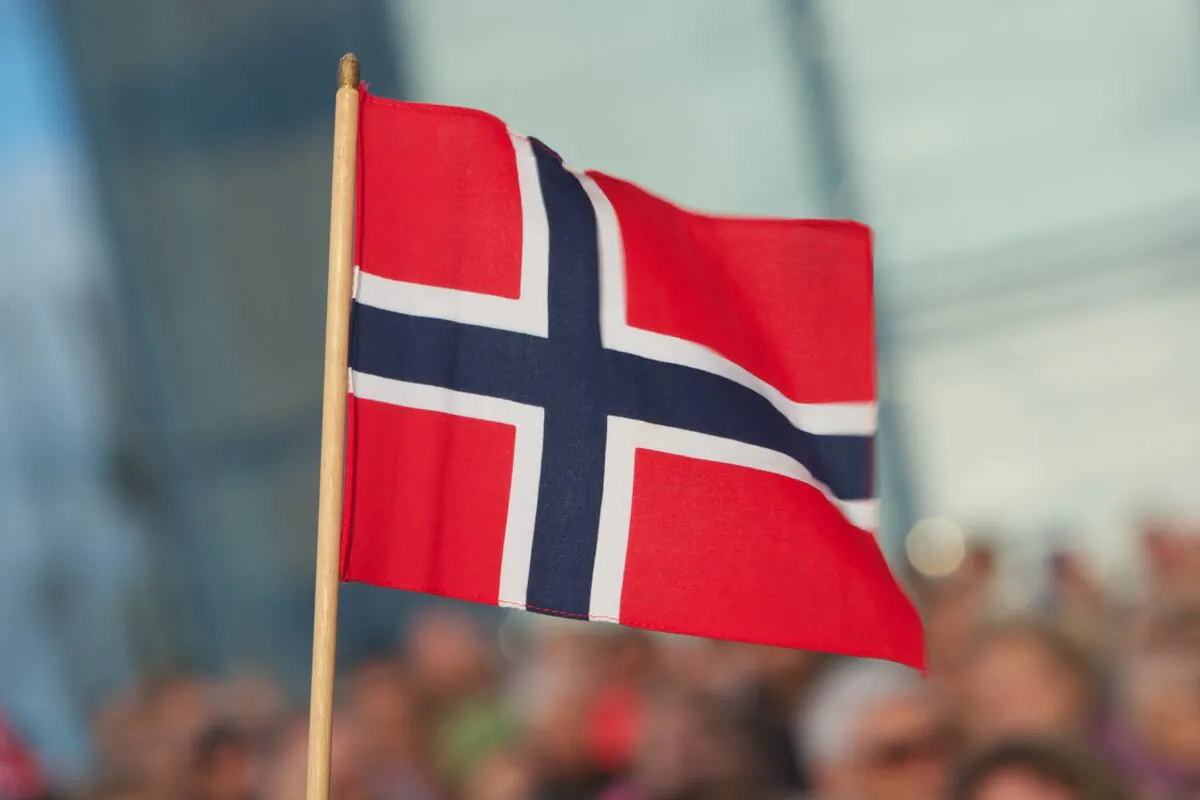
Norway’s parliamentary election on Sept. 8 partly reshaped the country’s political landscape by forming a new, narrow left-wing majority, but also confirmed the rise of a populist right across Europe.
Nine parties will be represented in the new Storting, the country’s parliament. An informal coalition of five left-wing parties emerged victorious, with the Labour Party reaffirming its position as the country’s leading political force. It secured over 28 percent of the vote, a two-point increase from the 2021 election. Meanwhile, four right-of-center parties will be represented, but because the liberal Venstre Party fell below the national 4 percent threshold, they ended up a few seats short of a majority.
For Labour, the result signals a recovery after years of stagnation, and its leader, Prime Minister Jonas Gahr Store, can now exercise power without depending on shifting parliamentary alliances.
The biggest story of the night, however, came on the right. The populist Progress Party, long known for its tough stance on immigration, taxes, and the EU, secured about 24 percent of the vote. That makes it the largest opposition party and the second-largest party overall—a position it has never held before in Norwegian politics.
In contrast, the traditionally conservative Hoyre experienced a historic defeat. Long a pillar of Norway’s center-right, the party dropped below 15 percent, marking its worst-ever result. For decades, Hoyre focused the Norwegian right on free-market economics and European integration, but it has been surpassed by a party that has positioned itself as the voice for voters skeptical of immigration, globalization, and elite institutions. This reversal highlights a generational shift within Norwegian conservatism—and reflects a broader trend.
Populist parties are not a new phenomenon in Europe. Many trace their origins back to the Cold War era, when concerns about national sovereignty, cultural identity, and supranational integration first arose. But during the 1980s and 1990s, these movements generally remained on the margins, dismissed as “protest” parties. Their rise to prominence has occurred over the past 20 years, fueled by growing public opposition to immigration and globalization.
More recently, the example of President Donald Trump in the United States has further strengthened European populists. His wins in 2016 and 2024, along with his ongoing influence, have demonstrated that populists can not only win elections but also govern.
Throughout Europe, populist and nationalist parties are now weakening the influence of traditional center-right groups. In Sweden, Norway’s neighbor, the Sweden Democrats made a similar breakthrough in the 2022 election, becoming the country’s second-largest party. That same year, in Italy, Giorgia Meloni’s Brothers of Italy not only rose from outsider status but also secured the premiership, forming a nationalist government in Rome.
More recently, Germany has witnessed the growth of the Alternative für Deutschland, which is currently polling at record levels, just as Geert Wilders’s Party for Freedom leads in polls ahead of a snap election in the Netherlands on Oct. 29.
Similarly, French politics is once again in turmoil following the collapse of Emmanuel Macron’s government on Sept. 8, and Marine Le Pen’s National Rally, which mounted a strong challenge in the last election, is expected to capitalize on the chaos. And across the English Channel, Nigel Farage’s Reform Party has gained significant leads in opinion polls, surpassing both the Conservative Party and Prime Minister Keir Starmer’s Labour.
Thus, the common theme across these countries is decreasing trust in traditional center-right parties. While traditional center-left parties such as Norway’s Labour Party still hold support by emphasizing welfare, climate, and stability, their right-wing counterparts are losing ground.
Such parties have, in most countries, tried to balance support for globalization, free trade, and European integration with the rising demands of voters who feel left behind by these trends. However, their inability to do so is now costing them dearly, as the rise of the Norwegian Progress Party, the Sweden Democrats, and others shows. In short, non-socialist voters are now seeking tougher stances on immigration and cultural issues and are turning to populist parties willing to challenge elite orthodoxy.
In Norway, the election result will now lead to a continued Labour-led government, but it will be facing a stronger, more aggressive opposition than before since the rise of the Progress Party means that debates over immigration, national identity, and globalization will play a more central role in Norwegian politics. For Europe, Norway’s vote is just another sign that the post-World War II political landscape is finally changing.
Whether this shift is permanent or just a temporary disruption remains unclear. Still, the message from Oslo is clear: parties that don’t address voter concerns risk falling behind those willing to challenge the status quo.
Views expressed in this article are the opinions of the author and do not necessarily reflect the views of The Epoch Times.
 Friends Read Free
Copy
Facebook
Tweet
Friends Read Free
Copy
Facebook
Tweet