Commentary
Hundreds of women dressed in pink stood outside a Massachusetts courthouse this week in support of a mother who killed all three of her children.
That sentence is supposed to make the rest of the story easy.
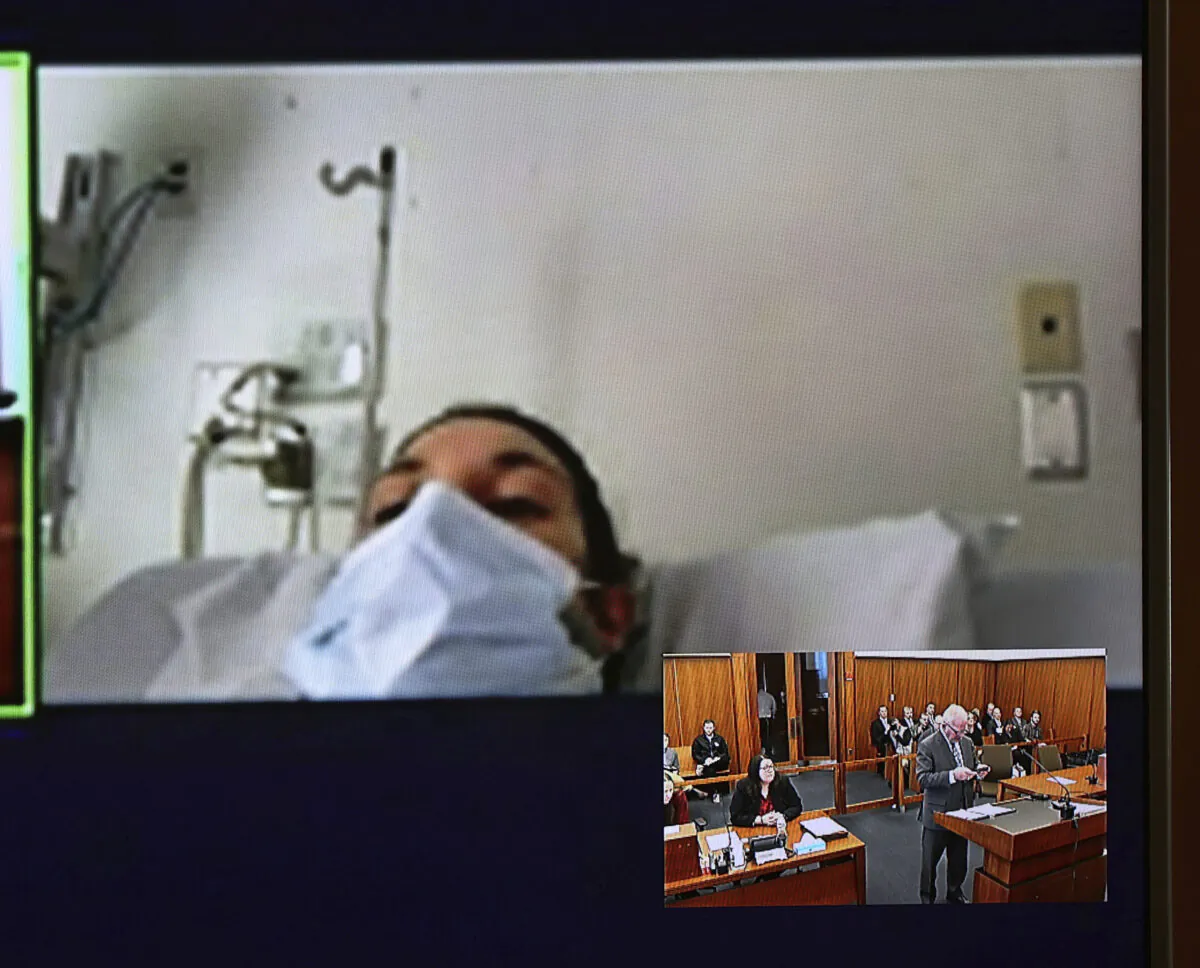
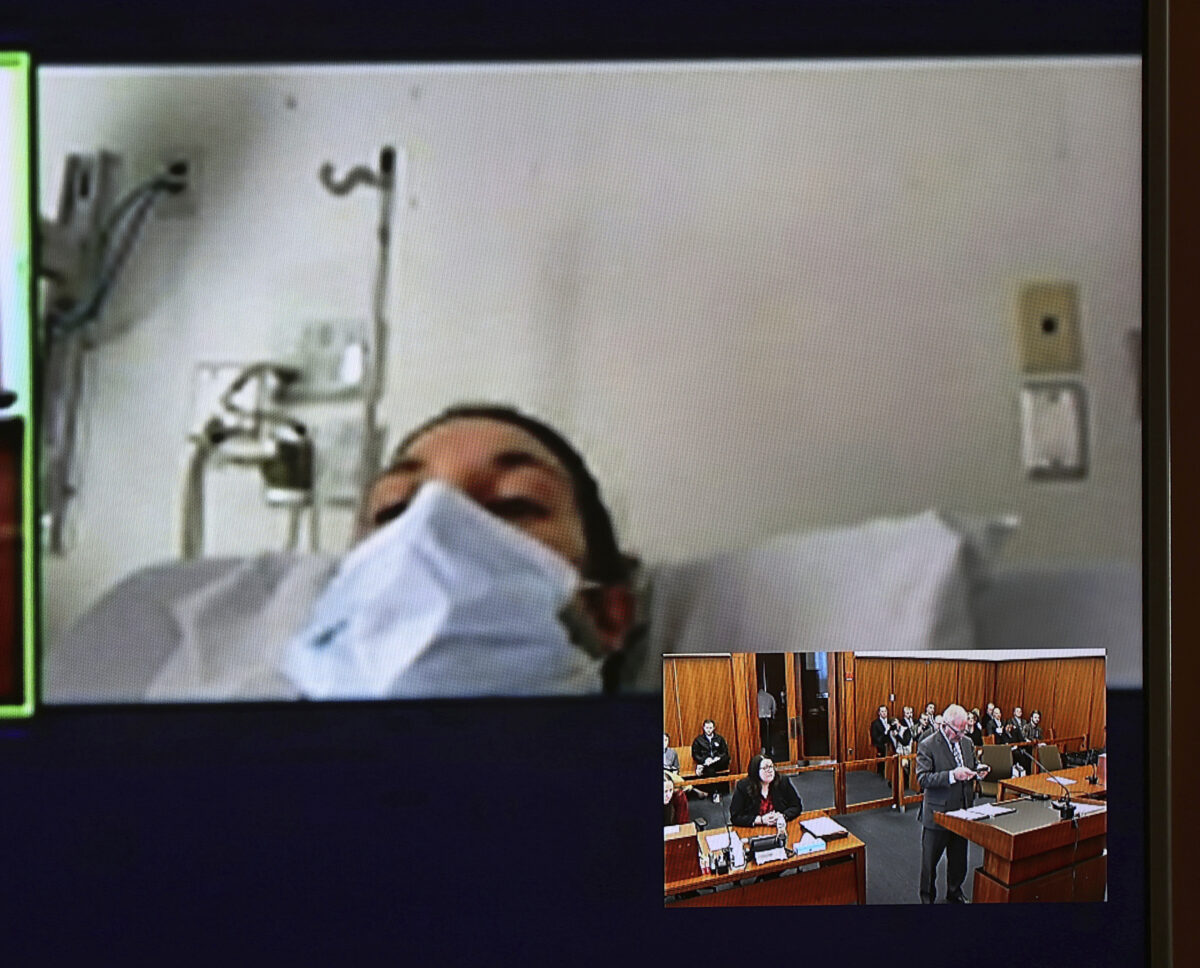
Lindsay Clancy killed Cora, 5; Dawson, 3; and Callan, 8 months old, in January 2023. She strangled them with exercise bands and then jumped from a second-story window in an apparent suicide attempt. She survived and was left paralyzed.
There is no version of this story in which what happened to those children isn’t horrifying. But there is also no intellectually serious version in which the inquiry should end there.
Online, two camps have formed. Some conservatives seem offended by the suggestion that Clancy deserves compassion: She killed her children. She’s a monster. End of story.
On the other side are women making strange social-media videos about the frustrations of motherhood—throwing water on their children or joking about wanting to hurt them—as if to say, “See? Every mother understands how you could get there.”
I don’t.
I have four children. I have been exhausted, angry, overwhelmed, and touched out. I have never wanted to hurt my children. We don’t need to normalize fantasies of harming children to have compassion for Clancy. And we don’t need to call her a monster to take seriously that three children are dead.
Before the killings, Clancy was a labor-and-delivery nurse. A longtime colleague described her as compassionate, kind, and the kind of nurse you would want caring for your family. Her husband, nanny, and relatives described a loving, attentive mother. I have found no credible evidence of a previous pattern of abusing her children or mistreating patients.
Then something changed.
Her third child was born in May 2022. By September, Clancy was experiencing worsening anxiety, insomnia, exhaustion, racing thoughts, and depression.
She sought help.
Over roughly four months, she received more than 30 prescriptions involving 13 psychiatric medications from multiple prescribers. That does not mean she took 13 drugs simultaneously. Medications were started, stopped, and adjusted while her mental condition deteriorated.
By December, she was suicidal. She went to an emergency department and a specialized postpartum program. On Jan. 1, 2023, she voluntarily admitted herself to McLean Hospital for psychiatric treatment.
She was discharged on Jan. 5.
Nineteen days later, her children were dead, and she had nearly killed herself.
That chronology does not prove psychiatric medication caused Clancy to kill her children. But how can anyone seriously argue it isn’t worth examining?
I understand the conservative instinct because some version of it lives in me. I have never experienced mental illness or addiction. Personal responsibility makes intuitive sense to me: make better choices, control yourself, and don’t hurt other people. When someone does something unimaginably terrible, my instinct is not to search for an excuse.
But my life has placed me close enough to people whose minds have betrayed them that I cannot pretend willpower explains everything.
Someone in my immediate family is completely functional under ordinary circumstances. But under a combination of extreme stress, inadequate food, and serious sleep deprivation, I have watched her connection to reality drift. The person standing in front of you looks familiar while increasingly experiencing a reality you don’t share.
An ex-boyfriend of mine was placed on involuntary psychiatric holds multiple times during medication changes or withdrawal. He eventually died from an accidental drug interaction.
His mother once took Ambien and woke the next morning to discover she had made stuffed peppers from scratch, cleaned the kitchen, driven to Taco Bell, purchased $36 worth of food, and eaten some in bed.
She remembered none of it.
The U.S. Food and Drug Administration requires its strongest boxed warning on certain insomnia medications, including Ambien, because people have performed complex activities—including cooking, eating, and driving—while not fully awake and later have no memory of them.
I am not suggesting Ambien made Clancy kill her children. I am saying the statement: “A drug can’t make someone do something without knowing what they’re doing” is untrue.
Personal responsibility requires a person capable of exercising it. Determining whether Clancy possessed that capacity is precisely what her trial is about.
This is why some conservative reaction perplexes me. For years, conservatives have demanded skepticism toward pharmaceutical companies and medical institutions. We have talked about informed consent, adverse events, and regulatory capture. Why should psychiatric medication suddenly be exempt from scrutiny?
For decades, millions of patients were given a simple explanation for depression: their brains weren’t producing enough serotonin. Selective serotonin reuptake inhibitors, also called SSRIs, helped correct the “chemical imbalance.”
That explanation has not held up nearly as cleanly as the public was led to believe. A major review concluded that evidence does not support the idea that depression is simply caused by low serotonin. That doesn’t mean antidepressants don’t help people. They clearly help some people, and psychiatric medication can be lifesaving.
It means our understanding is incomplete.
Meanwhile, roughly one in nine American adults takes prescription medication for depression.
Perhaps we should ask not only how to medicate human suffering, but why so many people are suffering.
This is where I inevitably come back to nature.
I raise animals. When an animal suddenly begins behaving completely contrary to its normal nature, I don’t start by condemning the animal. I ask what changed.
What is she eating? Is she sleeping? Is she stressed? Has she been isolated? Is she getting sunlight? Did her hormones change? Was she given medication?
Human beings are animals, too.
Yet we have constructed a mental health system that can sometimes seem more interested in correcting the individual’s chemistry than in examining the environment in which that individual is struggling.
Sleep matters. Sunlight matters. Food matters. Movement matters. Community matters. Hormones matter. Being outside and connected to the living world matters.
Research on gardening and nature-based interventions has found improvements in stress, anxiety, and depressive symptoms. That doesn’t mean someone experiencing postpartum psychosis needs a garden instead of a psychiatrist. Psychosis can be an emergency requiring hospitalization, medication, and separation from children.
But why have we decided these conversations compete?
A postpartum woman may need psychiatric medication and sunlight. She may need a physician and her mother. She may need medication and uninterrupted sleep. She may need protection from herself while someone also asks whether the medications are helping or making things worse.
Nature rarely offers single-variable explanations. Modern medicine shouldn’t either.
That is where I part ways somewhat with the women in pink. Their compassion moves me. But we don’t need to pretend ordinary motherhood explains what happened.
Most mothers become exhausted and frustrated. They do not strangle their children. If Clancy was experiencing psychosis, this wasn’t normal maternal frustration turned up high enough. Something had gone profoundly wrong.
Three children are dead. Cora, Dawson and Callan cannot disappear from this story because their mother’s psychiatric history is complicated.
Maybe a jury concludes Clancy understood exactly what she was doing and should bear full criminal responsibility. Maybe it concludes she was so profoundly mentally ill that she could no longer distinguish reality sufficiently to be held criminally responsible.
That is the jury’s question.
Ours should be larger.
How does a woman described for years as a loving mother and compassionate nurse deteriorate over several months, repeatedly ask the medical system for help, cycle through numerous psychiatric medications, become suicidal, enter a psychiatric hospital, leave—and 19 days later kill the three children she apparently loved?
Calling her a monster doesn’t answer that question. Dressing in pink doesn’t answer it either.
Nature has taught me that when a living creature suddenly behaves contrary to everything it has been before, the most important question isn’t what label we should give it.
It is: What changed?
Asking that question doesn’t excuse what happened to Cora, Dawson, and Callan.
It may be the only way we have a chance of preventing it from happening to someone else’s children.
Views expressed in this article are the opinions of the author and do not necessarily reflect the views of The Epoch Times.
 Friends Read Free
Copy
Facebook
Tweet
Friends Read Free
Copy
Facebook
Tweet