
Commentary
As citizens, we often focus on the big stories unfolding in national and international politics. And there’s certainly plenty happening in those realms worthy of our attention.
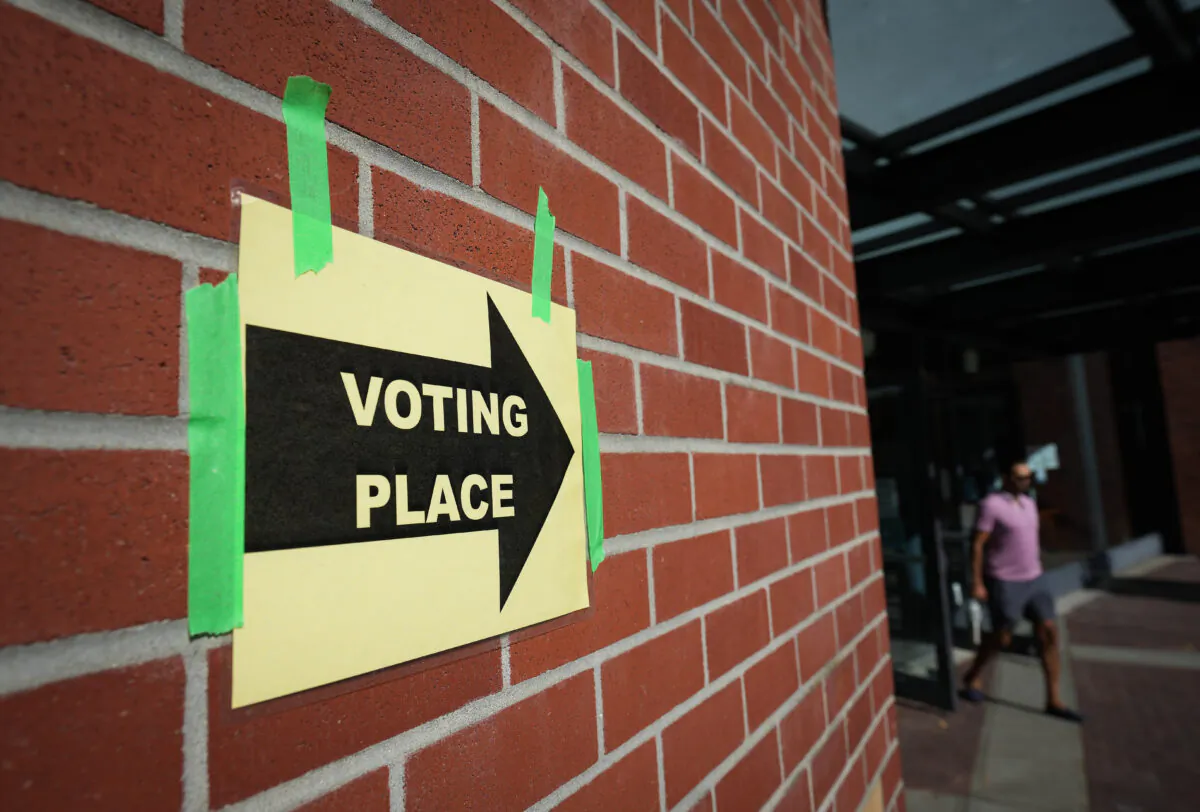
But we pay less attention than we should to local elections. Democracy, however, thrives at the local level. And in the next few weeks, municipal and local elections will take place in five provinces and the Northwest Territories.
Local elections should matter as much—if not more—to us as federal or provincial elections. Municipalities set property tax rates and oversee water, sewage, garbage, and recycling services. They plan and maintain parks and recreation facilities and, in some cases, determine how many police officers and firefighters are hired to protect our streets and homes.
Municipalities also establish zoning laws and issue building permits. They are responsible for emergency services during fires, floods, and other disasters. They decide where roads and sidewalks are built, which ones are repaired, and when. Do you love bike lanes and want to see more of them? Contact your local council. Hate them because you think they disrupt traffic and lengthen your commute? Contact your council.
Yet despite their impact on our daily lives and pocketbooks, municipal elections typically have low voter turnout. According to CBC reporting in 2022, turnout in elections in Canada’s largest cities bottomed out at 37.5 percent in Edmonton and peaked at 46.38 percent in Calgary, while Toronto (40.9 percent) and Montreal (38.31 percent) languished in between.
By comparison, the last five Canadian federal elections (between 2011 and 2025) saw average turnout of 65.68 percent. Even that figure is considerably lower than the 72.5 percent average turnout recorded across the 31 federal elections between 1900 and 2000.
Yet beyond the practical reasons to participate in local elections, there’s an important democratic argument to be made.
Democracy means that people govern themselves. We have a right to vote in local elections, but democracy also entails obligations. For self-government to work properly, citizens must engage with the issues and understand what the positions of the candidates are.
Democracy also requires citizens who can discuss ideas, weigh different policy options, and deliberate together about what is best for their communities. These skills require practice. This was well known to Alexis de Tocqueville, a French nobleman who toured the United States in the early 1800s to learn how democracy worked in America. His observations became the two-volume “Democracy in America,” one of the most insightful works on democratic political culture ever written.
One of Tocqueville’s central observations was that democracy is brought closest to the people through the institutions of local government. “In no stage of government does the body of citizens exercise a more immediate influence,” he wrote. Democracy and self-government, after all, are not “natural” in the sense of being spontaneous. People must learn and practise the skills of self-government.
Again, according to Tocqueville, people best learn their capacity for liberty and self-government at the local level. Local politics brings self-government within reach of ordinary citizens. “Town-meetings,” he wrote, “are to liberty what primary schools are to science; they bring it within the people’s reach, they teach men how to use and how to enjoy it.”
When we participate in town halls, school boards, or city council meetings, we can articulate our vision of what our community needs. We discover that other people have different ideas. We learn that democracy requires conversation, compromise and deliberation. These are skills that social media often does little to develop because it can shield us from engaging directly—face-to-face—with people who hold different views.
Being in a room with people we know—and whom we are likely to encounter again, especially if we live in a smaller community—can sometimes moderate our views. At the very least, we learn that we cannot expect to get our way all the time. We learn the art of democratic politics.
This is what Tocqueville meant when he described local government as a school of liberty—it’s where we begin to learn how to govern ourselves and how political freedom works.
Tocqueville went even further. “A nation,” he wrote, “may establish a system of free government, but without the spirit of municipal institutions it cannot have the spirit of liberty.”
In other words, we can have the outward appearance of “free” government while losing the habits and skills that make self-government possible.
Local elections matter not only because they determine who governs our communities, but because participation in local democracy helps sustain the spirit of liberty itself.
David W. Livingstone, PhD, is a senior fellow with the Aristotle Foundation for Public Policy.
Views expressed in this article are the opinions of the author and do not necessarily reflect the views of The Epoch Times.
 Friends Read Free
Copy
Facebook
Tweet
Friends Read Free
Copy
Facebook
Tweet