
Commentary
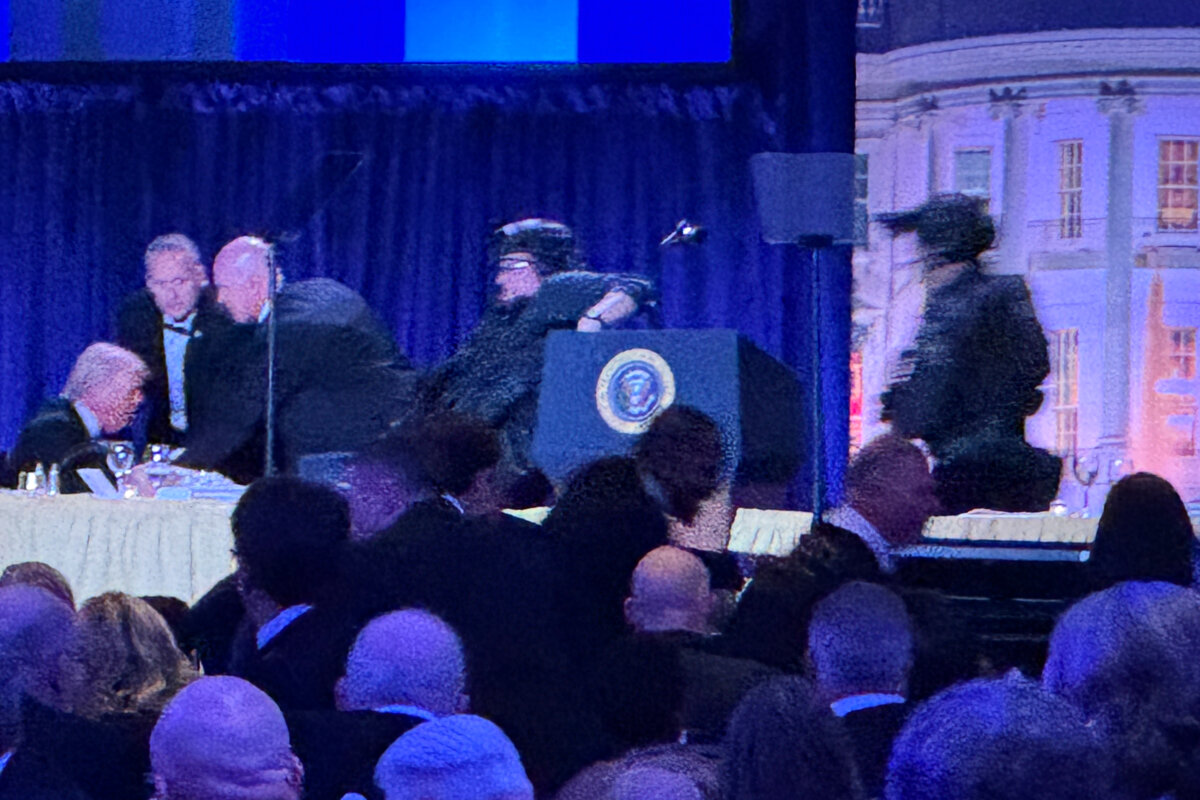
What unfolded at the White House Correspondents’ Dinner last night should be a sobering moment for the nation. An attempted assassination targeting President Donald Trump and senior officials is not just another alarming headline—it is a warning flare about where we are as a society, and where we could be headed if we fail to act with clarity and restraint.
Political violence has always existed at the margins of American life. But what is different now is the frequency, the boldness, and the apparent detachment from reality among those willing to carry it out. To enter a high-security environment, heavily armed, with the belief that one can breach layers of protection and alter the course of national leadership is not merely reckless—it is delusional. And yet, it happened. Or at least, it was attempted.
That reality forces us to confront something uncomfortable: We are living in an era when rhetoric, grievance, and isolation can combine into a combustible mindset. Words matter. Tone matters. The constant escalation of political language in which opponents are cast not as rivals but as existential threats creates an atmosphere in which the unbalanced and the unstable can begin to rationalize the unthinkable.
But amid the danger and the disorder, there was also something worth recognizing and even admiring: the response.
The U.S. Secret Service once again demonstrated why it is among the most respected protective forces in the world. Reports indicate that even as shots were fired and an agent was wounded, the response was measured, disciplined, and controlled. They did not turn panic into catastrophe. They did not allow chaos to dictate their actions. Most notably, they exercised restraint, choosing not to discharge their weapons in a crowded setting where innocent lives could have been at risk.
That level of judgment under pressure is not accidental. It is the product of rigorous training, experience, and a culture that prioritizes both protection and proportionality. In a room filled with civilians—journalists, public servants, guests—the margin for error was nonexistent. A different response, even if understandable in the heat of the moment, could have led to multiple casualties and a far more devastating outcome.
Instead, they contained the threat, secured the scene, and preserved life. That is what excellence in law enforcement looks like. It is not defined solely by force, but by the wisdom to know when not to use it.
And yet, even as we commend that professionalism, we cannot ignore the broader implications of what occurred. This is not just about one individual or one night. It is about a pattern that is becoming harder to dismiss. We have seen attempts, threats, and plots targeting public figures and institutions with increasing regularity. The guardrails that once seemed firmly in place are showing signs of strain.
So what do we do?
First, we must reject any normalization of political violence unequivocally and without exception. It does not matter the target. It does not matter the motive. Once violence becomes an acceptable tool of political expression, the entire system begins to erode.
Second, we must confront the tone of our public discourse. This is not a call for silence or for the abandonment of strong opinions. Democracy requires debate, disagreement, and even passion. But there is a difference between conviction and incitement. There is a difference between criticism and dehumanization. When the language of politics begins to mirror the language of war, it should not surprise us when some begin to act accordingly.
Lowering the temperature is not weakness. It is responsibility.
Third, we must invest more seriously in identifying and addressing the early signs of radicalization and instability. This includes strengthening mental health resources, improving information-sharing where appropriate, and ensuring that those who exhibit dangerous behaviors are not ignored until it is too late. Prevention is always more difficult than response, but it is also far more effective.
Finally, we must recognize that institutions such as the Secret Service cannot carry this burden alone. They are the last line of defense—not the first. By the time they are engaged, the threat has already materialized. The real work lies upstream, in our communities, our media, our leadership, and our willingness to hold ourselves accountable for the environment we help create.
Last night could have ended very differently. It did not, in large part thanks to the professionalism and restraint of those tasked with protecting our leaders. For that, they deserve our gratitude.
But gratitude is not enough.
If we are serious about preserving the stability of our democracy, we must pair that gratitude with action, starting with something as simple, and as difficult, as lowering our voices and raising our standards.
Views expressed in this article are the opinions of the author and do not necessarily reflect the views of The Epoch Times.
 Friends Read Free
Copy
Facebook
Tweet
Friends Read Free
Copy
Facebook
Tweet