
Commentary
Drying lakes in the western states and a rapidly decreasing Ogallala Aquifer are gaining media and scientific attention. Although the West and Midwest do not have the population densities of coastal regions, most folks realize that this “flyover” country is the heart and soul of America’s agriculture. If water depletion and soil destruction continue on their current trajectory, famine is the obvious result.
Is this dehydration a natural climatic phenomenon, or is it possible that humans caused it and people can reverse it? If agriculture bears blame, then it also carries the burden of redemption. As U.S. Farm Bill debate heats up, perhaps we should imagine policies that refill aquifers, reinvigorate springs, and create more dependable rainfall. Is such an objective realistic? Yes. Emphatically, yes.
More food was produced in America 500 years ago than is produced today. The archaeological and anthropological consensus is that with 100 million to 200 million bison, 2 million wolves, 200 million to 400 million beavers, and passenger pigeon flocks numbering in the billions, this North American landscape was unimaginably productive. Meriwether Lewis and William Clark reported encountering a bear every mile on their journey from St. Louis to the Pacific. A lot of eating, gnawing, and digesting occurred in pre-European times; it wasn’t just people.
A hydration trifecta existed 500 years ago: biomass, beavers, and bison.
The primary water and rainfall management objective is threefold. First, slow it down. Second, spread it out across the landscape. Third, let it sink, or soak, into the ground. These three S’s are the sum and substance of landscape hydration.
Even a cursory look at pre-European North America revealed an amazing architecture to make sure that all three of these things occurred. Except for what Native Americans could do with crude hoes made from bison clavicles and sinew, tillage (plowing) was nonexistent. Biomass (vegetation) covered all areas all the time. A combination of trees and forages (grasses and forbs) blanketed the landscape.
When raindrops fall on exposed soil, they’re like little bombs that separate large particles from small ones. As the small ones settle into the crater left by the raindrop, they create an impermeable film that repels moisture and obstructs the flow of oxygen, hydrogen, and nutrients. When raindrops hit vegetation, they splatter and drip into the ground like a mist. The most fundamental rule for encouraging water infiltration is vegetative cover. That means that a farm policy that encourages annual crops requiring perennial sod destruction inherently reduces insoak.
In pre-European America, somewhere between 8 percent and 10 percent of the landscape was water, primarily developed by beavers as beaver ponds. These structural wonders in creeks and small rivers slowed water down, giving it time to do two things. First, ponded water had time to gently soak into aquifers. Second, all this water surface enabled evapotranspiration to form clouds. This, in turn, created a functional hydration cycle when the clouds brought rain. Today, America’s landscape is down to less than 4 percent water. Our nation has less than half the water coverage it did in prehistoric times. We’ve squeezed the sponge.
The change in water alone is such a massive landscape change that we can’t imagine what restoring the original percentage would look like. Americans have been in the drainage business since day one, and this speeding up of water velocity across the landscape gives it no time to soak in and little surface area from which to evaporate into cloud formation. This water inventory, which ebbed and filled based on droughts and floods, no longer buffers the landscape.
The third hydration element was bison. These massive horned beasts loved to make wallows where they could dust bathe. Dust powder cleaned their hides of glandular secretions, much like the talcum powder we use as humans. With their horns and strength, bison made many millions of wallows across the landscape. Only a couple feet deep and no bigger than a backyard swimming pool, these held water during heavy rain events long enough to let rain soak into the ground.
The accumulated impact of millions and millions of these wallows kept heavy rainfalls in place long enough to recharge aquifers. One of the foundational rules of the landscape design plan known as permaculture is to keep raindrops as close to where they fall for as long as possible. Raindrops running across the land surface are both erosive and nonbeneficial. They take precious soil with them, forming gullies, and they leave the area without the blessing of hydration.
Although some areas do naturally get more rain than others, often the key to hydration is not the quantity of rain that falls, but the amount that’s kept on site. Biomass, berms, and ponds work synergistically to slow, spread, and sink raindrops.
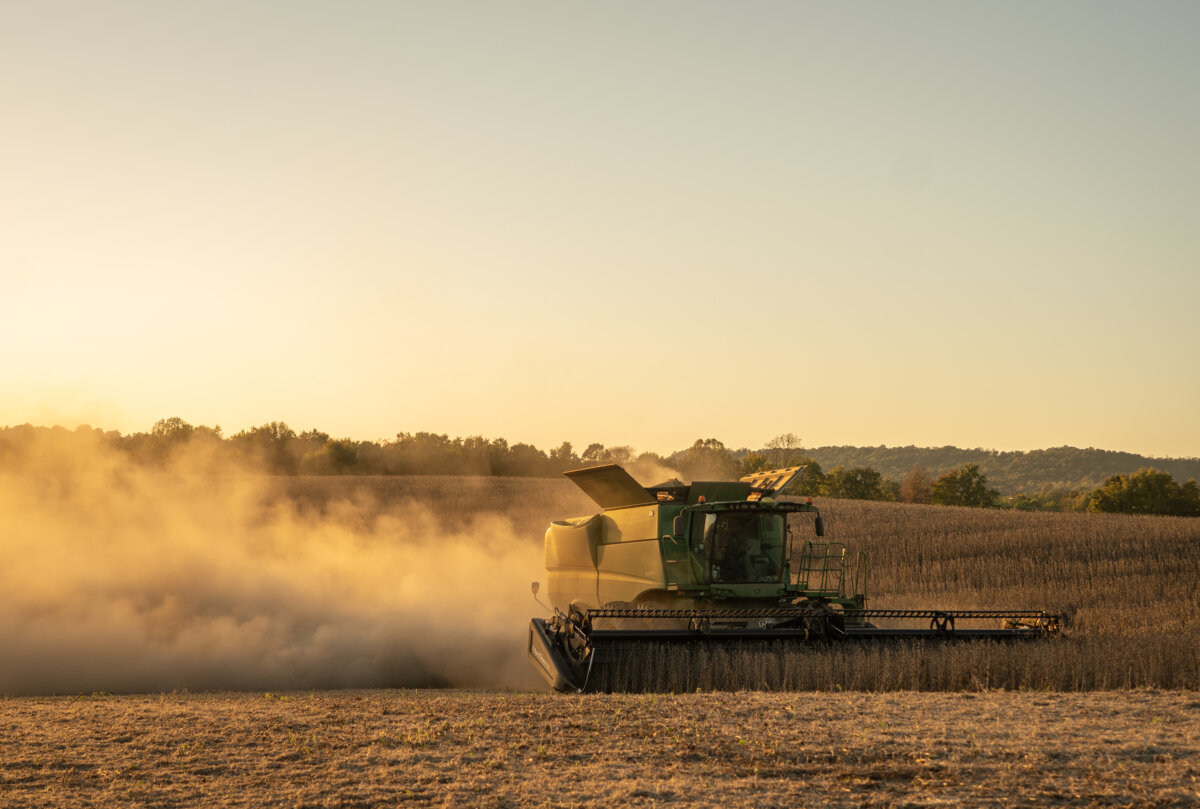
With this in mind, and after a quick romp through America’s prehistoric past, does modern conventional agriculture hydrate or dehydrate? Miles of barren, plowed ground attest to vegetative destruction. Millions of acres of exposed soil, devoid of biomass for months, dehydrate as surely as garments hung on a clothesline. Miles of dead trees in Colorado and elsewhere are just as dehydrating. The goal is flourishing biomass, not dead, fire-prone material.
The most protective and aggressive biomass is forage—grass, forbs, and herbs. The original American prairie was roughly 60 species of grasses and some 1,000 species of forbs and herbs (weeds). Instead of mimicking bison choreography, most cattle farmers do not rest their pastures, overgrazing and destroying the vegetative cover. Management-intensive grazing creates strategic rest periods, enabling biomass to build strength and volume, like long, protective skirts on the soil.
Many government regulations, at all levels, virtually prohibit pond building. Many farmers who appreciate ecological hydration principles find themselves stonewalled by regulations that view holding raindrops near where they fall as some sort of thievery, stealing water from folks downstream. Ecologically, inventorying water higher on the landscape protects downstream folks from flooding and guarantees consistent base flow through aquifers and springs.
In short, agriculture practice can either dehydrate or rehydrate. Nearly everything subsidized by Agriculture Department policy dehydrates the landscapes. Rehydration would involve converting millions of acres of cropland back into well-managed perennial prairie polycultures. If ever America needed more cows and fewer soybeans, it’s right now. Good policy would include an aggressive pond-building strategy, which the original Soil Conservation Service employed in the 1950s to counter another dust bowl. Today, official government policy views ponds as liabilities because they attract wild birds, an alleged vector for avian influenza. Any policy that views wildlife as a liability is anti-ecological.
Louis Bromfield, novelist and inveterate ecological farmer, might have become secretary of agriculture had he not met an untimely death at 59 years old in 1956. He said the solution to flooding on the Mississippi River was not massive Army Corps of Engineers dams on the rivers; the water was already moving too fast by then. He said the solution was simple: millions and millions of small ponds in middle America, like big hoofprints—bison wallows—to fill during floods and hold that water on high ground. He was right.
American agriculture is at war with water. Demanding its use for irrigation, demanding subsidies for excessive corn and soybeans, demanding liability protection for any chemical deemed safe by the Environmental Protection Agency’s industrial cabal, American farmers are destroying our landscape. It’s time to recognize it, say it, and change policy to reward redemption rather than destruction.
Views expressed in this article are the opinions of the author and do not necessarily reflect the views of The Epoch Times.
 Friends Read Free
Copy
Facebook
Tweet
Friends Read Free
Copy
Facebook
Tweet