
Commentary
To many outside observers, particularly progressive Americans, the Nordic countries—Sweden, Norway, Denmark, Finland, and Iceland—represent a real-life utopia. Marked by an egalitarian ethos and substantial welfare systems, they appear to embody a certain vision of what the United States could be: societies of beautiful, educated people enjoying free health care, robust social safety nets, and widespread gender equality.
To start, it’s easy to see why the Nordic model attracts admiration.
The region’s nations consistently rank among the world’s most “equal” because of far-reaching income distribution through high taxation and expansive welfare systems that include public services such as higher education and health care, which are technically universal. In addition, they are also global leaders in gender equality, offering generous parental leave that helps ensure women’s continued participation in the labor force. Also, since social trust has historically been high and political corruption low, Nordic societies are marked by a sense of unity and civic responsibility that is rare in other parts of the world.
However, enter the world of Nordic noir. This genre of crime fiction originated in Scandinavia and presents, through novels and television series, a starkly contrasting, bleak portrayal of life in the North: long, dark winters; barren landscapes; and brooding, disillusioned protagonists battling inner demons while solving gruesome crimes. Here, the cold, complex realities of life intrude upon the picturesque exterior.
This dark narrative style has deep roots, tracing back to figures such as the 19th-century Norwegian dramatist Henrik Ibsen, Danish philosopher Soren Kierkegaard, and Swedish filmmaker Ingmar Bergman.
More recently, authors such as Stieg Larsson (author of “The Girl with the Dragon Tattoo”) and Henning Mankell (creator of the “Wallander” series) have gained worldwide acclaim for stories depicting not only murder, but also deep-rooted social malaise. Misogyny, racism, rape, misandry, gang violence, and alienation are central themes in narratives in which the lead police investigators every so often are far from heroic. Instead, they are weary, emotionally scarred individuals, frequently turning to alcohol to cope with the dark underbelly of society. And this is not just fiction.
Today, beneath the veneer of socioeconomic strength and political stability, the Nordic countries are marked by growing challenges. For example, the country’s bureaucracies, once celebrated for their efficiency, are not only bloated, but are also stifling economic growth, technological innovation, and political flexibility. Education and health care, although ostensibly “free” at the point of service, suffer from subpar results and lengthy wait times. Moreover, social cohesion—once a defining trait of the region—is deteriorating. And the primary reason for this is that immigration, since the early 2000s, has tested—and broken—the limits of integration. Sweden, in particular, has experienced a historic rise in violent crime, including nearly daily shootings and bombings stemming from tribal and gang-related disputes between various immigrant groups.
Thus, the truth about the Nordic countries today lies somewhere between the image of a utopian model and that of a noir dystopia. But how do Nordic people reconcile this tension? And why do they tolerate politics that allow it to persist? The answer lies in history. The Nordic countries were not always wealthy and secure. On the contrary, parts of the region were desperately poor well into the 20th century. And since today’s welfare systems are the result of political choices made after World War II, a deep cultural memory of hardship remains.
As a result, Nordic societies are preoccupied more with lingering imperfections than accomplished successes. Thus, since the most significant problems have already been addressed, political debates focus not on the big picture but on increasingly minor and marginal issues. In such a milieu, to win votes, one must inflate these issues—or be accused of indifference. Consequently, the tone of Nordic politics is disproportionately grim and theatrical, marked by endless debates about addressing “inequalities” and problems that, by global standards, barely register.
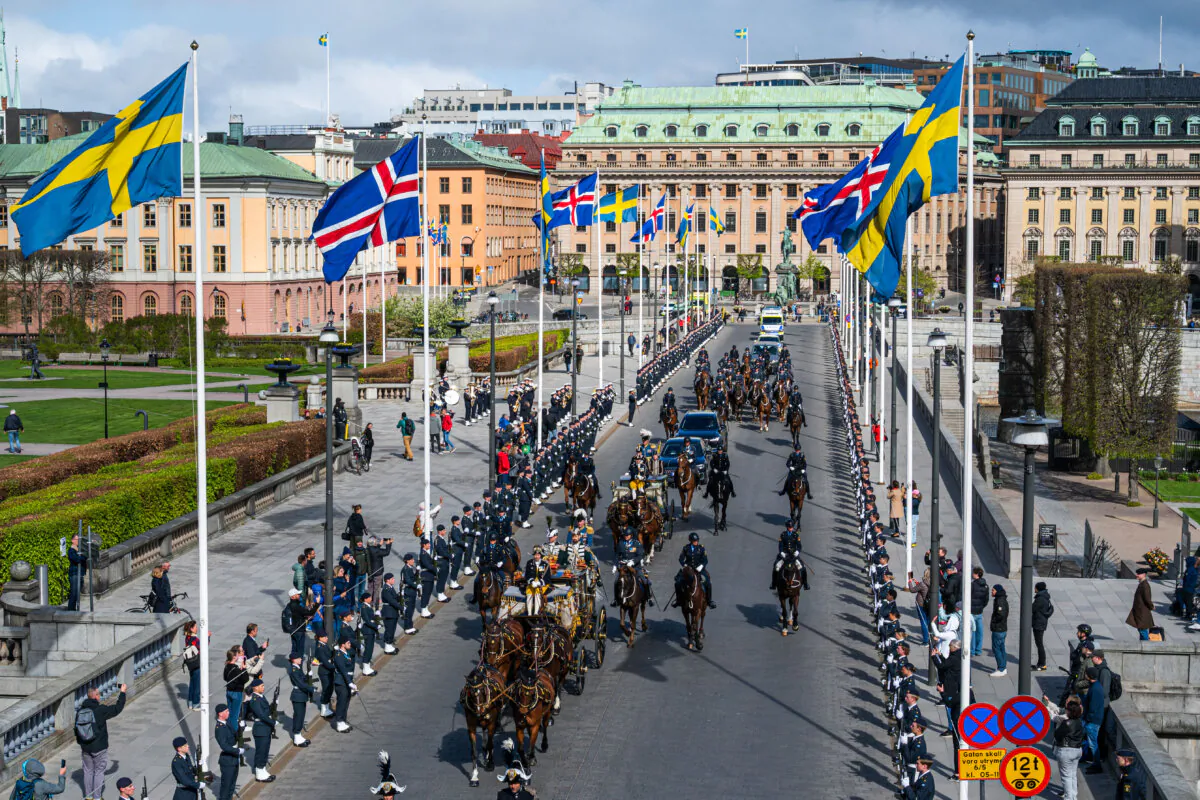
This dullness is particularly obvious in Sweden, the largest and most influential of the Nordic nations. As the “big sibling” of the region, the country is both admired and scrutinized. Its cultural exports—crime fiction included—tend to dominate global perceptions of the North. Recently, the Swedish political climate has grown darker, with both left-wing populist and nationalist parties gaining ground and the traditional political consensus cracking under the weight of new realities.
Hence, the Nordic noir politics paradox stems from and reflects the dual nature of these societies. In an era of rapid global change and challenges demanding fundamental adaptations, they are caught in a kind of political limbo in which outside praise and internal self-absorption make the necessary reevaluation of past and present social, economic, and other policies agonizingly difficult. Because if you live in a paradise, doesn’t change imply degradation? The result is a situation in which popular discontent and political anxiety feed each other in downward spirals.
Views expressed in this article are the opinions of the author and do not necessarily reflect the views of The Epoch Times.
 Friends Read Free
Copy
Facebook
Tweet
Friends Read Free
Copy
Facebook
Tweet