
Commentary
Two paradoxes mark Norwegian society. First, there is tension between Norwegians’ conservative nationalism and their affinity for progressive welfare policies. Second, oil revenues are creating an unstable political situation. Naturally, these contradictions become intertwined in the country’s otherwise typically calm and ordinary Nordic political dealings.
Norwegians’ patriotism flows from the country’s long history. Norway became a state during King Harald Fairhair’s nearly six-decade reign in about AD 900. However, after being severely affected by the bubonic plague, Norway entered the Kalmar Union with Denmark and Sweden in 1397 and did not regain its independence until 1905. Norwegian nationalism was also furthered by the Nazi occupation in World War II and has remained peculiarly strong for a European nation. For example, in both 1972 and 1994, Norwegians voted against membership in today’s European Union in referendums, mainly because of concerns over national sovereignty.
Moreover, Norway’s prosperity is primarily attributed to its North Sea oil reserves. Since the 1970s, the country has surpassed its Nordic neighbors in wealth, boasting a gross domestic product per capita that exceeds even that of the United States today. Yet, like in many other natural resource-rich countries, politicians face permanent pressure to inject so much money into the economy that it risks inflation. However, Norway has largely avoided this “resource curse” by placing oil revenues in what is commonly known as the country’s “Oil Fund,” which now holds more than $1.7 trillion in assets.
Still, even if Norwegian politics lack the destructive levels of economic populism found in, for example, some South American countries, frugality comes at the price of a state of permanent public discontent. As many voters tend to support the parties that promise the most, electoral volatility is high. Since 1981, only two governments have been re-elected. And, as Norway’s political landscape is usually marked by unrest, this year’s elections on Sept. 8 may offer just another twist in the country’s modern political trajectory, characterized by a left-right zigzag.
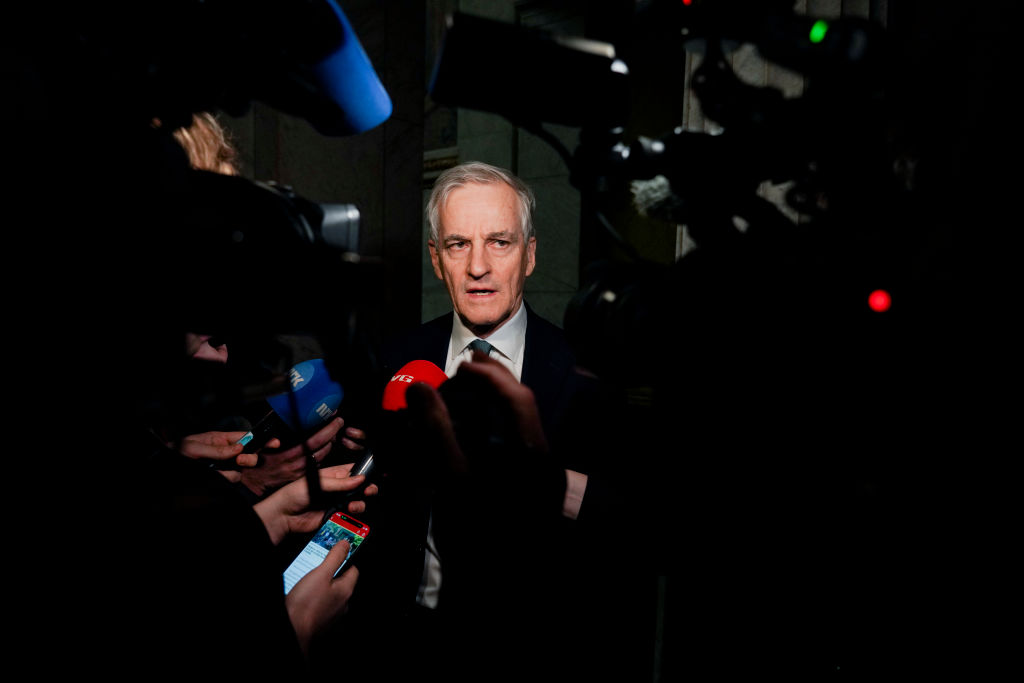
The current government, led by the Labour Party’s leader, Prime Minister Jonas Gahr Store, has been under strain since the agricultural Center Party exited a two-party coalition in January. The break depended on the Labour Party’s wish to align Norway’s energy policy with the EU’s climate net-zero policy, which the Center Party, despite being a self-proclaimed “green” party, refused to accept. It argued that complicity would not only lead to higher electricity prices but also risk national control over energy resources, providing an example of the often-acute political role of Norwegian nationalism.
According to conventional political wisdom, the collapse of the center-left coalition should have boosted the opposition. The Center Party’s support has also since nosedived to about 5 percent. However, Store’s Labour Party has instead seen a marked boost in recent opinion polls, reaching about 30 percent. Still, Norway’s proportional electoral system warrants that the post-election political landscape will be highly fragmented, with no single party likely to command anything close to a majority in Stortinget, the country’s parliament.
Consequently, to stay in power, Store must forge a new coalition not only with the Center Party but also with some or all of the country’s smaller leftist parties as well. These are the Socialist Left Party and the Red Party—a more hardline communist faction—polling at between 5 percent and 10 percent, plus the Green Party, which hovers at about 3 percent. These parties are vying for voters who want more progressive social, environmental, and other policies than the center-left Labour Party.
On the right, the populist Progress Party, whose platform demands capped energy prices and reduced immigration, led the Labour Party in the polls for several years after the 2021 election. It has now been returned to second place but continues to poll at about 20 percent, which still makes it a potentially leading opposition party after the election.
However, the Conservative Party, traditionally the second-largest party, remains a significant force in Norwegian politics. And because the country’s political, academic, and media establishments still view the Progress Party as ideologically fickle, the conservative leader, Erna Solberg, who served as prime minister from 2013 to 2021, may be poised for a comeback. But, like Store, she must build a coalition that includes not only the Progress Party but also the Liberal and Christian Democratic parties, which are polling at about 6 percent and 4 percent each—and in the main are hostile to the Progress Party.
Thus, three months out from Election Day, Norway’s political situation remains in flux. And so far, energy policy has continued to be the central issue in the campaign. However, as in nearly all European nations today, immigration and national security are also prominent concerns. The Progress Party—always the wild card in the impulsive waters of Norwegian politics—may therefore still ultimately capitalize on the Norwegians’ permanent dissatisfaction with their governments.
Views expressed in this article are the opinions of the author and do not necessarily reflect the views of The Epoch Times.
 Friends Read Free
Copy
Facebook
Tweet
Friends Read Free
Copy
Facebook
Tweet