
Commentary
J.K. Rowling—an author once beloved and now controversial—wrote “Harry Potter,” the most successful book series in the modern era. Targeted to young teens, it probably rescued literacy for an entire generation. She wrote huge books about magical worlds that valorized schooling and learning just as her audience was losing interest and technology was going a different direction.
When the first book came out, it was already competing with the internet. The first web browser came out in 1995 and her first book appeared in 1997. The book won the competition. It showed a generation that it could handle large books and entice kids with the romance of school, friendship, a great storyline, and the use of imagination.
Hogwarts preparatory school is the center of action, an old-world institution with a Gothic ethos: candlelight, physical leather-bound books, uniforms, strict rules, students divided by named schools, and so on. The nostalgia is so deep as to defy any lived experience. Rowling made it all deeply romantic just when this was needed most.
Thanks in part to these books, physical beat digital, at least in the early stages. It set a huge number of kids to keep loving real books despite the arrival of the digital beast in their times.
I read the first three books and found them to be engaging if not particularly complex in their narrative structure. As good as they were, I lost interest after that—the characters did not develop enough to maintain my interest over the new issues—but I’ve recently watched the movies, which adhere pretty closely to the books.
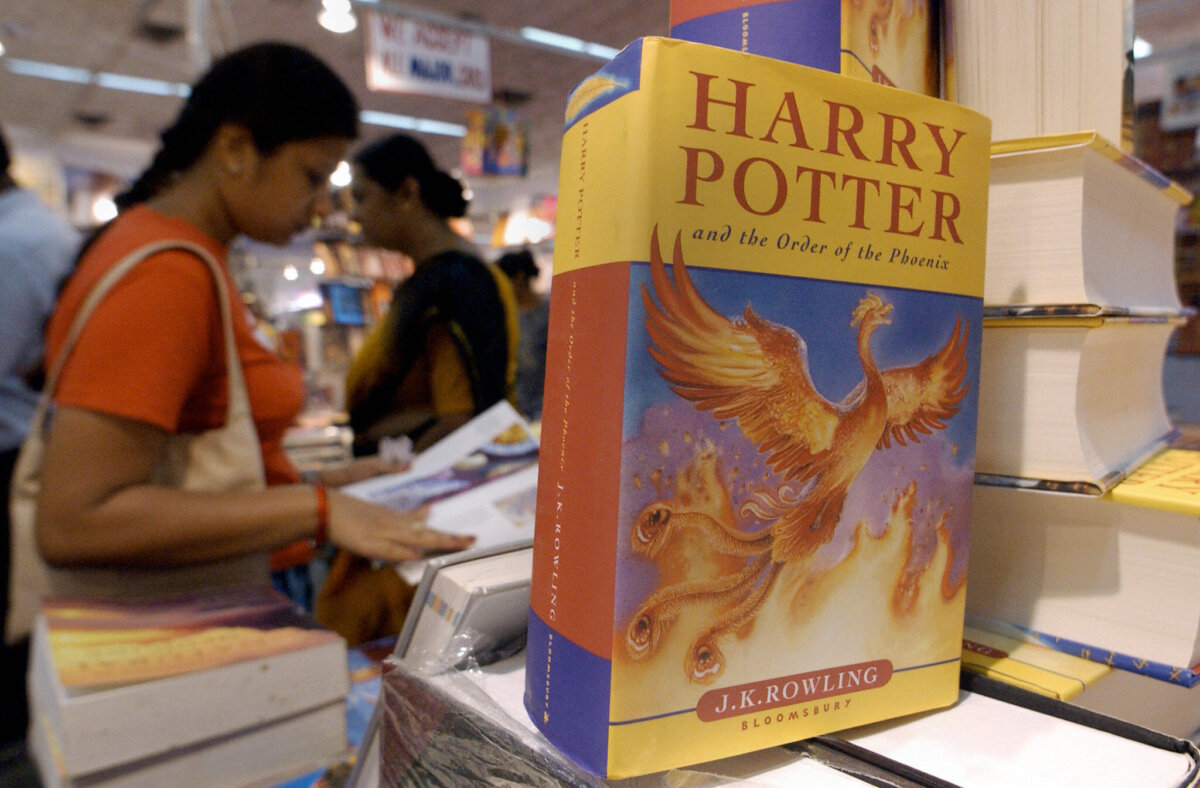
I was astonished at the sheer drama and depth of the fifth book in the series, “The Order of the Phoenix,” which came out in 2003. It’s apparently famous mainly for the creation of the greatest modern villain in the person of terrifying teacher and overlord Delores Umbridge.
By way of background in the story, it had become clear to Harry and the long-time custodians of the Hogwarts school that the archvillain Voldemort had made a return. He was plotting with others born of wizards to purge the half-breeds or muggle-born students and teachers. This would amount to a revival of the old Wizard Wars.
Meanwhile, the all-controlling Ministry of Magic, which technically oversees the school, was busy dismissing these claims of Voldemort’s return as disinformation born of conspiracy theory. To get control of the situation, the Ministry sent in a reliable bureaucrat to regain control and get the dissidents in line with the plan, complete with censorship and punishments for dissent.
The person in question is the loathsome Professor Umbridge. She wears a fussy pink dress suit, walks with determination in clunky low heels, and holds her head high with coifed hair straight from an old-world hairdresser. She speaks with a forced smile and always in condescending tones. She is officious in the extreme, burdened by a job that overwhelms her but determined still to control all within her realm, which is everything and everybody.
She clearly despises kids for the chaos they cause and demands that everyone adhere to the textbook version of what is right. She is the classic educational reformer. She is the worst bureaucrat from any agency; public health comes to mind. She is the head of HR whom everyone in corporate America despises. She is the church lady who suspects everyone of sinning. She is the school marm whom everyone hates. She knows all of this and wears it as a badge of honor.
Her first act is nearly inevitable. From now on, she announces, the students will no longer learn and practice actual magic and wizardry but rather merely learn theory from dry books they must memorize. To implement such a rule of theory over praxis was her mission and purpose. This is because she perceives zero threat from him who shall not be named (Voldemort). Anyone who says otherwise is guilty of spreading misinformation, disinformation, and malinformation.
“The Order of the Phoenix” consists of the school’s deep-history stakeholders like Professors Dumbledore and Snape, who meet in secret, take the deep-state threat seriously, and do not trust that administrative-state functionaries like Umbridge are up to the task. The order is discovered by the students, who are inspired to form a secret student-led educational effort that teaches real charms and magic designed to take on danger in real life.
Thus is laid the foundation of a great drama. It’s a story of deep but publicly denied evil, as inadvertently fronted for by careerists and cowards, countering astute legacy stakeholders who link up with courageous and visionary young people who see the danger growing from all sides.
If you are following closely, you can see the allegory here with the COVID experience that came fully 17 years after this book in real life. Voldemort represents the revenge of the deep state, Dumbledore is traditional medicine and public health, Umbridge is the new bureaucratic class, while the students here are the medical practitioners who had to take matters in their own hands.
The parallels are so striking as to be uncanny, with Umbridge standing in for a very similar character who emerged in real life to tell people to stand 6-feet apart. Incredibly, in the movie, Umbridge tells students not to meet and to stand no closer than 8 inches to another at all times. One supposes that real life that would come much later (6 feet) would have been too difficult to believe. In any case, yes, she does use media and does impose censorship.
The depth and realism here is palpable and revelatory of real life. How could Rowling have foreseen this? I don’t have the answers except perhaps to observe that the drama that has unfolded in our own times might actually create a template of understanding to reveal many common themes throughout history. Otherwise, it’s hard to see how this book could have so perfectly anticipated events much later in time.
Having been witness to the appearance and growing popularization of these books, it was fascinating to see the series initially dismissed as popular drek, gradually take on a heightened status, and finally emerge as classics in culture with countless iterations and a cult-like following. It might be seen as the last gasp of analog culture and an homage to traditional schools, reading, learning, and growing up.
Some parents worried when they came out that they were too enticing of a world of magic and wizards. Sometimes they were even banned in scrupulous religious circles. I never sympathized with that critique. The themes are solidly in line with the Brothers Grimm and other magical tales of history, clearly dabbling in fantasy to highlight traditional moral themes of courage and persistence in the face of evil.
The beauty of the fifth book or film in the series is that it makes a great standalone product, a perfect allegory for the drama of our times, which pits administrative state rigidity and nefarious plots of subterranean plotters against the simple wishes of normal folk to live good, peaceful, and productive lives. This book has it all.
Views expressed in this article are the opinions of the author and do not necessarily reflect the views of The Epoch Times.
 Friends Read Free
Copy
Facebook
Tweet
Friends Read Free
Copy
Facebook
Tweet