
Commentary
The greatest risk facing a civil society involves the deconstruction of the public’s trust in its institutions and the people who run them.
That’s why we depend on our leaders—corporate and public—to set examples that prioritize the reputations of their companies and institutions even when those decisions come at their personal expense.
It’s why, throughout the history of our political system, cabinet ministers would step aside if something controversial or tragic occurred on their watch, even if it wasn’t their fault. The public’s trust in its institutions came first. Examples from the 20th century abound. Lord Carrington’s decision to stand down as foreign secretary from British Prime Minister Margaret Thatcher’s cabinet following Argentina’s invasion of the Falkland Islands is one notable example of a man willing to “do the right thing.”
In Canada, Jean Charest—at the time 32 years old—stepped down from Brian Mulroney’s cabinet following a phone call to a judge. He was restored a couple of years later and went on to have a very successful career in politics. This is largely because, by doing the right thing and acknowledging his mistake, he was able to maintain public trust. More recent examples of people who resigned from cabinet on points of principle include Jody Wilson-Raybould in 2019 and Steven Guilbeault last year. Guilbeault removed himself from Prime Minister Mark Carney’s cabinet for what he continues to view as the current government’s abandonment of environmental activism.
You may agree or disagree with these people and their views, but it’s impossible for reasonable people to not respect them for sticking to their principles and doing the right thing. By acting in the fashion they did, the public is reassured that, within their government, there are people who are willing to act in a fashion that upholds the integrity of the positions they hold and will step aside even when it’s not obvious that they did anything wrong.
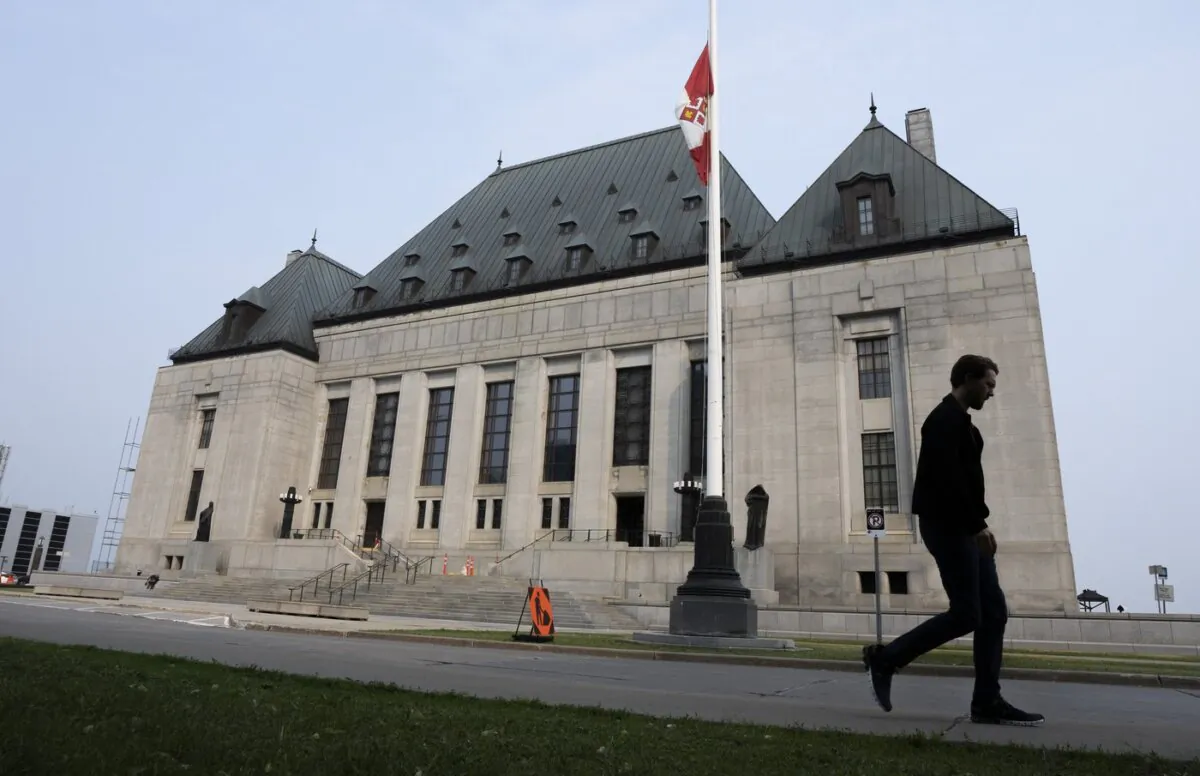
This is why it was discouraging recently to see the decision of Chief Supreme Court Chief Justice Richard Wagner to not recuse himself from hearing the attorney general’s appeal of lower court rulings that concluded the government was not justified in imposing the Emergencies Act. It did so, under the guidance of Prime Minister Justin Trudeau, in order to break up the Freedom Convoy protest that had gathered in downtown Ottawa in February 2022.
The request was made because Kristen Nagle of Canadian Frontline Nurses had asked that Wagner recuse himself in light of public comments he made regarding the protest, creating a reasonable apprehension of bias. Wagner replied, through the Supreme Court’s registrar, that he had never publicly commented on the Emergencies Act and there was, therefore, no need for him to step aside and let the other justices hear the appeal.
I have no reason to doubt that is an accurate legal response.
The problem, though, is that this is what Wagner had to say about the protesters in April 2022, a couple of months after the Emergencies Act was imposed:
“What we saw recently on Wellington Street here is a small beginning of anarchy where certain people decided to take other citizens hostage, to take the law into their own hands, not to respect the mechanism … I find that worrying,” he told Le Devoir.
No doubt many people would agree with that characterization. But many would not and may view Wagner as bearing a bias towards the convoy, its supporters, and its participants, and therefore be inclined to view the invocation of the Emergencies Act as justified.
That may be unfair but, when it comes to these matters, perception is reality. Should a Wagner-led Supreme Court hear the appeal and overrule decisions by the Federal Court and the Federal Court of Appeal, there is little doubt that a relatively large portion of the population will have less respect for the court’s independence than they do now.
Already, the views expressed and the decision made have prompted levels of public and media criticism of the chief justice that appear to me to be unprecedented. Some have even pointed to the installation of a bronze bust of Wagner at the Court, drawing further unwanted attention to the personalities wearing the robes—something Canadians are more accustomed to see involving U.S. Supreme Court justices.
These latest controversies follow the Canadian Judicial Council’s dismissal of concerns raised by a group of lawyers in response to Wagner’s Le Devoir comments. Wagner is head of the Judicial Council.
None of this is helping build public trust in what is one of Canada’s most vital institutions—the Supreme Court.
Wagner is certainly aware of this issue, having taken the court on the road last year to mark its 150th anniversary. While noting that, due to social media, there is more misinformation and disinformation in society today than there was when the Supreme Court was founded in 1875, he told The Canadian Press that “Trust is essential in a democracy. It must be earned and maintained through openness and transparency.”
Words well worth being not only remembered, but applied.
Views expressed in this article are the opinions of the author and do not necessarily reflect the views of The Epoch Times.
 Friends Read Free
Copy
Facebook
Tweet
Friends Read Free
Copy
Facebook
Tweet