
Commentary
Original sin is back with a vengeance.
Being born a boy means you are destined to become something that is “toxic.” The message, intended to demoralize, is not lost on our young men.
Boys are falling far behind girls in the classroom, and the gap widens when they come of age. Far too many young men are now unprepared for the workforce or fall outside it altogether, with worrying consequences for all of us.
Is it any wonder, then, that some of our most disillusioned boys attempt to atone for the original crime of having been born the wrong kind of thing and “transition,” as the language of Newspeak has it, into another kind of thing altogether?
For those of us who would stand up to this quasi-religious nonsense machine, it remains difficult to know how to help boys and young men find their place in a world that has written them off before they even get started.
Sitting quietly at desks for the better part of their day in sealed rooms with their peer group for five days a week, and then returning home to stare at a screen hasn’t helped. By subjecting them to this kind of routine, we have prepared our boys for a dull, conformist life, or worse.
It is time for parents to shake off the complacency and fear of breaking from the herd that so much of modern life encourages and learn to take responsibility for the formation of our boys. With that in mind, I want to say a word about raising our boys to be literate, musical, athletic, and polite. No boy who genuinely possesses these qualities can ever be wholly corrupted and conformist—he certainly won’t be dull!
The Bookworm
Our boys need to learn the value of sitting quietly and studiously, sure. You know how you do this? Not with the threat of detention, it turns out. Stimulate his interest.
A well-illustrated book about the Civil War will have him captivated for hours. He will soon astonish and even put you to shame with his knowledge, not because he was studying for an “A,” but because he was allowed to wander into another world far larger than his own.
As any teacher worth his salt knows, one measure of genuine success is how much your student can teach you. People who love learning teach others spontaneously. This can start at a very early age. This does not come from teaching for the test. By the time he’s finished with that Civil War book, he will be the one who can write the test, never mind take it. A genuine love of learning follows a love of reading.
Reading a wide variety of literature will prepare him for a vast array of people he will come across in his life. It is important that he has the vocabulary and imagination to help make sense of other people. It will help him develop empathy and understand that dragons are real. Why not learn how a hero or two set about slaying them?
Surround him with books full of heroes, adventure, about history, innovations, and how the world seems to work, how the stars rotate. He will revisit favorites, and eventually his eye will begin to wander over to your shelves.
It was with some mixture of pride and mild concern that I came home successive nights last week to discover my 12-year-old engrossed in Friedrich Schiller’s “Robbers”—in the original German, no less!—and then Mary Shelley’s “Frankenstein.”
Make at least part of your home feel like a library. These are magical rooms for children, filled with surprises for him and you.
It is not enough for you to read to him; he should read to you as well. Even if you are not religious, try the King James Bible—it is written in simple yet beautiful English and meant to be read aloud—or else his favorite book at the moment.
Ask him lots of questions about what he is reading. He will pepper you in his turn and become better at forming queries himself; he will become more and more pleasant for you and others to be around, and more interesting to himself.
These are treasures you can give your son that neither moth nor flame doth corrupt, nor thieves break through and steal.
The Musical Soul
Do not try to overcorrect and push him into traditionally “masculine” things only. Sign him up for piano lessons, have him join a choir, or have him take up an instrument. As the ancient Greeks understood—who, note well, thought that first and foremost boys needed to learn how to fight—we have musical souls that need to be tuned and brought into harmony.
Even if he does not have much of a natural talent for it, training his ear and teaching him to read musical notation is the kind of formation that will stay with him for the rest of his life, like learning a second language. It will leave a permanent impression on the shape of his mind, maybe even that thing we used to call his soul.
Music is a secret and beautiful way of teaching a boy logical, numerical, and grammatical principles. Most important of all, he will develop a feeling for things in life that the unmusical person, well, does not have an ear for, the “music of the spheres,” as it was once called.
It is not for nothing that many of our creation stories envisage the world being sung into existence. As all parents know, babies coo and sing before they talk. Draw out this innate and universal language in him.
A musical education will change how he sees and understands the world. The muses will visit him thereafter, and they make for inspiring company.
Sport for Love, Discipline, and Defeat
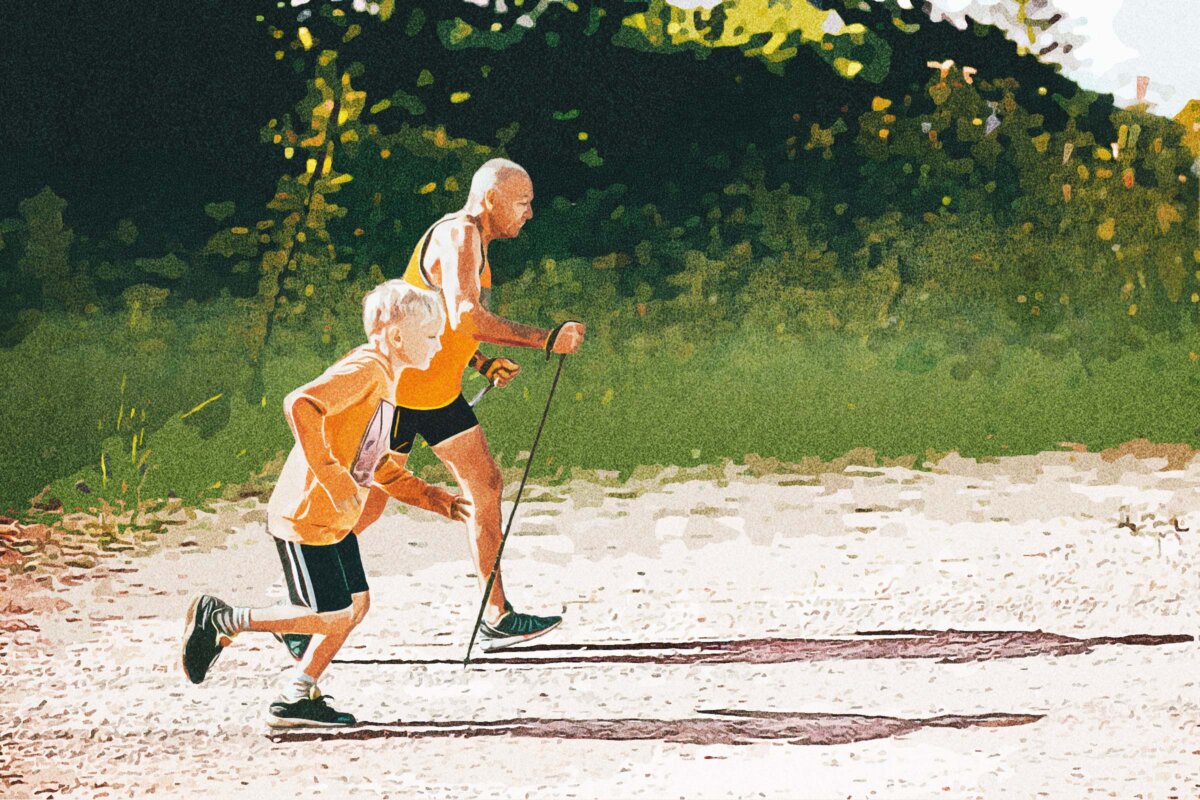
Boys need to learn that they are aggressive and how to channel that aggression. A martial art is a fine thing, but any physical challenge will teach him discipline and respect for the body and its needs and limits.
Sports teach boys that violence does not promise justice, that there is always someone bigger, stronger, and faster. There is no better teacher than the agony of defeat; no better way to learn that we are more than bodily creatures than physical competition.
Boys should play sports for love, as amateurs, not as proto-professionals. Specializing too early misses the point. Boys need camaraderie; they do not need to be taught that their particular talent is the pivot on which the entire world—read: your family—turns.
There is a reason so many of our best athletes set a poor moral example for the young. They were fixed at the center of the universe for as long as they could remember. The point of sport is not money, stuff, and glory, but honor, discipline, friendship, and community.
Courtesy as Gratitude
Above all, never forget that manners maketh man. So much more is caught than taught when it comes to moral formation. Attempt to model courtesy in your daily dealings with him and others. If boys see their father treat their mother courteously, their future wives, more likely than not, will have a happy life to look forward to.
Do not tolerate rudeness, especially outside of the home, but remain vigilant there, too. And do not beat yourself up too badly when you inevitably lapse or lose your cool. Boys need to see their parents fall and get back up again, too.
A boy whose parents genuinely want the best for him becomes grateful. A grateful boy is spontaneously courteous; his gratitude will make him take pleasure in both drinking and sharing the milk of human kindness. He will also learn to stare down the bully on the block, and later the same kind of bullying culture that his parents faced down before him, which would have prevented them from raising their boys right.
Views expressed in this article are the opinions of the author and do not necessarily reflect the views of The Epoch Times.
 Friends Read Free
Copy
Facebook
Tweet
Friends Read Free
Copy
Facebook
Tweet