



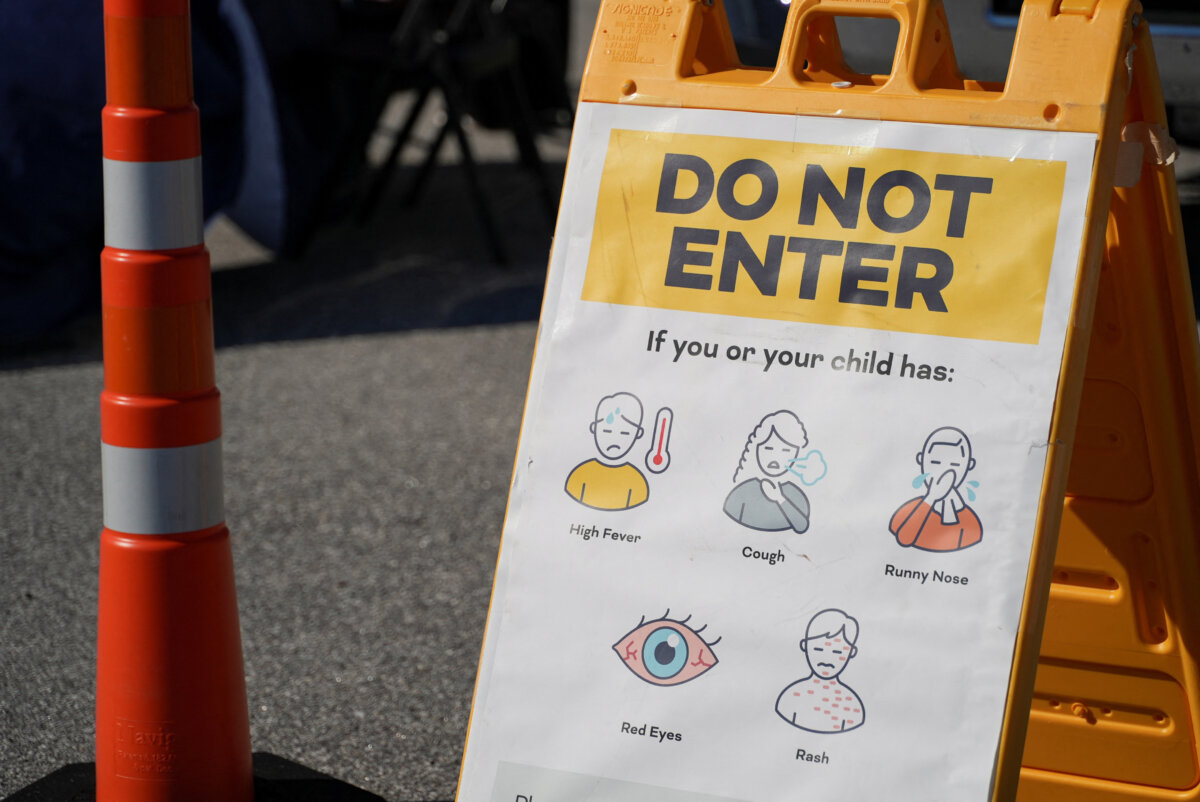
A coroner in Pennsylvania on Sept. 12 said that an adult died from problems linked with measles.
A 40-year-old woman died on Saturday “from complications associated with measles,” the Jefferson County Coroner’s Office said.
“This is a heartbreaking loss for the family and an unfortunate reminder that measles can be a serious and potentially life-threatening disease,” Coroner Greg Furlong said. “Our thoughts and prayers are with the family during this difficult time. We ask that the public and media respect their privacy as they mourn the loss of their loved one.”
Jefferson County Chief Deputy Coroner Jason Stiver said that measles can result in serious respiratory problems, hospitalization, and in rare cases, death. He said that people should follow guidance from public health officials, such as making sure they are vaccinated against measles.
Furlong told news outlets that testing is pending to confirm the woman had measles, but that she showed symptoms of the disease after coming into contact with a neighbor who had a laboratory-confirmed case of the disease. Furlong, who did not respond to a request for more information by publication time, also said the woman was unvaccinated.
In a statement to news outlets, the Pennsylvania Department of Health said it is aware of the information the Jefferson County coroner reported.
“We are in touch with the coroner and appreciate his commitment to keeping the public informed,” the department said. “The Department of Health is conducting a thorough review of this case and will provide the public with updated information when it becomes available.”
As of Sept. 11, Pennsylvania officials say they have recorded 676 measles cases, including 108 in the preceding seven days; 124 hospitalizations; and two measles-associated deaths.
Dr. Erica Schwartz, the director of the Centers for Disease Control and Prevention, said in a statement to media outlets that Pennsylvania officials did not notify the agency of the new death and have not accepted offers of assistance from the CDC.
“By contrast, Texas, South Carolina, Virginia, Kansas, New Mexico, and Wisconsin have officially requested CDC Epi-Aids and worked alongside federal teams to help bring their measles outbreaks under control,” she said. “CDC remains ready to provide Epi-Aid support to Pennsylvania as soon as the state officially requests our help.”
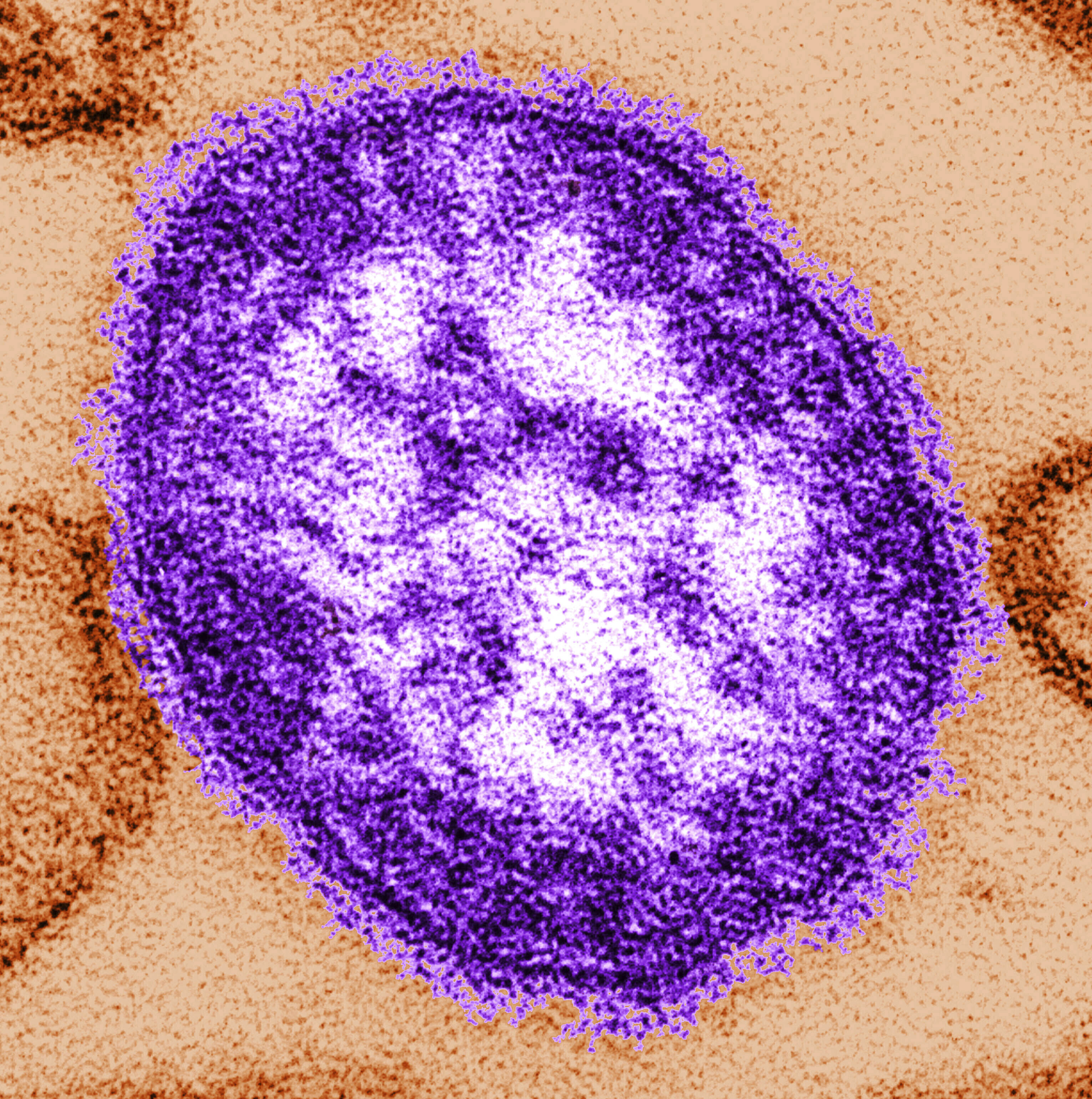 An undated image made available by the Centers for Disease Control and Prevention on Feb. 4, 2015, shows an electron microscope image of a measles virus particle. (Cynthia Goldsmith/Centers for Disease Control and Prevention via AP)
State officials in August said two deaths were related to measles. They released little information beyond saying the individuals, who were in Lancaster County, were unvaccinated, and encouraged people to receive a measles, mumps, rubella vaccine.
The local coroner said that one of the deaths was a baby who died from a spleen laceration. That death was not related to measles, the coroner said.
Dr. Stephen Diamantoni, the same coroner, later said that the second death was a 6-week-old infant who had a rare genetic disorder and did die from measles.
“The Lancaster County Coroner has now publicly stated that measles caused only the second infant’s death and has also publicly stated that the infant had Amish lethal microcephaly, a rare genetic condition in which infants typically live only about six months, received palliative care continuously from birth, and died at approximately two months of age,” Health Secretary Robert F. Kennedy Jr. said in a Sept. 4 post on X.
“The Coroner continues to state publicly that the first infant died from a lacerated spleen, not measles.”
He said the CDC would update its count of measles deaths “as additional information becomes available and relevant reviews are completed.”