
Commentary
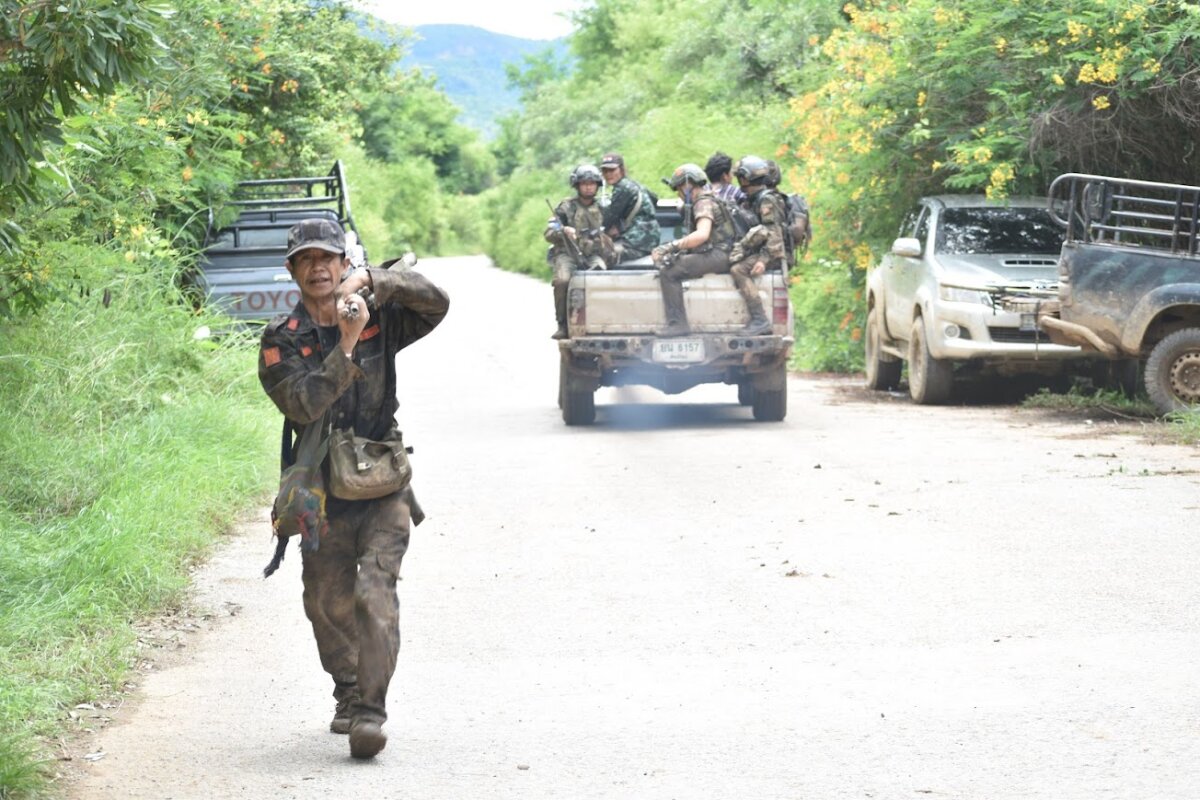
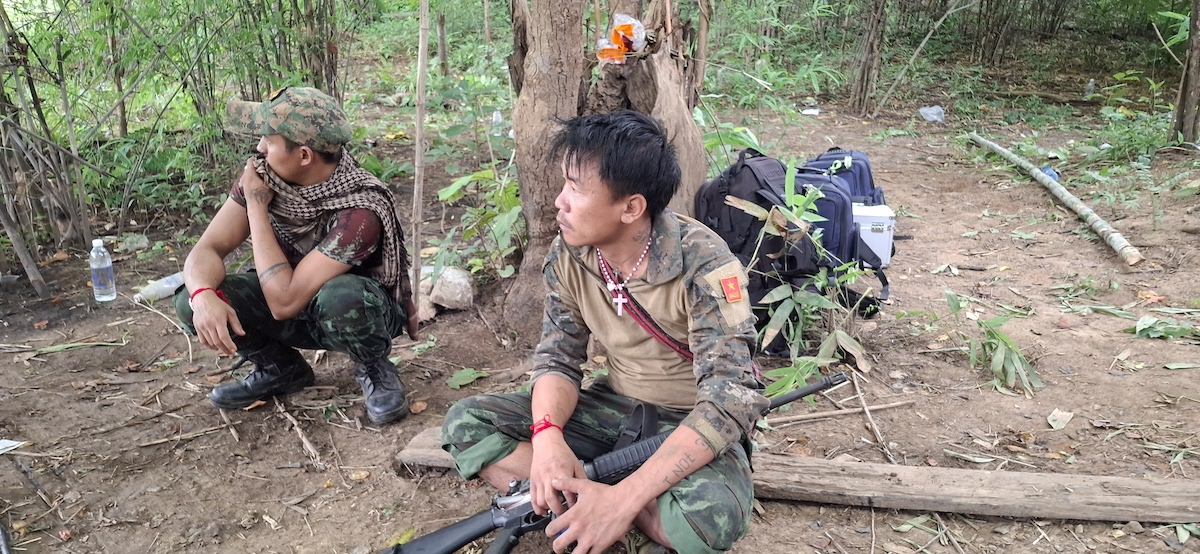
The sound of explosions was constant—some distant and unnerving, others so close you could feel the hot wind from the blast and the deafening roar that followed. The resistance soldiers and I hunkered down in the bunker.
With eyes and ears glued to the sky, the soldiers were tasked with preventing government forces from crossing the bridge and slaughtering the civilian population. But for most of the day at the Battle of Pasaung, both the soldiers and this journalist were focused on staying alive.
Overhead, Chinese jets crisscrossed the sky. After several missions in-country, I had learned to listen for the change in pitch. They always dive before dropping bombs or strafing the ground with autocannons. In Burma (also known as Myanmar), everyone is aware of this. Every soldier and civilian has been drilled on how to react to airstrikes, which are a constant feature of daily life.
Most schools have been closed since the 2021 military coup that plunged the country into civil war. In resistance-controlled areas, makeshift schools are all equipped with bunkers, and posters hang on trees instructing children what to do during an airstrike and warning them never to play with unexploded bombs or landmines. Children attend school in shifts, with classes broken into small groups at different locations to reduce the risk of mass casualties when the school is inevitably targeted.
Schools, temples, churches, and hospitals have become favored targets of the military junta, known officially as the State Administration Council (SAC). Recently, the SAC rebranded itself as the National Security and Peace Commission, but there has been no change in tactics. In May, 22 people were killed in a school bombing.
Over the past four months, I personally responded to two hospital attacks and two school bombings, one of which was hit with two 500-pound bombs.
Chinese drones are harder to predict. They sound very much like motorcycle engines, flying extremely high and then suddenly appearing directly overhead, raining down 40 mm grenades and mortar shells. The resistance has only a limited number of drone jammers for defense. Still, the Chinese technology provided to the junta far exceeds the capability of the jammers that the resistance is building in jungle camps.
Shortly after gaining independence from Britain in 1948, Burma was meant to be a union where all 135 ethnic minorities would have fair representation. Instead, the Bamar ethnic majority, which makes up about 68 percent of the population, quickly dominated political and military power. Almost immediately after the British left, the military began a campaign of repression against the ethnic minorities.
That same year, the Karen National Union (representing the Karen people) took up arms, soon joined by the Karenni, Shan, and numerous other ethnic groups. The Bamar and much of the educated population in the central regions also opposed military rule. They chose to protest and petition Britain and the United Nations for help rather than engage in guerrilla warfare.
In 2021, when the military junta nullified a popular election and ousted National League for Democracy leader Aung San Suu Kyi, the people once again took to the streets in protest as they had for generations. This time, the government not only opened fire on demonstrators but also unleashed modern surveillance and digital repression tools manufactured by Huawei and Hikvision.
These Chinese systems were used to monitor, suppress, and track the population and arrest protest leaders. Chinese-made digital ID systems allowed the junta to block financial transfers to resistance forces and displaced civilians, as well as to prevent people whom the regime considered threatening from leaving the country.
It is estimated that since the coup, there have been more than 6,000 extrajudicial killings and more than 28,000 arrests. In 2024, the junta implemented mass conscription for men ages 18 to 35 and women ages 18 to 27. Using Chinese digital tools, the junta can track and locate those of conscription age and prevent them from escaping the country.
Before the junta shut down the internet, images went viral showing government forces killing unarmed protesters. Revolution spread quickly from the ethnic jungle states into Yangon, Mandalay, and central Burma, as even the urban Bamar majority realized that there would be no outside help and that they would have to fight to reclaim their country.
Today, the world’s longest-running war has become a nationwide struggle uniting people of all ethnicities and faiths against the junta, which would have collapsed long ago without support from China’s communist regime.
The Chinese Communist Party (CCP) has several interests in Burma. First are forest resources and minerals, particularly rare earths, many of which come from Burma’s Kachin state.
Second is the China–Myanmar Economic Corridor (CMEC), a section of the Belt and Road Initiative linking China’s southern Yunnan Province with the Bay of Bengal in the Indian Ocean. This route would be crucial in the event of a war over Taiwan. If the U.S. Navy blocks the Strait of Malacca, China would still be able to transport oil and energy from Iran and the Middle East through pipelines running across Burma’s Arakan state.
Finally, Beijing prefers to have an autocratic Burma on its border rather than a stable democracy with close ties to the United States, Japan, and the European Union.
The United States, the United Nations, and Western democracies have all decried the junta’s actions, issued letters of protest, and imposed sanctions on Burma. However, the junta continues to receive financial support, along with airplanes, weapons, munitions, and jet fuel from Beijing and Moscow.
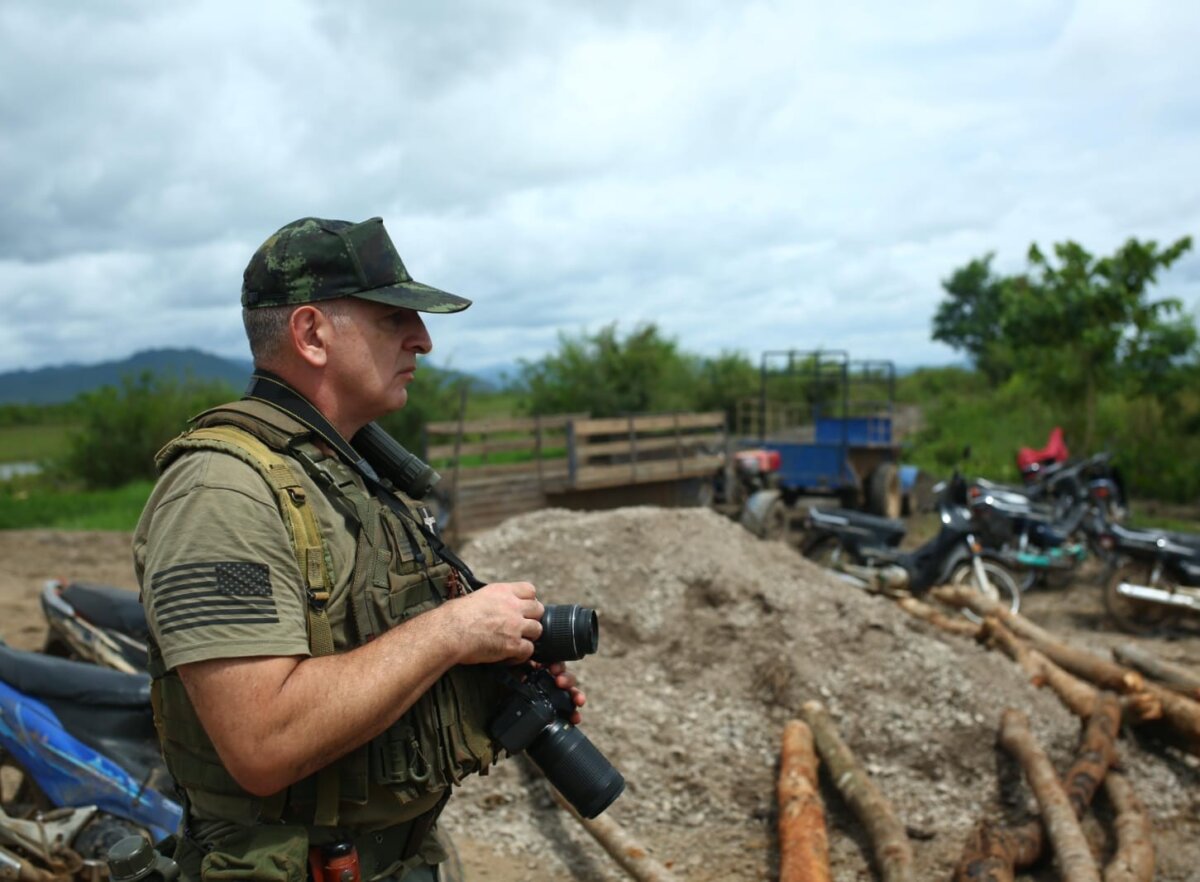
Whenever caches of weapons are captured on the battlefield, I, along with other embedded reporters, photograph them to determine their origin and submit reports to the United Nations, the U.S. State Department, or other relevant authorities. A significant percentage of the small arms, copies of AK-47s and RPG launchers, are made in China. But small arms are not the primary issue. The real problem is the jets and the jet fuel.
The resistance has no aircraft and no anti-aircraft weapons at all. With Chinese backing, the junta enjoys total air superiority, giving it the ability to kill anyone, anywhere, at any time. And tragically, the junta is largely targeting civilians.
According to estimates from the Office of the United Nations High Commissioner for Refugees, there are now more than 3.5 million displaced people in Burma, forced into camps for internally displaced persons (IDP). Because these IDP camps are located inside Burma, they have no U.N. or international protection and are bombed regularly. On Sept. 1, for example, an IDP camp was struck by Chinese jets, leaving three people injured, including children.
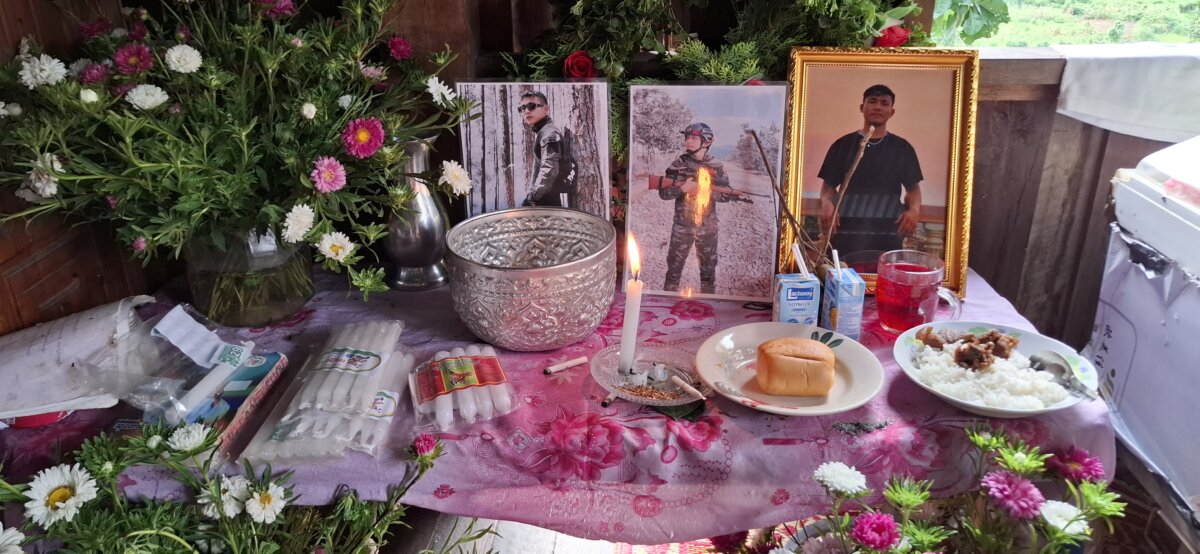
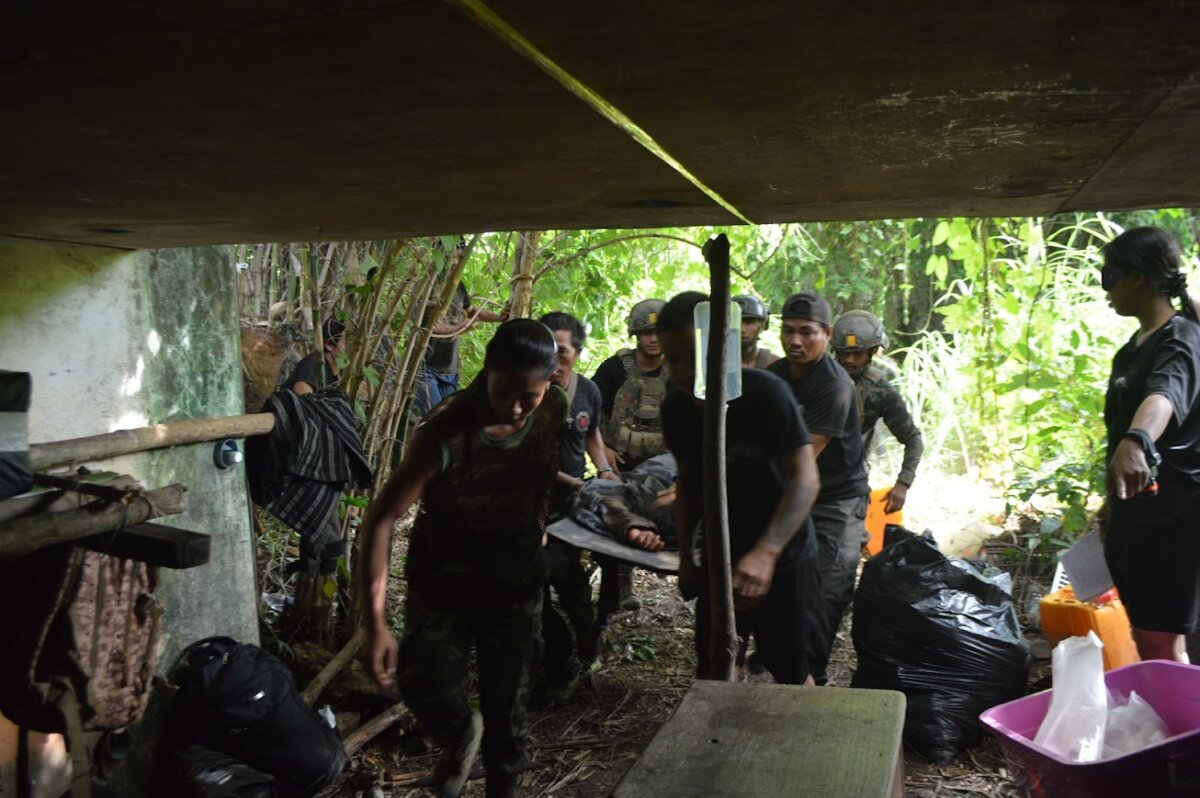
The Battle of Pasaung in mid-August demonstrated how complete the junta’s control is, thanks to CCP support. After spending hours at the front line, realizing that there was little that could be done against the junta’s air superiority, I headed back to the casualty collection point nearly a mile from the fighting. Chinese planes kept diving and circling, trying to locate the medics and doctors so they could kill the wounded along with those caring for them.
Hidden in the jungle under a drainage ditch, the medical team worked frantically to save lives, which often meant a battlefield amputation of a leg shattered by a Chinese landmine. Of the 44 casualties I counted, only two had gunshot wounds; the rest had been torn apart by drones or bombs, all of them manufactured in China.
After two fierce days of fighting and heavy losses, the resistance forces fell back, regrouped, and vowed to retake Pasaung another day. In the meantime, the civilian population will continue to suffer, and the CCP can rest easy, knowing that its investments in Burma remain secure.
Views expressed in this article are the opinions of the author and do not necessarily reflect the views of The Epoch Times.
 Friends Read Free
Copy
Facebook
Tweet
Friends Read Free
Copy
Facebook
Tweet