Commentary
As an advocate for nonindustrial farming, I face consistent and constant pushback from folks who wonder how smaller farms could possibly feed the world. Modern American culture is enamored of big.
The most common question venture capitalists ask any up-and-coming entrepreneur is, “How big can it be?” The benchmark for success seems to be the bigger it is, the better.
Fighting for scale in American agriculture, the four largest beef processors now control 85 percent of the supply. The goal to gobble up competitors led to today’s unprecedented centralization, consolidation, and concentration.
Does anyone think that, in late spring 2020, when the COVID-19 hiccup resulted in barren grocery store shelves, we would have been served better by having hundreds of thousands of community-scaled food processing facilities across the nation rather than a few tens of thousands of centralized industrial plants? Unable to get processing slots, millions of animals were slaughtered and thrown away on farms across the United States. Produce rotted in the field when mega-processors went to half-staff.
This is not efficiency; it is profoundly inefficient. As co-owner of a small multi-species processing plant, I can assure you that we hummed along just fine during that chaotic time. With fewer than 30 employees, we could spread out, adjust workflow, and keep watch on each other like family.
I shared a symposium several years ago with a curator from the Smithsonian who admonished, “Bigger is always better. A bigger fort. A bigger gun.” It rattled my contrarian view for a bit, until I realized that a few guys with pocket-sized box cutters brought down the Twin Towers. Even the U.S. Special Forces use small teams, not big brigades.
On our farm, I’m constantly reminded of how nature accomplishes scale versus the conventional modern thinking toward size, especially in agriculture and food systems. Looking back over the history of the poultry industry, for example, as recently as the 1930s, the average layer flock size in America was fewer than 1,000 birds. With the discovery of antibiotics and synthetic feed additives, confinement houses came into being.
If a house could hold 5,000, the new goal was 10,000. Then the goal was 20,000. Today, 100,000 is not uncommon, and surprise of surprises, we now have devastating diseases we didn’t hear about when flocks were smaller. When Joel Arthur Barker wrote the book “Paradigms” in 1992 and popularized the word, one of his axioms was that all paradigms eventually exceed their efficiency.
In other words, “too big to fail” is really “too big to remain viable.” This thought brings me back to what I observe on the farm and in nature. If nature wants more cows, it doesn’t make a great big cow. It makes calves. If nature wants more tomatoes, it doesn’t make a gigantic tomato plant; it makes a bunch more tomato plants. In other words, nature scales, or increases, by duplication—not by consolidation.
In the wild, we see this illustrated magnificently, because humans are less manipulative. The millions of wildebeest cows on the Serengeti are within a few pounds of each other. Why? Because a big cow has higher maintenance requirements and can’t handle the dry season. A small cow can’t protect her calf from predators. As a result, nature weeds out both extremes in a constant balance toward survival.
A mouse is the size of a mouse because if it were as big as an elephant, it wouldn’t be a very successful mouse. An elephant is the size of an elephant because if it were the size of a mouse, it wouldn’t be a very successful elephant. The notion that whatever we have would be better if it were bigger is both nonsensical and anti-nature.
Industrial thinking tends toward growth by scaling the size of things. Bigger factories. Bigger workforces. Bigger machines. Bigger data centers. But nature has a way of checking unbridled size. The supersonic transport Concorde plane—remember that?—was too big and fast, making it too expensive to be efficient, and it didn’t last long.
On our farm, when we come up with an idea, we always ask, “How small can it be?” This is not because we hate growth. It is because we understand that babies must be born small. Prototypes must be small enough to be birthed. The most critical element in innovation is preserving the capacity for embryonic viability.
And industrially scaled government churning out reams of new regulations makes launching new ideas inordinately expensive. The result is that many ideas cannot be birthed small enough to withstand the industrial bureaucratic onslaught of licenses and often capricious regulations. The result is more mega-processing facilities feeding our nation instead of community-sized facilities. And the result of that is an imbalanced and unstable food supply that breaks when a black swan like COVID swims into view.
When navigating rocky shoals, you don’t want to be in an aircraft carrier; you want to be in a speedboat. Small outfits can pivot more quickly. They can adjust. And generally, they welcome true creativity far more than entrenched massive organizations. Historically, most massive efforts, whether to build something or destroy something, occurred under an umbrella of coercion and tyranny. Freedom builds lots of little things. Tyranny builds one or two big things.
I would suggest that a new benchmark of healthy agriculture should be how many farms we have; how many different food enterprises compete in the marketplace. Perhaps we should tie the number of Department of Agriculture employees to the number of farms in our nation. That would create an interesting performance feedback loop. As a nation, we’ve drunk the Kool-Aid of individual size as the paragon of efficiency without realizing that it decreases resilience. At the end of the day, if you don’t have resilience, what good is supposed efficiency?
Freaks of nature generally do not live long. In the scope of geological time, our modern era has done some amazing things, but do we question their long-term resilience? We figured out how to dope livestock with antibiotics so we could confine them in gargantuan buildings, only to develop drug-resistant pathogens like C. difficile and MRSA. We figured out how to eat machine lubricants such as canola oil, only to find the devastating consequences of hydrogenated vegetable oil.
Where are artificial intelligence data centers now taking us? Cell-cultured animal protein substitutes? Nature is amazingly forgiving. We spent at least 30 years finally connecting DDT to infertile frogs, three-legged salamanders, and eagle eggs that wouldn’t hatch. Do we really think we can dope our food with mRNA, genetic modification, and other big-schemed industrial promises without encountering the axiom “nature bats last”? We’ve become productive enough with chemicals and soil depletion that we’ve successfully created a riparian dead zone the size of Connecticut in the Gulf of Mexico (America).
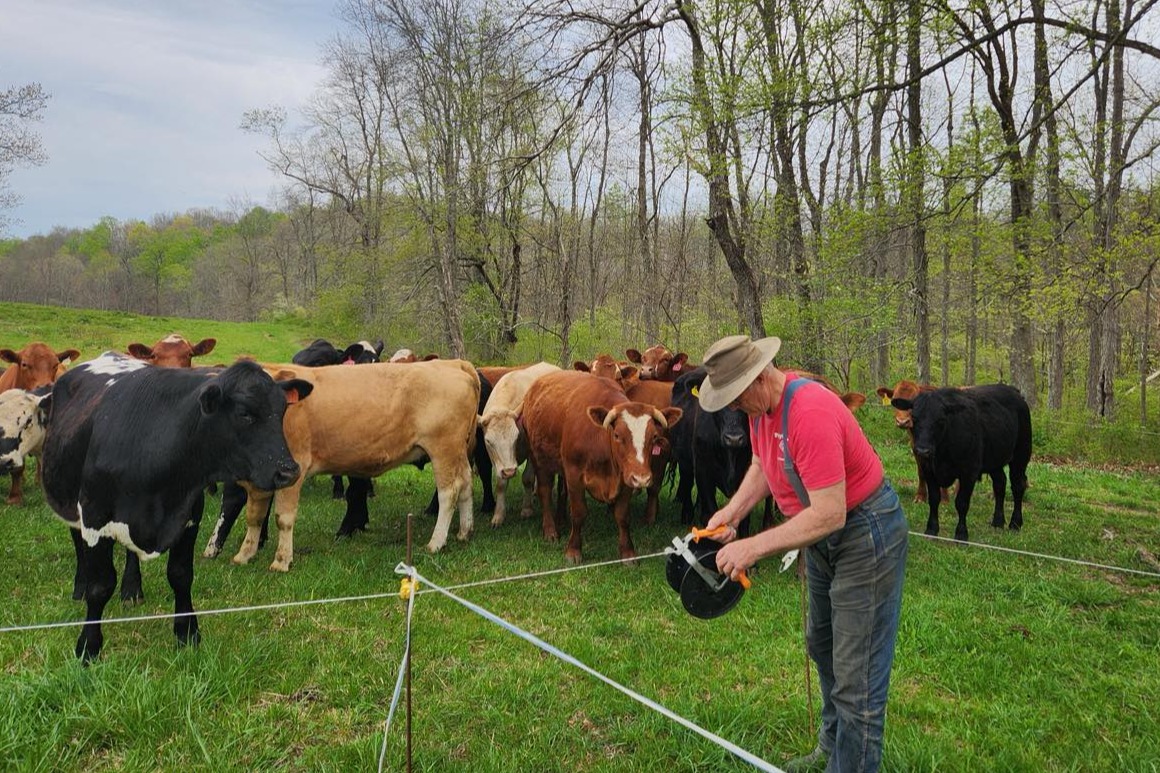
I don’t apologize for having a smaller farm. No “concentrated animal feeding operations” here. I’m not aspiring to gobble up my competitors, develop sales targets, or be perpetually growing. America has about 40 million acres of lawn and 70 million acres of housing areas. Let’s get off this insane idea that feeding ourselves requires a handful of mega-sized enterprises and realize that we would be better served by duplicating thousands of small farms, backyard gardens, and chicken flocks.
In short, let’s embrace nature’s pattern for long-term success. If nature wants more oak, it doesn’t make a mega-oak tree. It plants acorns. Duplication—birthing?—is nature’s way toward scaling production. Anything that gets in the way of birthing ideas and enterprises should be considered a societal liability. The freedom to birth enterprises is the ultimate incubator of innovation and stability.
Views expressed in this article are the opinions of the author and do not necessarily reflect the views of The Epoch Times.
 Friends Read Free
Copy
Facebook
Tweet
Friends Read Free
Copy
Facebook
Tweet