Commentary
Most people know about the canary in the mine. Long ago, coal miners learned that canaries are hyper-sensitive to deadly gases and began using them as an early warning signal to protect miners from deadly gas exposure. The canary in the coal mine became a common phrase to describe all sorts of early warnings about catastrophes.
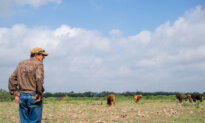
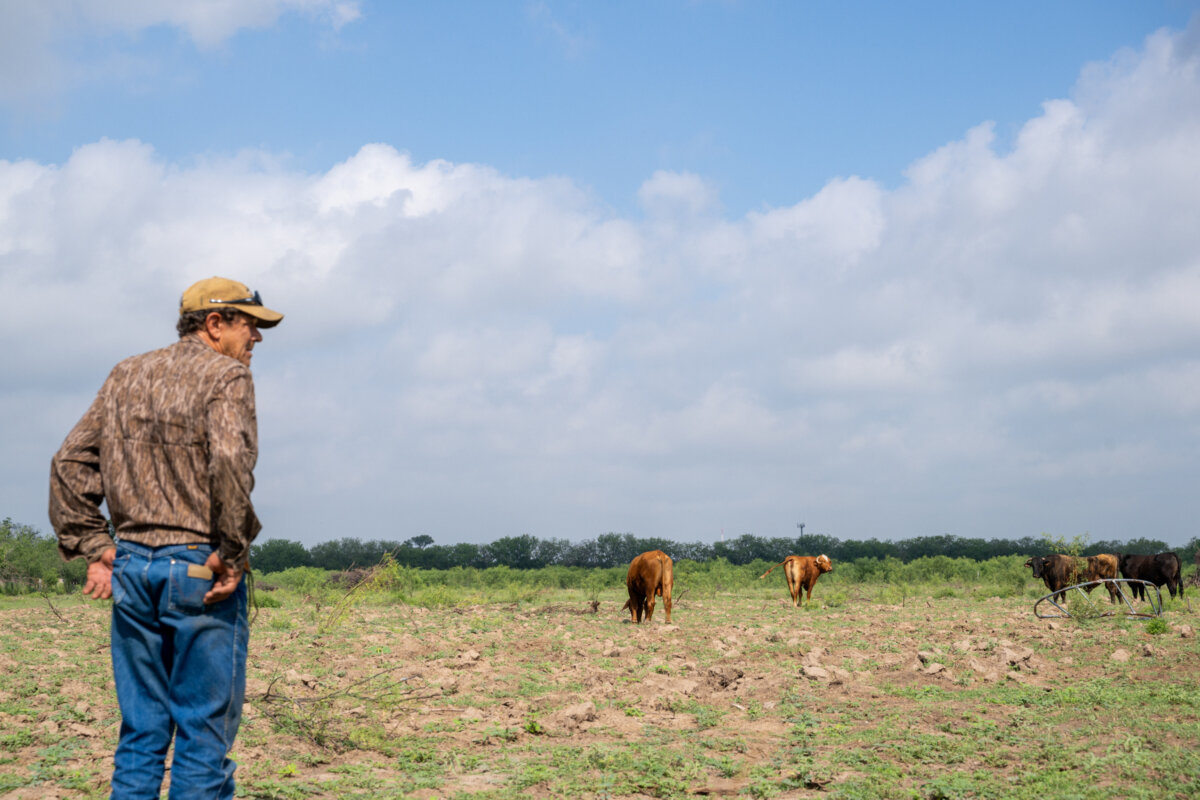
What if the current shortage of beef is today’s canary in the coal mine, like an early warning about agriculture in crisis? Rather than blaming imports, tariffs, droughts, and the Big Four Oligarchy, what if the low American beef herd indicates something bigger going on in our nation’s agriculture? The American beef inventory is the lowest it’s been since 1950.
This analysis isn’t making headlines, but it is worth noting.
1. Deteriorating pastures. Fewer than 5 percent of U.S. ranchlands and grazing lands are being managed in an ecologically enhancing system. The magnificent and productive pre-European prairie grasslands developed because of a moving, mobbing, mowing protocol. Fire, weather, predators, and hunting moved herbivorous herds around the landscape in a beautiful but functional choreography.
Disturbance, rest, and recovery were nature’s strategy to grow grass, build soil, and soften raindrop impact. On our farm, we move the herd every day, using high-tech electric fencing to mimic this ancient choreography. The result is triple the county’s production average without planting a seed or applying an ounce of chemical fertilizer in 65 years. The pastures improve year after year using nature’s template.
But most cattle are not managed this meticulously; they graze continually in a field and keep it grazed extremely short. Overgrazing year after year weakens the grass and depletes the soil, reducing productive capacity. America’s pastures have been in an abusive, declining state for decades, and nothing can make them recover except reversing management practices. This is also true for government-owned land, both in the Bureau of Land Management and Forest Service. Poor stewardship is finally catching up with us.
Croplands tend to be on the best soils with the most forgiveness. They will be the last to deteriorate to a nonproductive state. Many perennial pastures are already there.
2. Low return per acre. Because beef cattle return the lowest income per acre of any commodity except perhaps forests, it most acutely illustrates the imbalance between rising land prices and the value of what that land can produce. Beef cattle also do not receive any crop insurance or government subsidy. To be sure, I don’t advocate for government involvement, but I am simply making the point that all other commodities either receive pricing help or are inherently more valuable per acre (such as orchards).
This ongoing low return per acre means that it’s the hardest to develop with proper infrastructure and labor. The average cow herd in the United States is 25 to 30 mama cows, which is not enough for a salary. As a result, most cattle growers have a town job, and the farm is really a glorified hobby. That results in sloppy accounting and a non-business mentality. Because cattle are the lowest return per acre and hardest to pay full-time, it is the natural canary to signal weakness in the agriculture sector.
3. Aging farmers. Cattle farmers average five years older than the average American farmer, which is now right at 60. Old farmers, just like other retirees, are reluctant to launch new ventures, expand an existing operation, or innovate. Experimentation is risky; the older a person gets, the more risk-averse he becomes.
The fact that cattle owners are older than average means this overall succession problem will confront this sector before others. Again, the canary. Ultimately, no farm is sustainable until it creates two full-time salaries from two different generations. This is true for other sectors, but the cattle sector is the first to reach a critical stage.
This aging trend can’t be fixed quickly with legislation or an executive order. It’s been a long time developing and will be a long time correcting. Herd expansion requires many positive threads to intertwine. America’s farm fabric has been fraying into geriatric reality for years, and the cow canary is sounding an alarm.
4. Low profits. Few agricultural sectors have had more trouble being profitable than cattle. As a result, deferred capital improvements are more common than not. Dilapidated buildings and over-depreciated equipment held together with baling twine and duct tape mean every project depends on the good luck fairies aligning.
Of course, young people tend to shy away from unprofitable ventures. This exacerbates the succession problem because the aging farmer can’t attract a young partner, whether related or not. Today, 47 percent of all U.S. farmland is leased; that means that nearly half of all agricultural land is managed by someone who doesn’t own it. Certainly, good stewardship can occur without personal ownership, but the idea of the independent entrepreneurial farmer as the backbone of agriculture is in jeopardy when enterprises can’t turn a profit.
Because the six subsidized crops—soybeans, corn, wheat, cotton, sugarcane, and rice—have a safety net and routinely receive billion-dollar bailouts, cattle owners are completely on their own in the chemical-industrial agriculture complex. Fragility and dysfunction, then, will naturally befall them before the other sectors. Canary.
5. Land dominant. Because cattle are largely on pastures, their production is highly land-dominant in real time. Not that soybeans or Tyson chicken houses are not land dependent, but outside leverage is harder to create on pastures. A factory chicken house depends on subsidized soybeans and corn. The cow-calf farmer depends primarily on perennial pasture that receives no subsidy.
As a result, the cattle owner is largely on his own within the greater sea of agriculture. And then his price is largely determined by four massive processing companies—Tyson, JBS, Cargill, and National Beef—reducing competitiveness in the marketplace. The land-to-production ratio, sans government intervention, on a low-return product is without parallel in the agriculture industry. Here again, cows become canaries.
Cattle farmers could do many things to change their doldrums. They could direct market to escape dependence on the big four. They could add complementary enterprises such as produce or pastured poultry. That would enable them to create an additional salary for youthful partnerships. The enhanced income could pay for ponds and fencing, both critical for efficient moving, mobbing, and mowing biomimicry. Increased profitability would finance better equipment and barn paint.
These goals are absolutely achievable. As agriculture’s problems continue making news headlines, perhaps the lesson of the day is to appreciate the cow’s unique position in the farming hierarchy and learn from this canary example. America, we have an early warning signal for future problems; it’s time to look, listen, and learn. We are not trapped. We can change—and quickly. Let’s step up to the challenge.
Views expressed in this article are the opinions of the author and do not necessarily reflect the views of The Epoch Times.
 Friends Read Free
Copy
Facebook
Tweet
Friends Read Free
Copy
Facebook
Tweet