
Commentary
While Europe and the United States try to stamp out the lingering inflationary effects of their COVID-19 policy missteps, China faces deflationary forces that promise considerable economic harm of a different sort.
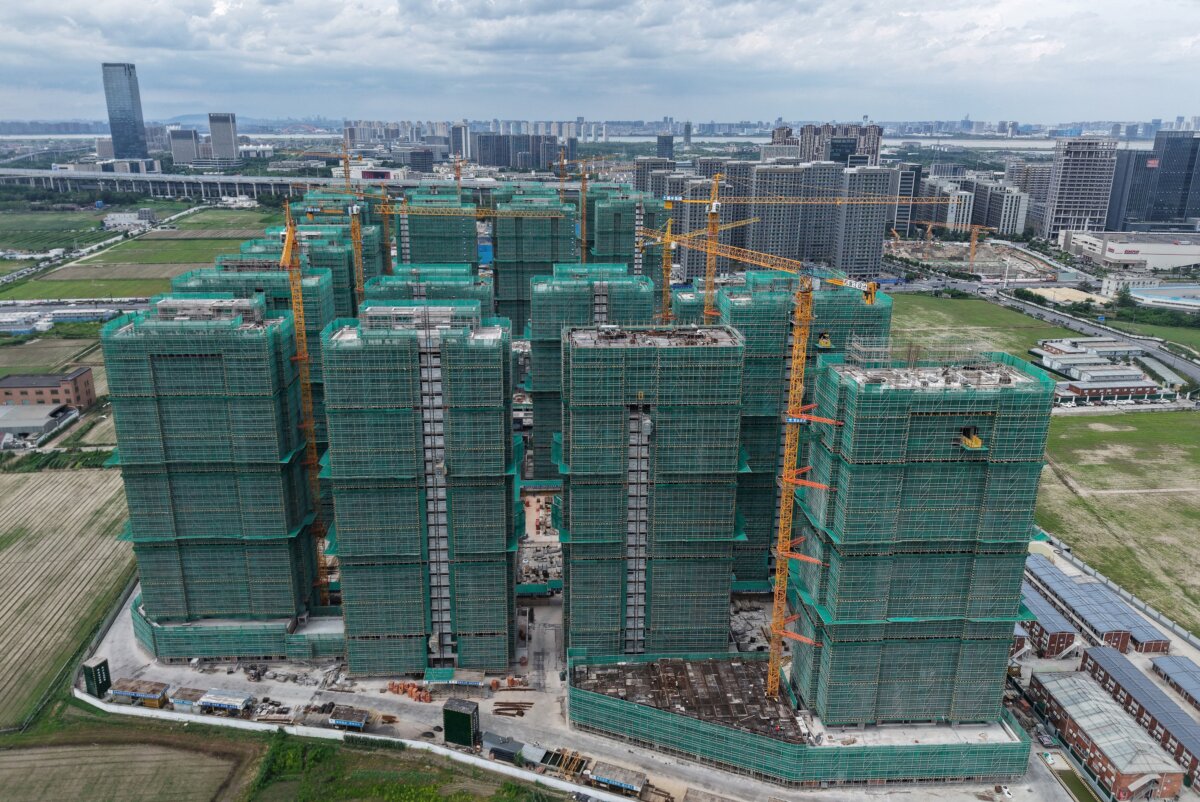
China’s deflation stems largely from specific policy errors and more generally from the severity of the country’s stubborn property crisis. It has the ability to exaggerate and exacerbate the economic ills already in place and, at the extreme, impose a kind of “doom loop” in which the negative influences play off each other. It would overstate matters to say that China is in such a predicament, at least not yet, but the possibility clearly exists.
China’s deflationary pressures operate on both retail and producer levels. Their causes are related but not entirely the same. At the retail level, the downward price pressures emerge largely because the Chinese consumer has shown a profound reluctance to spend.
Retail sales continue to underperform almost every other aspect of the economy. In the January-to-February period, they rose by a mere 2.8 percent above year-ago levels, an improvement over their extremely disappointing performance from late last year but still much slower than the 5 percent real growth Beijing claimed for the overall economy in 2025 or the reduced 2026 growth target of between 4.5 percent and 5 percent.
If the backsliding in the consumer area were temporary, this shortfall would mean little, but the fact is that the reluctance among households to spend stems from something far more lasting. China’s stubborn, ongoing property crisis continues to put downward pressure on real estate values and, by extension, on the wealth of Chinese households. Eager to rebuild their wealth, these households remain reluctant to spend.
The downward pressure on sales has kept a lid on prices. February showed something of a surge, but the deflationary pressures have kept consumer prices more or less flat since 2022.
At the wholesale level, the deflation is much more pronounced. Producer prices—what Chinese statisticians call prices at the factory gate—did rise by some 0.3 percent from January to February, the most recent period for which data are available. But over the past year, they have fallen by nearly 1 percent and have been in decline off and on since the middle of 2023.
Here, the problem lies in an unfortunate policy decision Beijing made in 2023. Worried over the economic repercussions of poor consumer spending and the property crisis, the planners in Beijing decided to get the Chinese economy going by pouring investment funds into upgrades and expansions of productive capacities in politically favored industries, among them advanced technology, artificial intelligence (AI), robotics, electric vehicles (EVs), quantum computing, and biomedical products. That heavy investment has created an extreme excess of productive capacities in these and other favored areas and engendered a vicious price competition that has dragged down producer prices generally.
It may be hard for those suffering from inflation to realize, but deflation, as China is experiencing, can feed a number of debilitating influences into the economy. Deflation certainly tends to slow the pace of economic activity as both buyers and producers wait to transact business on the expectation that prices will be lower in the future. Every such delay drags back the pace of getting and spending and hence slows the pace of economic growth, capital investment, and job creation.
Moreover, the declining prices of products impose a loss on any business that must maintain inventories for sale, which is most of them, a fact that cuts back on the financial wherewithal to invest, expand, and create jobs.
The impact of these profit-retarding effects shows clearly in the slowed flow of foreign investment capital into the country. For years, European, U.S., and Japanese businesses saw China as the greatest growth prospect in the world. Investment funds from these sources poured into the country and contributed significantly to astounding gains from investments in China.
But of late, in large part because of the general growth slowdown but especially because of the ill effects of deflation on profits, such investment flows have ebbed significantly. The cutbacks began in 2023, not coincidentally when the first signs of deflation appeared, and have continued since. Last year was the third consecutive year of declining foreign investment flows, which fell 9.5 percent below the already reduced levels of 2024.
Any economy would suffer from such cutbacks, but China, in particular, needs foreign capital flows. Not only do they put needed financial resources at the disposal of China’s economy, but they also bring the economy desired technologies and advanced business practices. With atypical realism, Beijing’s planners seem to have recognized the fundamental troubles against which this decline in foreign investment has occurred.
Beijing’s 15th Five-Year Plan emphasizes the need to reverse these adverse trends. It sees the need for a five-year horizon to accomplish this. By seeking such a long horizon, the planners have effectively admitted the severity of the problem. In the meantime, the pace of China’s economic growth will suffer.
Views expressed in this article are the opinions of the author and do not necessarily reflect the views of The Epoch Times.
 Friends Read Free
Copy
Facebook
Tweet
Friends Read Free
Copy
Facebook
Tweet