
Commentary
A little more than a year before Sweden’s next general election, scheduled for Sept. 13, 2026, Prime Minister Ulf Kristersson’s center-right coalition faces a mounting crisis of confidence. The most recent opinion polls show his government trailing the opposition, some by more than 10 percentage points—a stark warning sign for a fragile administration that came to power on ambitious promises it has struggled to fulfill.
When Kristersson and his three-party center-right alliance won the 2022 election, they did so with a razor-thin two-seat majority in the 349-member Riksdag parliament. Moreover, the victory was driven less by enthusiasm for a general rightward shift in politics than by mounting public frustration with the outgoing Social Democrat–Green Party government, which voters felt had failed to address key societal challenges.
During its tenure from 2014 to 2022, the Social Democrat-led coalition pursued what critics labeled a far-left “woke” agenda, including an open-border immigration policy that led to the influx of approximately 100,000 immigrants annually. Because the increase continued a long-standing trend of high immigration since the 1990s, Sweden’s population grew from 8 million to more than 10 million, creating a significant financial burden for both national and local governments in housing, welfare, and health care for newcomers, as well as a sharp rise in violent crime.
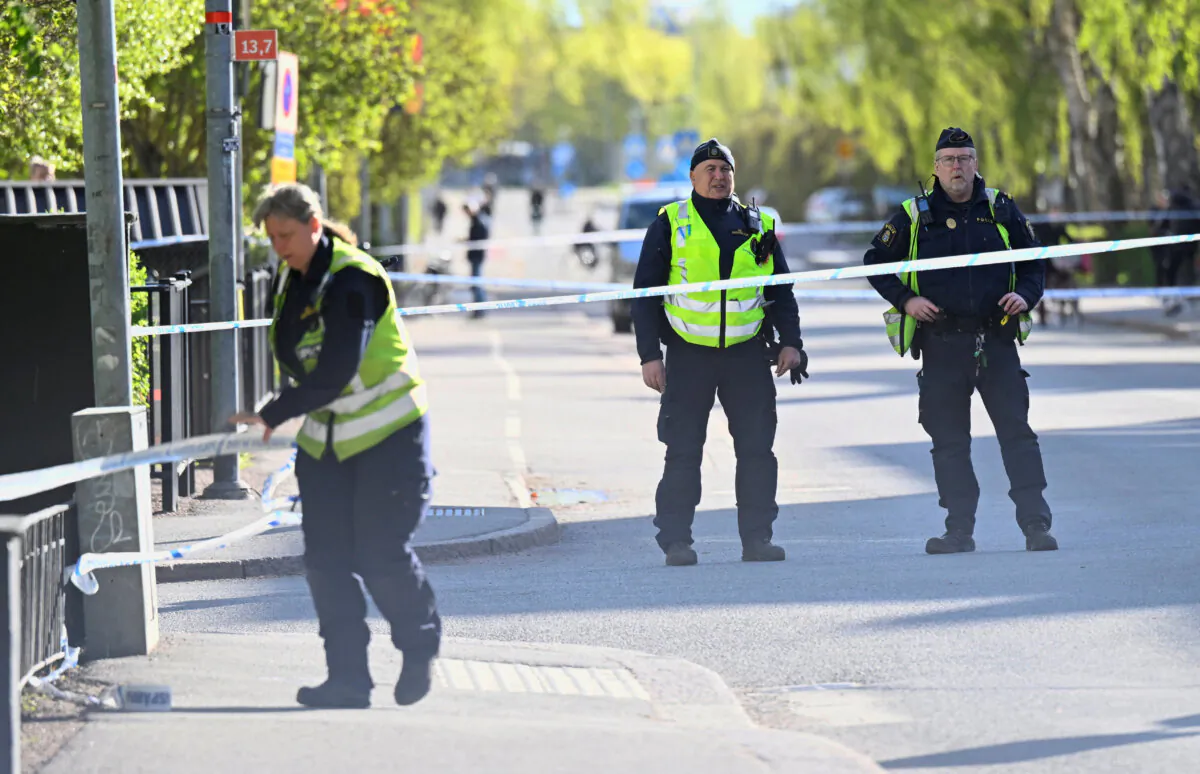
By the early 2020s, Sweden was leading Europe in per-capita gun homicides, rapes, and bombings—crimes that were virtually unheard of in the country just a generation earlier. Public spaces in earlier clean and safe towns and cities also became dominated by immigrant gangs, including Eastern European beggars, further fueling public unease.
Still, even if the 2022 election result was a protest vote, it presented an opportunity for Kristersson’s coalition to put Sweden on a partly new path. Yet, despite reforms and harsh rhetoric on crime and immigration, efforts to reduce immigration numbers and enhance law enforcement have fallen short. According to Statistics Sweden, the country’s public statistics bureau, immigration has increased anew in the past three years, and violent crimes are still dominating the news.
These developments are also unfolding at a politically perilous moment. While public concern about law and order remains high, Sweden’s economic performance has been tepid at best. Unlike some other European countries, Sweden avoided a full-blown financial collapse following the COVID-19 pandemic. Still, growth has stagnated, unemployment has ticked upward toward 9 percent, inflation has eroded household purchasing power, and the government has had limited fiscal room to maneuver. Also, Sweden’s welfare system remains extremely costly, and underperformance in health care, education, and social services further undermines the government’s popularity.
Adding to these difficulties is the fragility of the ruling coalition. Kristersson’s Moderate Party governs in partnership with the Christian Democrats and the Liberals, but also depends on support from the Sweden Democrats. This nationalist, anti-immigration party became the second-largest party in 2022 and remains a lightning rod in Swedish politics. Its past associations with right-wing extremists still generate discomfort among many voters—and endless scrutiny from the media, including Sweden’s notoriously left-wing public service radio and television. The ruling alliance has also proved challenging to manage internally, as ideological differences have made it hard to present a coherent and effective policy agenda.
Meanwhile, the opposition, led by former Prime Minister Magdalena Andersson, has seized on the government’s faltering record and managed to position itself as a steadier alternative. Their allies—the Green Party, the Left Party (the former Communist Party), and the agricultural Center Party—have also shown steady numbers in support. In addition, the current coalition’s junior partners, the Christian Democrats and the Liberals, are polling below the 4 percent parliamentary threshold. Given Sweden’s proportional election system, the left-leaning bloc would thus likely win a clear majority if elections were held today.
Still, Kristersson is not without political assets. A typically Swedish, low-key, and technocratic figure, he is regarded as competent and steady. He has also begun to sharpen his message in anticipation of the year-long campaign ahead, signaling an intensified focus on law enforcement, border control, and national security issues, where public trust in the present government remains relatively strong.
In the election campaign, Kristersson is expected to highlight the opposition’s past failures, especially their permissive immigration policies and the traditional media’s complicity in downplaying the resulting crime wave. The strategy will be to paint the Social Democrats as the architects of the very problems now plaguing Sweden—and as in cahoots with the extreme left-wingers controlling the Greens and the Left Party.
Still, the road ahead is uphill. Without lower immigration numbers and a marked improvement in public safety and economic confidence, Kristersson’s government risks becoming a one-term experiment. A return to left-wing rule after only one term would also align with Sweden’s political tradition. Except for four short periods, the Social Democrats have ruled the country since 1932.
Views expressed in this article are the opinions of the author and do not necessarily reflect the views of The Epoch Times.
 Friends Read Free
Copy
Facebook
Tweet
Friends Read Free
Copy
Facebook
Tweet