
Commentary
At the U.S.–China summit in Washington, each side apparently agreed to a “tariff truce” for two more months, including a decrease in tariffs on $30 billion of “non-sensitive” goods imported from the other side.
These $60 billion in tariff cuts will be welcomed by U.S. producers of coal, agricultural products, fish and seafood, wood products, medical devices, and cosmetics. U.S. consumers will enjoy cheaper Chinese imports such as toys, fireworks, and household goods.
But Washington may be ceding the moral high ground and giving Beijing time to increase its relative power.
The agreement, reported after the Sept. 23 to Sept. 25 summit, is not yet official. It applied only to non-strategic goods, excluding advanced U.S. semiconductors that are key to developing advantages in artificial intelligence. Nor are rare-earth elements (REE) included.
Beijing attempts to use its near-monopoly on refined REE as economic coercion against the United States and our allies. Perhaps to improve its bargaining position, Beijing slowed exports of rare-earth magnets to the United States ahead of the summit. This indicates that the United States, Europe, and Japan should accelerate their plans to develop their own REE supplies independent of the Chinese Communist Party (CCP).
There were no major agreements on AI, Taiwan, or China’s economic and military support for Iran and Russia. The White House has not yet approved $14 billion of arms sales to Taiwan. The U.S. ambassador to China said that U.S. President Donald Trump offered to sell arms to China, and Trump said publicly on Sept. 28 that “maybe it’s a good idea.”
The CCP wants Washington to stop supporting Taiwan diplomatically, economically, and militarily. Beijing seeks to stall U.S. arms sales to Taiwan, making the island democracy vulnerable to takeover. That would remove a democratic thorn in the CCP’s side and shatter confidence among U.S. allies in case of war with China or Russia.
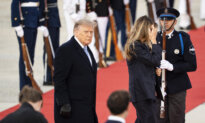
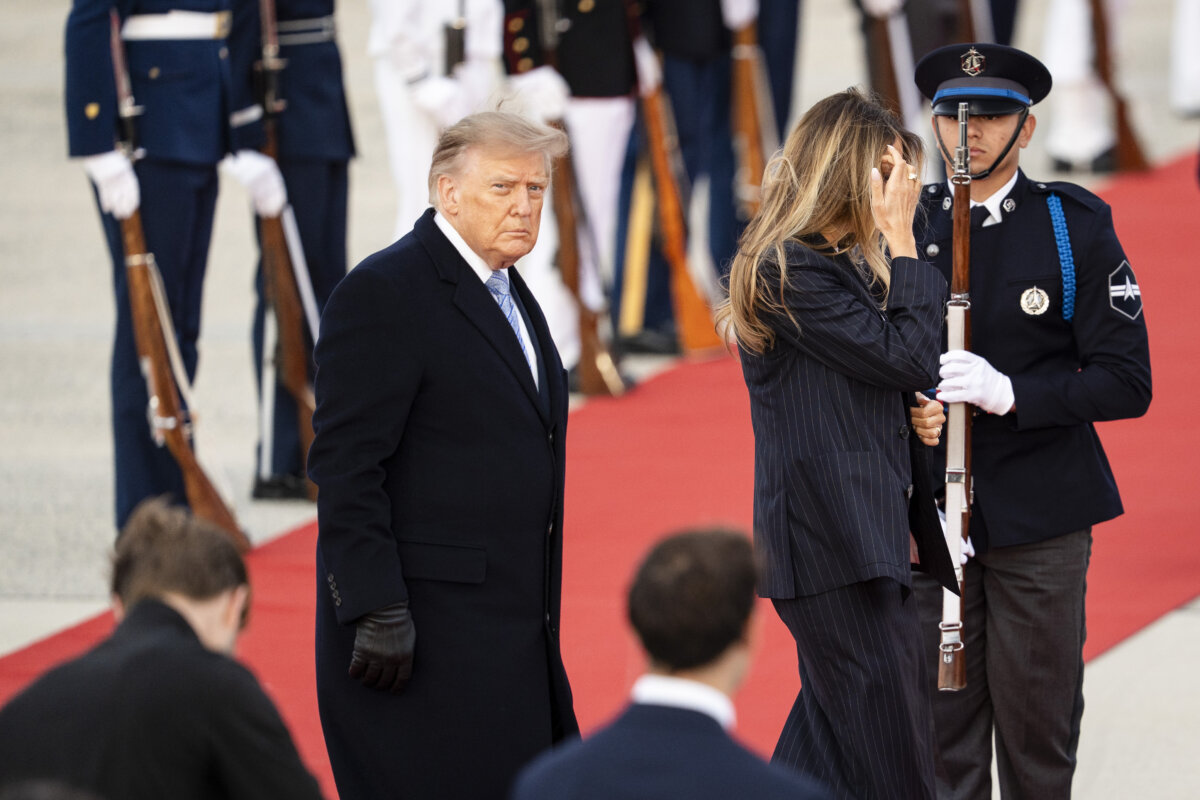
The summit included plenty of pomp, including U.S. military service members on their hands and knees smoothing a red carpet for Chinese leader Xi Jinping at the airport. That video went viral. Trump then met Xi on the tarmac, which is rare for a state visit. This has only happened two other times since 1962, for a pope and a UK prime minister.
There were U.S. military flyovers, Xi’s giant panda gifts, American and Chinese flags on the roof of the White House, and Trump in a tuxedo for the state dinner. Xi wore his Mao suit.
The glitz and bonhomie were arguably a public relations win for the regime in Beijing, which seeks to present itself and communism as non-threatening ideological equals to the elected leaders of major global democracies. For the CCP, legitimacy derives from power, not elections. Mao Zedong said that political power grows from the barrel of a gun. Xi’s approach in Washington is to draw a smile on the weapon.
Part of the problem with the seemingly weakening U.S. bargaining position is China’s monopoly on REE refining and many U.S. exporters’ dependence on the Chinese market. Ahead of the summit, China took several steps toward making these bargaining chips count.
China is still using its lack of enforcement against fentanyl precursor producers as one of those chips. If the United States capitulates on various matters, then Washington would likely get more law enforcement cooperation on fentanyl.
Beijing’s recent “warning notice” to its precursor manufacturers is the minimum it should have done long ago, not evidence of the increased enforcement cooperation necessary to significantly slow the flow of illicit fentanyl. Beijing’s lack of enforcement arguably leads to tens of thousands of U.S. deaths annually and warrants much tougher treatment of the CCP.
Many U.S. farm sectors, particularly pork and soybeans, are dependent on exports to China. Their industry representatives in Washington have political heft through their lobbyists. In May, the Chinese regime agreed to buy $17 billion of farm goods (excluding soybeans) annually from the United States. However, in the first seven months of 2026, China purchased only $3.9 billion of such goods. This is another in a long list of violated promises by Beijing.
Further such agreements are next to useless, if not counterproductive, as long as past agreements are not honored. New ones lead the naive and wilfully blind to justify further engagement and enabling of the regime in Beijing.
The $60 billion in tariff cuts may make trade easier between the United States and China, but it arguably enables China economically and kicks the can down the road for a future confrontation when China is even more powerful than it is now. The CCP’s main goal in talks with the United States is arguably to set the stage for China to replace the United States as the most influential global superpower.
Compared with U.S.–Soviet summits of the 1980s, the recent meetings focused on two leaders of equal nations rather than the leader of the free world and international system channeling the world’s most powerful authoritarian country toward democracy and human rights. These larger normative issues, which give the United States global soft power relative to China, were apparently sacrificed for the mundane and self-defeating issues of more trade with the world’s most dangerous totalitarian country.
Xi’s decision to skip a trip to New York City for the annual United Nations General Assembly’s support for the Washington summit underscored his preference for a nationalistic approach to politics, rather than further empowering a U.S.-led international system established in 1945, when the United States was the world’s greatest superpower.
Three years later, human rights and democracy were enshrined in the U.N. Universal Declaration of Human Rights, which China agreed to. Xi prefers to ignore this and treat the United States as a mere equal rather than as the center of international institutions and norms related to freedom, security, and trade.
The lack of major agreements or conflict at the summit is arguably a demonstration of the CCP’s goal of stabilization and détente as China grows its economic, industrial, and military power relative to the United States. U.S. decoupling from China, starting during Trump’s first term and without parallel global controls on China’s commerce, led Chinese companies to transship to the United States via third countries and to shift their supply chains and export markets to Southeast Asia, Europe, Africa, and Latin America.
China’s strategy is arguably to manage its relationship with the United States until its global influence and economic strength further outpace that of the United States. Beijing would then gradually become the world’s leading superpower and exert the greatest influence over international institutions.
By that time, the Taiwan issue could be moot, or China’s military could take over the island without firing a shot. This is consistent with Xi’s approach to the summit in Washington. It explains the continuation of a frosty yet relatively non-confrontational near future for bilateral relations, but one in which relative U.S. power erodes over time, eventually leading to conflict or capitulation.
Views expressed in this article are the opinions of the author and do not necessarily reflect the views of The Epoch Times.
 Friends Read Free
Copy
Facebook
Tweet