Commentary
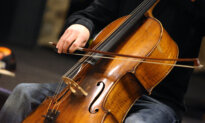
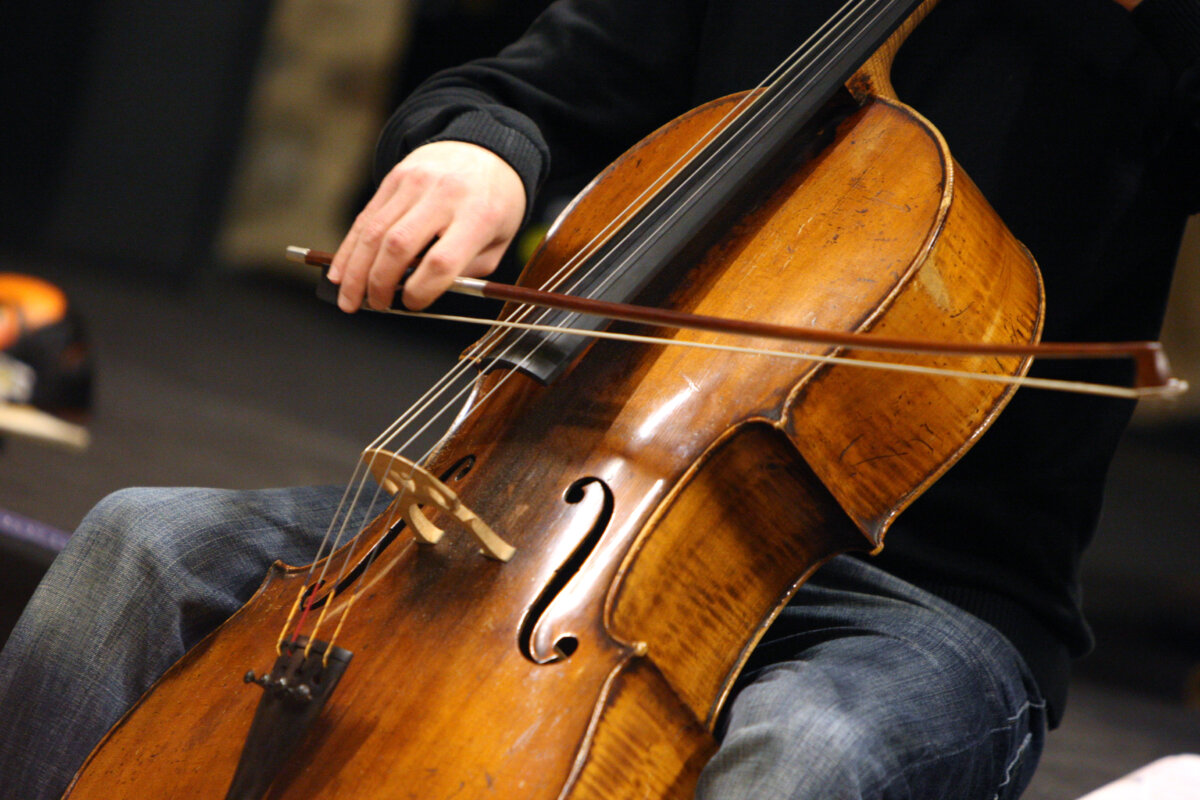
There is a mystery associated with the string instrument called the cello. The instrument itself is the product of hundreds of years of development before finally it arrived in the current form. Played well, by a master, it can sound ominously like a human voice. It can even go beyond that to become anthropomorphic. It seems to have real emotions like joy, pathos, despair, and hope.
In recording, it is one thing. In live performance, it is startling and unforgettable. This is why history’s greatest cellists—Pablo Casals, Mstislav Rostropovich, Jacqueline du Pré, and Yo-Yo Ma among among them—call forth such a dedicated following. Those who have heard them live, in chamber music or solo, tell of the event for decades following.
I was privileged enough this weekend to know something of that experience. The Churchtown Dairy in New York hosts chamber music concerts in its famous round barn when the cows are in pasture during the summer. I was in attendance at the presentation of Brahms’ famous piano quartet #1 (G Minor, Op. 25), which is this gorgeous and ferocious piece debut with Clara Schumann on piano.
It featured Todd Phillips on violin, Catherine Cho on viola, and Mihae Lee on piano, and Matthew Christakos, now Associate Principal Cello of the New York Philharmonic. All of them are remarkable musicians but some thoughts on the cello in particular. It’s the first time I can recall hearing the instrument so fully and convincingly human, to the point that the player himself disappeared and the instrument itself seemed to speak and not just speak but cry, laugh, and celebrate with joy.
Sitting very close to the stage, I could see Christakos himself shift his attention constantly away from the music and toward the other musicians left and right and upward to feel the sound bouncing around the room. He had the attention of a singer in a small group.
What’s especially striking about his personal biography is that he is one of the youngest musicians even to be in this position. He is now 24 years old, having won following rigorous and blind tryouts two years ago. This is a position for which many thousands of cellists the world over would hope. He was chosen, and though I’m hardly in a position to judge, he certainly merits it in every way.
So, yes, of course, he deserves the genius moniker. The usual trope that people have when describing such a talent is to say that he has a gift. I always resist saying this because it implies that such people just happened to be in possession of benefaction from the heavens, as if it could occur to anyone. This is emphatically untrue and it mischaracterizes what it takes to earn this kind of status.
Matthew started playing cello at age four. I have no first-hand evidence but think of any 4-year-old you know. Do you think he or she would be thrilled to be given a bow and an instrument and taught the discipline necessary to practice and improve? Very likely he had musically-focused parents who understood, not that they pass on their musical genes (though there might be something like such a thing) but because they pass on their passion.
Still, there had to come a point in his life where he made a choice. He could treat the cello as another task to please parents and teachers or really dedicate himself to improvement with every spare hour. It’s a decision that one has to make not just once but many times over and over at every stage of life, from pre-teen through teen and then into college. Many times, prodigies give it up at some life transition. In fact, this happens more often than not.
In this case, it did not happen. He stuck with it and learned as much music history, theory, and repertoire as humanly possible, to the point that during his last year in college, he decided to give it a try and audition for one of the most prestigious orchestras in the world.
What makes a person become this? Is it nature, nurture, a gift from God, or sheer hard work? It is some combination but among the choices, it is the last one that is most underappreciated. And this is true not just in arts but in every single profession no matter what it is. Show me a master of any craft—pottery, poetry, finance, or surgery—and I’ll show you a person who has worked uncommonly hard to get there.
A “gifted” novelist is a person who has shed blood, sweat, and tears to craft the perfect story and prose. A “gifted” speaker is a person who can tell you many stories of standing before an audience and not doing well. A “gifted” scientist is a person who has spent thousands of lonely hours alone in a lab struggling to understand.
To dismiss such people as merely “gifted” is to diminish the work that goes into greatness. Not only that. It is a scheme to let ourselves off the hook for failing to do the work in our own lives that would otherwise cause us to become excellent, outstanding, or masters of our craft.
The truth is that anyone, really everyone, can come across as gifted in any line of work. We can and should all get better, if it is greeting customers at a store, efficiently helping people with tech support, managing a landscaping job, or project management at work. Maybe it is managing a household or teaching young children to read and do math.
We all have tasks. There is no such thing as unemployed, not really. That means that the opportunity for true excellence is before us all. We need to get better at taking responsibility for all the ways in which we fall short.
For that matter, I think about the architect who built this beautiful round barn. His name is Richard Anderson. He did not study architecture. He learned it and infused the profession with his own unique vision. He works as much and as hard as anyone I’ve ever known. The evidence of his achievement is all over New England today. He is exactly the kind of person people call “gifted” but the reality is that he is indefatigably dedicated to excellence.
The round barn itself seems to whisper this truth. There is something fitting about hearing Brahms in a circle, where sound has no corners to trap it, where music rises and falls and wraps back upon itself like the years of practice that brought this young man to this moment.
The architecture mirrors the art: both require patience, both demand that we surrender our immediate desires for something that will outlast us. Richard Anderson did not wake up one morning able to conceive of such a space, just as Matthew Christakos did not wake up able to make a cello weep. They built these capabilities brick by brick, note by note, failure by failure, until the failures themselves became the foundation.
What strikes me now, days removed from the performance, is how rarely we permit ourselves to witness such excellence without resentment or excuse-making. We are trained to spot the “advantages” that others had; the head starts, the connections, the lucky breaks. This habit of mind protects our ego but poisons our potential.
When we watch a master at work, we are not seeing someone who won a cosmic lottery. We are seeing someone who accepted the terms of excellence: the loneliness of early mornings, the risk of humiliation from public mistakes, the thousand small deaths of the ego that precede any genuine achievement.
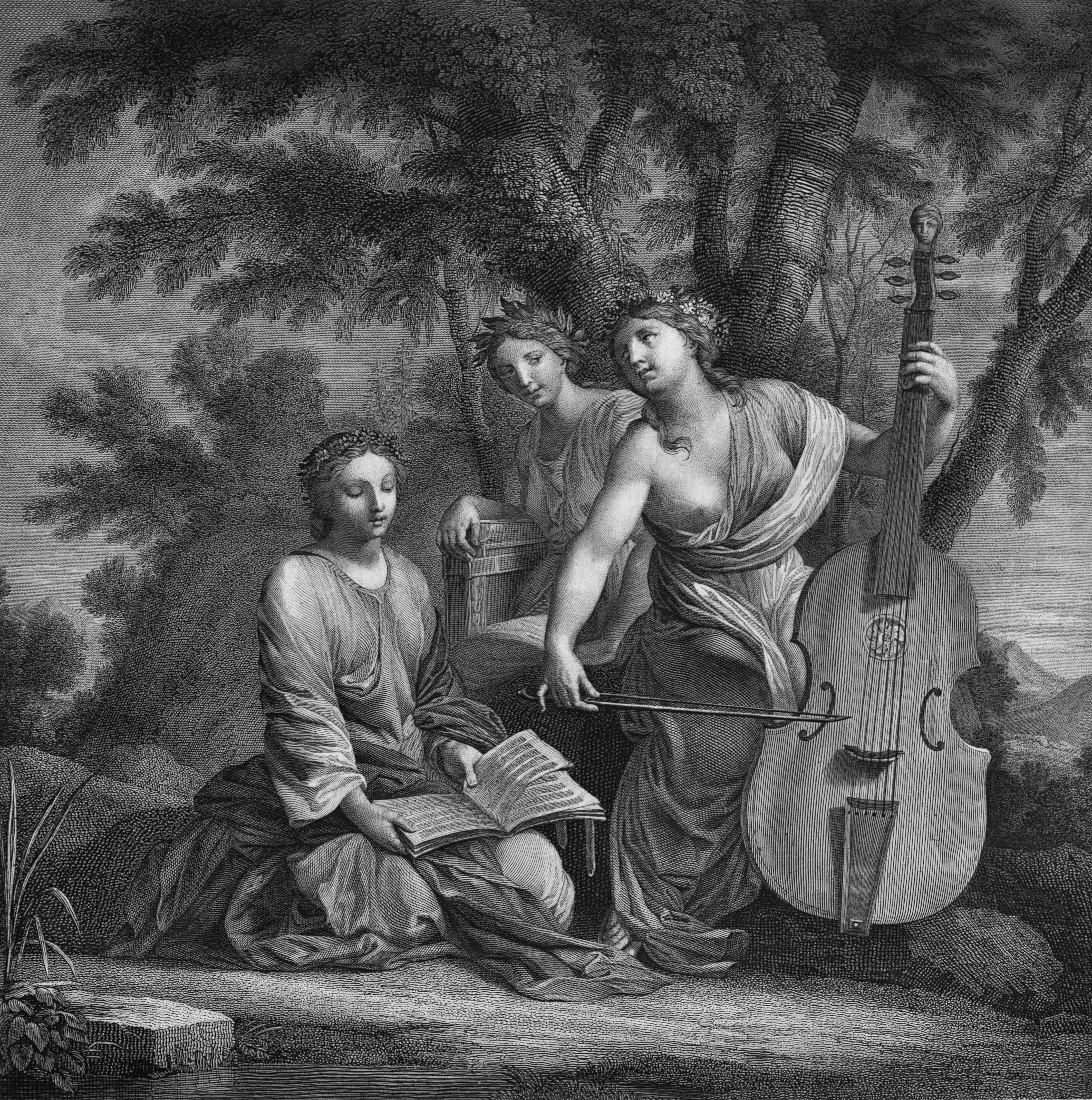 Three of the nine Muses of Greek mythology, Melpomene, the muse of Tragedy, Polyhymnia, the muse of Hymns, and Erato, the muse of Love Poetry. (Kean Collection/Getty Images)
Parents are mistaken when they do this with their children, trying them out in every field to find the one that clicks. This is fruitless. What makes anything click is training, discipline, and lonely work, most often with the mentorship and attention of someone who loves them.
And what of the rest of us, who will never play for the New York Philharmonic or design buildings that grace the countryside? We too have our instruments, whether spreadsheets and stethoscopes, lesson plans and legal briefs, cutting boards and classrooms. The principle does not change.
The mother who gives her full attention to a child’s question, the mechanic who refuses to let a car leave his shop until it is truly right, the writer who crosses out a perfect sentence because it does not serve the whole, the tech support voice who genuinely wants the problem solved before the call ends, the dog trainer with the patience of Job—these are the same people, engaged in the same holy work of becoming excellent.
In the pauses between movements in the Brahms quartet, the silence in the round barn felt almost sacred; when it ended, the audience broke into extended and thunderous applause. We had been present at something that transcended the players and the audience alike.
This is the gift that the truly excellent give to the rest of us: not just entertainment, not just admiration, not just celebration of virtuosity in composition and performance but a vision of that of which human beings are capable when they refuse to settle for good enough. The cello and its three instrumental friends had spoken, and in its collective voice we heard our own possibilities calling.
Let us retire the language of “gifts” and “genius” as explanations, and reclaim them as aspirations. Matthew Christakos did not receive his mastery; he earned it. In doing so, his resulting talent extends an invitation to everyone who heard him that night. The work is hard, yes, but it is available to anyone who chooses it. That choice—made daily, made stubbornly, made in the face of doubt and distraction—is the only miracle that matters.
None of which is to diminish the role of the divine in talent but it needs human volition to reach genius, which, in this case, is that middle realm between time and eternity, which is the intended destination of any art or any human undertaking.
Views expressed in this article are the opinions of the author and do not necessarily reflect the views of The Epoch Times.
 Friends Read Free
Copy
Facebook
Tweet
Friends Read Free
Copy
Facebook
Tweet