
Commentary
Over the past decade, Swiss luxury watches, such as Rolex, Patek Philippe, and Audemars Piguet, have become more than just timepieces in China. They are seen as symbols of status, wealth, and success, especially among the growing middle class. However, this perception is changing.
On the pre-owned market, once-hyped models have plunged in value this year. The Rolex green Daytona, for instance, dropped from 1.2 million yuan ($168,665) at its peak to 410,000 yuan ($57,630). Patek Philippe’s popular models now sell for less than their original prices, yet still fail to attract much interest. The Audemars Piguet Royal Oak, which once sold for 3.85 million yuan ($541,000), now sells for around 2.35 million yuan ($330,300), meaning sellers could lose more than 1 million yuan ($140,500) on a single deal.
This sharp drop reflects a deeper problem: the weakening of China’s middle class. For this group, speculative optimism has come to an end, and showing off wealth is no longer a top priority.
Middle-Class Stress
According to the Federation of the Swiss Watch Industry, Swiss watch exports to China fell by nearly 26 percent in 2024. The decline has continued into 2025. Between January and June, export volume dropped by 420,000 units—a 5.7 percent year-on-year fall—setting a new historical low.
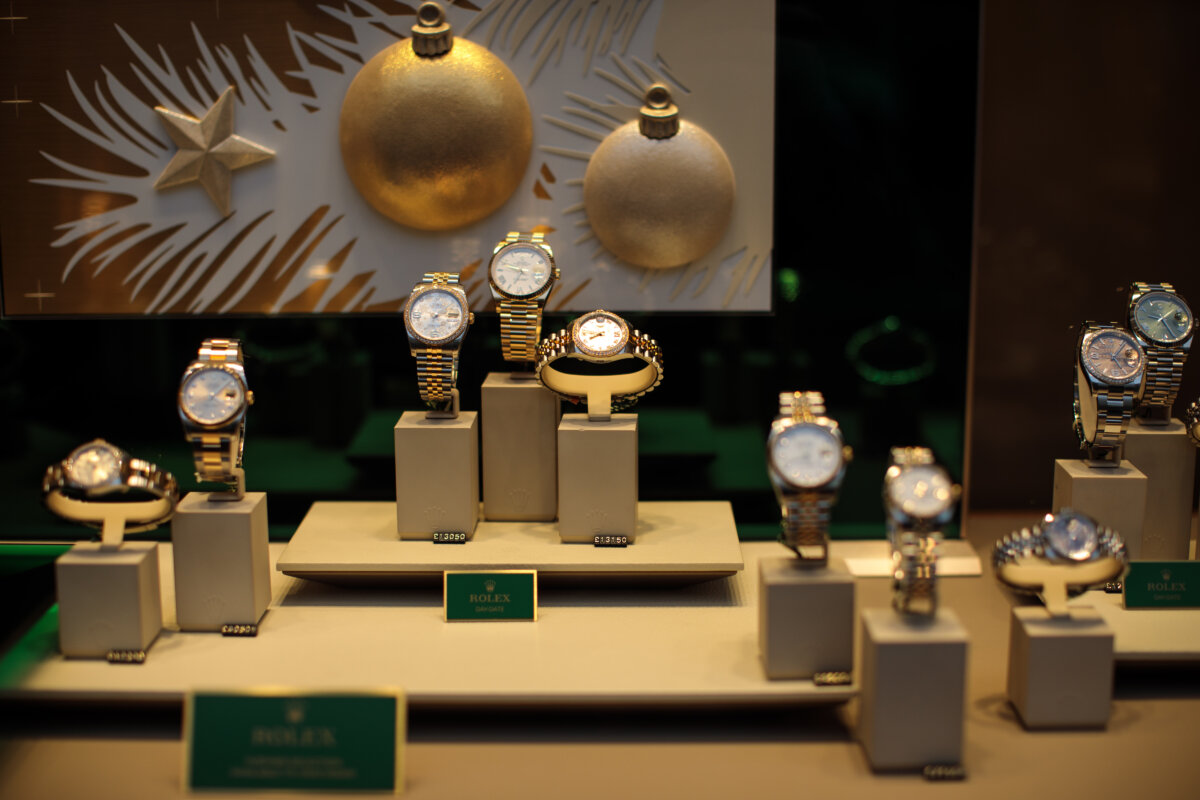
In high-end shopping malls across Beijing and Shanghai, the transformation is evident: the “exhibition only” signs have vanished, waitlists have disappeared, and display cases are now fully stocked.
This collapse is more than a demand issue—it reveals a structural shift underway in Chinese consumption habits, particularly among the middle class, which was once the most reliable engine behind the luxury sector.
China’s middle class—defined by the National Bureau of Statistics as having annual incomes between 100,000 yuan and 500,000 yuan ($14,055 to $70,277)—has been the backbone of luxury sales.
But as economic momentum slows and uncertainty rises, this group is facing intense pressure on multiple fronts.
On the one hand, income growth is faltering. Chinese state media outlet Economic Observer reported that 11 of the 24 A-share listed securities companies implemented varying degrees of pay cuts and reductions in year-end bonuses in 2024. Compared to 2021 levels, two companies have cut salaries by more than 40 percent, and four others have cut salaries by more than 30 percent.
At the same time, household balance sheets are deteriorating. Since 2021, property prices across China have declined by an average of 57 percent. In cities like Beijing and Shanghai, second-hand housing prices have dropped by 25 to 30 percent. With more than 70 percent of middle-class wealth tied to real estate, the shrinking asset base has triggered a significant contraction in wealth.
By the end of 2024, the total debt of Chinese households was equal to 65.1 percent of the country’s GDP, according to the National Institution for Finance and Development. In urban areas, the average household owed approximately 723,000 yuan ($101,620), about 83 percent of which was tied up in home loans. At the same time, the average person had only 107,000 yuan ($15,029) in savings.
With high debt and limited savings, it’s no surprise that people are cutting back on non-essential spending first.
According to a 2024 China consumer confidence survey by U.S. management consulting firm Oliver Wyman, more than a third of respondents planned to cut back on leisure activities, while over half intended to reduce their shopping spending during international trips.
The End of the Watch-as-Investment Illusion
Luxury watches were once sold not just as products, but also as financial instruments. Due to their perceived scarcity and brand premium, they became a type of hard currency, even outperforming traditional safe-haven assets.
For instance, in 2020, in China, the Rolex green Submariner sold for more than twice its retail price, and some Patek Philippe Nautilus models increased in value by over 200 percent. During the same period, gold rose by nearly 30 percent domestically, according to some estimates.
These factors led to a mini watch speculation boom between 2011 and 2021 in China. Some collectors took out consumer loans to purchase highly sought-after models and then resold them at a profit, a practice that reflected the broader speculative mindset common in China’s asset markets.
But after 2023, with the economy slowing and liquidity tightening, resale values in China’s pre-owned watch market crashed.
More than one-third of second-hand watches remained unsold for more than six months, and dealers often offered buyback prices 15 to 20 percent below market value.
Wealthy individuals have since changed their investment choices. In 2024, demand for gold bars in China went up by 20 percent, and purchases of government bonds rose by a similar amount.
Watches, once considered a means to preserve wealth, are now viewed as risky assets due to their illiquidity, depreciation, and oversupply.
Changing Trend
Meanwhile, smartwatches are gaining popularity. With integrated health tracking, messaging, and mobile payments, they offer practical features that traditional luxury watches can’t match.
In the first quarter of 2025, China’s smartwatch shipments increased by 25.3 percent year over year, helping the country surpass North America as the world’s largest premium smartwatch market.
Beyond functionality, what people admire and spend money on is constantly changing. The previous generation of wealthy Chinese, including property magnates and coal barons, had a penchant for conspicuous consumption. Today’s elite, particularly those in tech, health care, and clean energy, prefer more subtle assets, such as art or low-key investments. Younger consumers prize personalization, practicality, and value for money, viewing smartwatches as the new status symbol.
A Sobering Reality After the Myth
The idea that luxury watches could hold or grow in value was, in reality, an unsustainable hype —a bubble propped up by the illusion of scarcity, aggressive marketing, and speculative investment. Once supply caught up with demand and the middle class came under growing debt and financial pressure, that illusion quickly collapsed.
The sharp decline in the luxury watch market signals more than just a downturn in the industry; it reflects a broader loss of consumer spending power and confidence in society. In an environment marked by stagnant incomes, rising debt, and economic uncertainty, extravagant spending is giving way to a trend of caution and practicality.
When social status loses its value, and paying off debt takes precedence over maintaining an image, the era of luxury consumption comes to an end.
Views expressed in this article are the opinions of the author and do not necessarily reflect the views of The Epoch Times.
 Friends Read Free
Copy
Facebook
Tweet
Friends Read Free
Copy
Facebook
Tweet