
Commentary
While many headlines are celebrating Italy’s recent decision to ban solar panels on productive farmland, others are still wondering: Couldn’t solar panels actually support regenerative farms? After all, we’ve seen systems that incorporate sheep grazing under ground-mounted arrays.
But let’s be clear—solar panels are not a panacea, and we are far from “solving” anything with the current iterations of alternative energy.
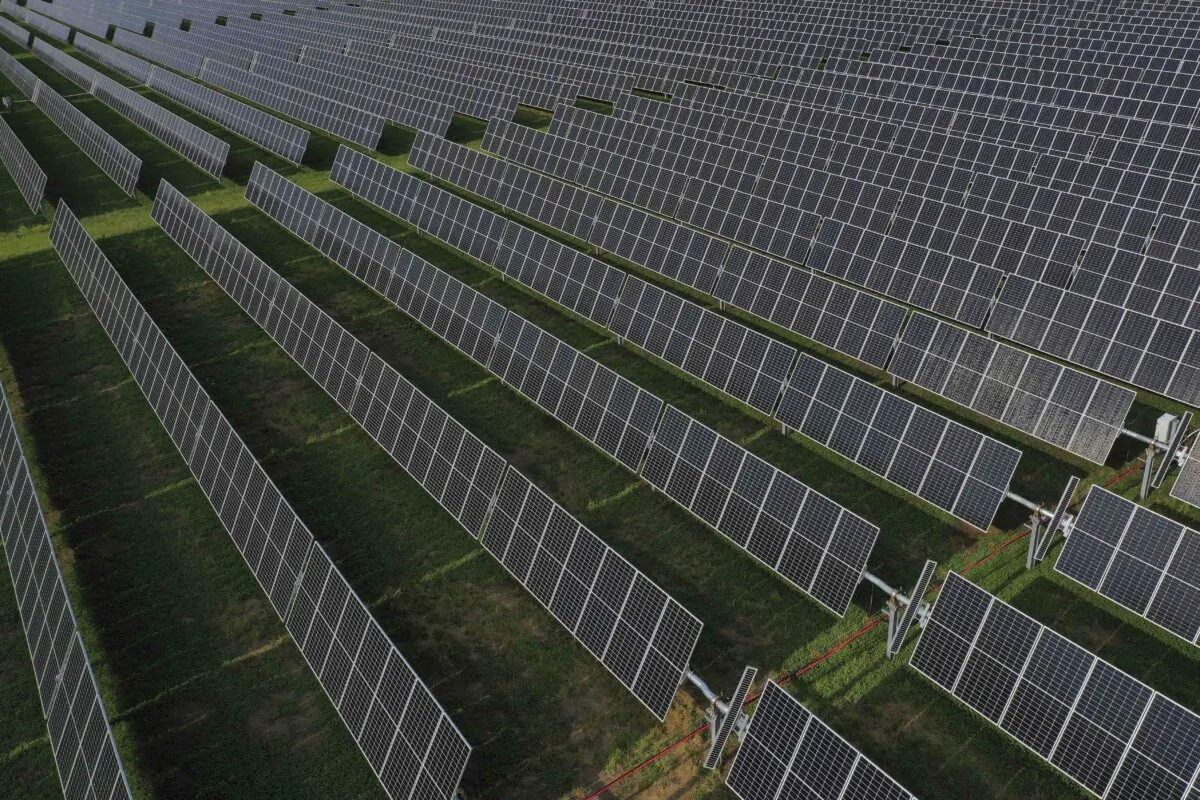
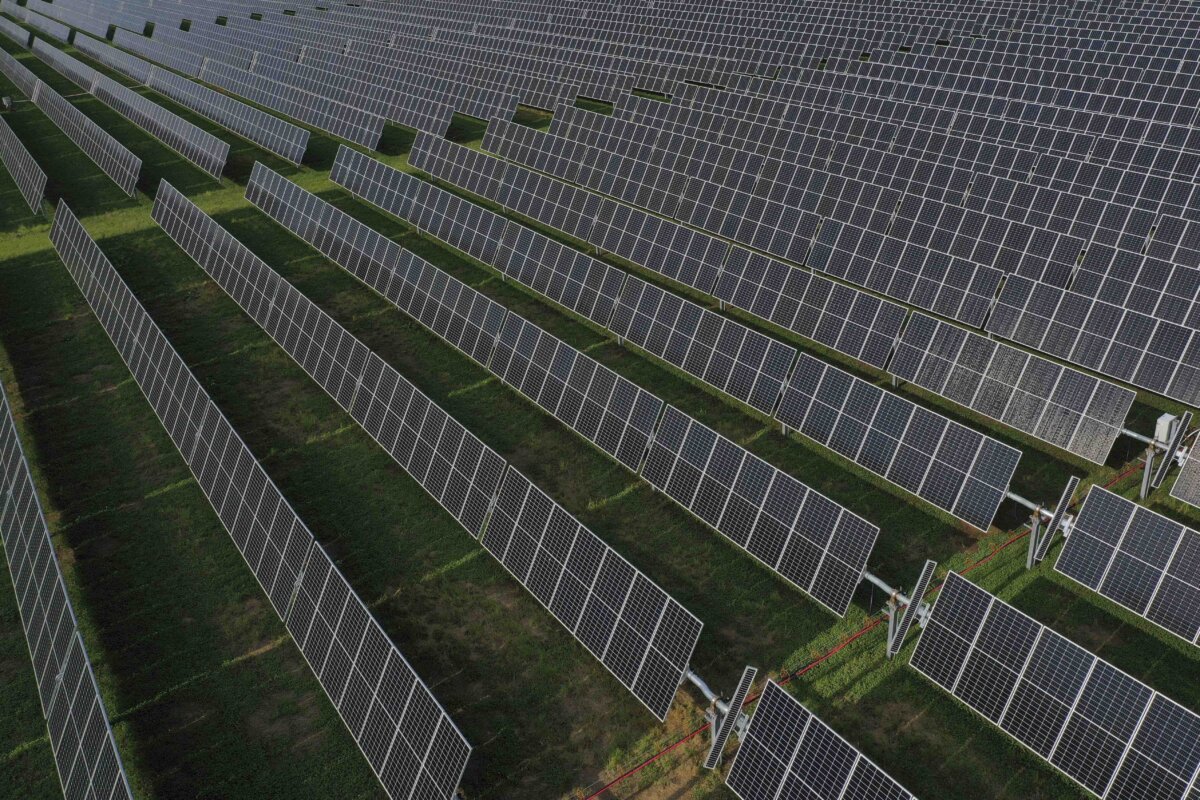
I live in Central Texas, where rural counties have few regulations—which, frankly, is one of the reasons I moved here. But even here, where independence runs deep, I’m watching a quiet takeover unfold. Solar farms are popping up on perfectly good farmland, not in concert with animals, not integrated into diversified systems, but displacing food production entirely. That’s not progress—that’s regression in disguise.
Anyone who’s followed my work knows that I believe local food systems are a matter of national security. We should be treating farms like infrastructure—just as vital as bridges, roads, or power lines. Instead, we’re watching prime land get covered in metal and glass, creating heat islands, displacing wildlife, and doing nothing to feed our communities.
And it gets worse. While the panels themselves might be passive, the installation process is anything but. To reduce airborne dust during construction, companies spray chemical dust suppressants—many of which are contaminating the very land and water they claim to protect. In fact, several commonly used suppressants contain magnesium chloride and calcium chloride, which can leach into nearby ponds and raise salinity levels, making the water toxic for fish, plants, and livestock.
But the environmental and ethical problems don’t stop at land use. The manufacturing of solar panels comes with a heavy cost: child labor in Congolese cobalt mines, devastating lithium extraction, and toxic waste from rare earth mineral processing. Much of the panel assembly takes place in China, often under poor and exploitative labor conditions, with forced labor still a concern in certain provinces.
The very supply chain that powers the green energy movement is laced with human suffering and ecological devastation. How is it ethical—or sustainable—to outsource that burden in the name of progress?
The groups most associated with forced labor in China include the Falun Gong spiritual group and the Uyghurs, a Muslim ethnic minority living primarily in the Xinjiang region. These groups and other minorities have been detained in mass internment camps under the guise of “reeducation” and transferred into state-run labor programs. Many are forced to work in factories tied to the global solar supply chain, especially in the production of polysilicon, the material that makes up most solar panels. These products often reach international markets, including the United States.
Meanwhile, rural migrants and even prisoners in China are also subject to coercive labor, with poor working conditions, withheld wages, and little transparency.
It’s time we asked: If your clean energy depends on child miners and forced laborers, is it really clean?
I personally know ranchers who can no longer let their cattle drink from their ponds—or “tanks,” as we call them in Texas—because those water sources are now contaminated. Families who built their dream homes in the country are now surrounded by solar panels and chemical drift. What’s green about that?
This isn’t a singular situation. Reports from across the country are telling the same story: poisoned livestock, damaged ecosystems, dried-up creeks, and lost livelihoods. Ironically, this so-called green revolution is actively destroying the very land and water needed to sustain life.
Is this really what environmental progress looks like? Is this really the best we can do?
Moreover, solar panels have a shelf life. Biodiverse ecosystems do not. Wind turbines wear out. Healthy, resilient soil builds year after year—if we steward it. The solution to climate change, land degradation, and food insecurity isn’t more panels—it’s more plants, more animals, more biology.
Here’s how it works: Plants pull carbon from the atmosphere and convert it into carbohydrates, feeding the soil microbiome; animals contribute to microbial life through their urine, manure, and saliva. When animals are moved daily—mimicking natural predator pressure—they help prairies, rebuild topsoil, and restore the water cycle. This is not theory. This is ancient wisdom confirmed by modern ecological science.
And yet, you’ll never see regenerative agriculture make millionaires the way solar or wind can. Why? Because it’s not designed for centralized profit. It’s local, slow, and relational. It requires humans to be present, connected, and humbled by nature—not trying to outsmart it.
Green energy, in its current form, is a scam with catastrophic consequences. It sells us a vision of redemption—of atoning for the sin of simply being human. But here’s the truth: Being human isn’t the problem; forgetting our place in the natural order is.
If we want to talk about the climate and land use, and if we care about real resilience, then we need to stop subsidizing illusions and start investing in reality. Solar farms don’t feed us—regenerative farms do.
And when you poison ponds and cattle in the name of progress, you reveal not your virtue, but your blindness.
Views expressed in this article are the opinions of the author and do not necessarily reflect the views of The Epoch Times.
 Friends Read Free
Copy
Facebook
Tweet
Friends Read Free
Copy
Facebook
Tweet