
Commentary
The course of human history is replete with evil deeds and natural disasters: massacres, famines, persecutions, unhinged murderers, volcanic eruptions, mass drownings, wars, floods, droughts, and all manner of mania like witch crazes, blood libels, and ethnic hatreds. No year has ever escaped being marred by some outrage or disaster. But some years have been worse than others.
Harvard historian Michael McCormick has claimed that the year 536 was the worst ever, and there is much evidence to back his claim. A massive volcanic eruption in Iceland dimmed the sun for 18 months, causing a hemispheric cooling that ruined crops and starved millions from Ireland to China. A few years later saw an outbreak of bubonic plague that killed half the population of the Byzantine Empire and ravaged Egypt and the Middle East. Some believe that this accelerated the arrival of the Dark Ages in Europe from which it took centuries to recover.
Other historians favour the year 1347 as the low point. That year saw the arrival of the Black Death from Asia, a plague that eradicated 60 percent of Europeans in an era already suffering from the end of the Medieval Warm Period and the onset of the Little Ice Age. It would be followed by continent-wide peasant rebellions. Then again, the arrival of smallpox in the Americas after 1520 wiped out perhaps 90 percent of indigenous inhabitants.
The years 1943–46 saw millions die in the exterminations camps of Nazi Germany, millions more perish on the battlefields, terror bombings of Japanese and German civilians by Allied bombers, and the horrors of forced transfer of populations after World War II.
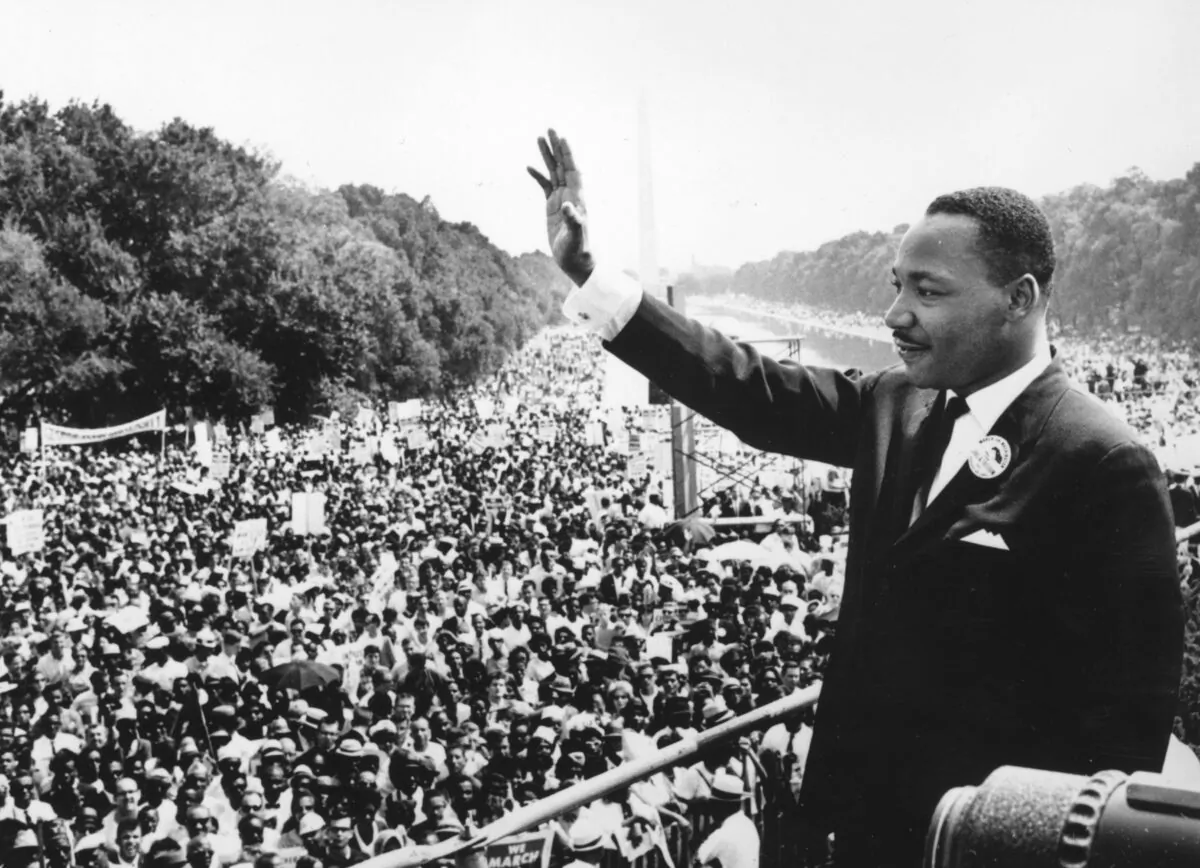
Personally, I’ve always thought 1968, the year my generation called the Year of the Pig, was pretty terrible. It is widely remembered for the assassinations of Martin Luther King (by a gunman hired by white supremacists) and Bobby Kennedy (murdered by a Palestinian who hated Kennedy’s support of Israel) but those killings only scratch the surface of a miserable period.
1968 was also the year of the Tet Offensive in Vietnam in which communist troops came close to toppling the American-backed government in Saigon. Bloody battles were augmented by bloody atrocities committed by both sides. In West Africa, the Nigerian Civil War (Biafra War) was starving millions; in Germany, left-wing terror cells were carrying out killings and arson; in France, millions of workers and students were rioting in the streets, causing President de Gaulle to flee the country. Soviet bloc armies invaded Czechoslovakia and crushed the liberalization movement “Prague Spring.” Hundreds of Mexican students were gunned down by the army prior to the opening of the Olympic Games.
In the USA, the murder of MLK sparked riots in over 100 cities; anti-war students were occupying university campuses chanting “Hey, hey LBJ, how many kids did you kill today?”; the Black Panthers and the Revolutionary Action Movement were bringing talk of Marxist armed struggle to the African American community; and a radical feminist tried to assassinate Andy Warhol. At the Democratic National Convention in Chicago, police and rioters battled in front of TV cameras as tear gas wafted onto the convention floor—a spectacle that helped propel Republican Richard Nixon to electoral victory.
The assassination of Charlie Kirk brought to me the thought that 2025 has shaped up to look a lot like 1968. Russian armies are again fighting a neighbour; civil wars are again killing millions in Africa; protesters have occupied university campuses and disrupted city life; the plight of Palestinians is again in the news; the Democratic Party is leaderless, rent by internal divisions; and there seem to be no moderate voices in political life. There are extremists for whom every opponent is a homophobic, transphobic racist and—of course—a fascist. Little wonder that we see acts of protest manifesting in the storming or occupation of government buildings. No surprise that Democratic politicians are assassinated by a rightist in Minnesota or that leftists have killed a Republican congressman and tried twice to kill Donald Trump.
The sorrowful state of ideological division in North America is demonstrated not just by the murder of Charlie Kirk, the killing of two attendees at a pro-Israel meeting, or the gunning down of a UnitedHealthcare executive, but by the spontaneous applause that these crimes generated. Grown adults with responsible positions in government, universities, and the helping professions swiftly took to the internet to express their delight at the killing of someone with whom they disagreed. Even in Canada, where the illiberal infection has spread, professors and a provincial cabinet minister volunteered graceless and antidemocratic approval of the murder of a father of two young children whose sin was thinking differently.
The 1968 killing of Martin Luther King served to bring about a moment of racial reconciliation and the passage of landmark civil rights legislation in Congress. It is greatly to be feared that the murder of Charlie Kirk will bring about no such temporary healing and that discord and violence will only grow worse.
That said, there’s also hope that, in the wake of this shocking and tragic murder, people will come to realize that hatred and division are not the path forward, and come together to safeguard the marketplace of ideas and roundly reject senseless violence.
Views expressed in this article are the opinions of the author and do not necessarily reflect the views of The Epoch Times.
 Friends Read Free
Copy
Facebook
Tweet
Friends Read Free
Copy
Facebook
Tweet