
Commentary
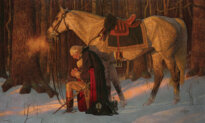
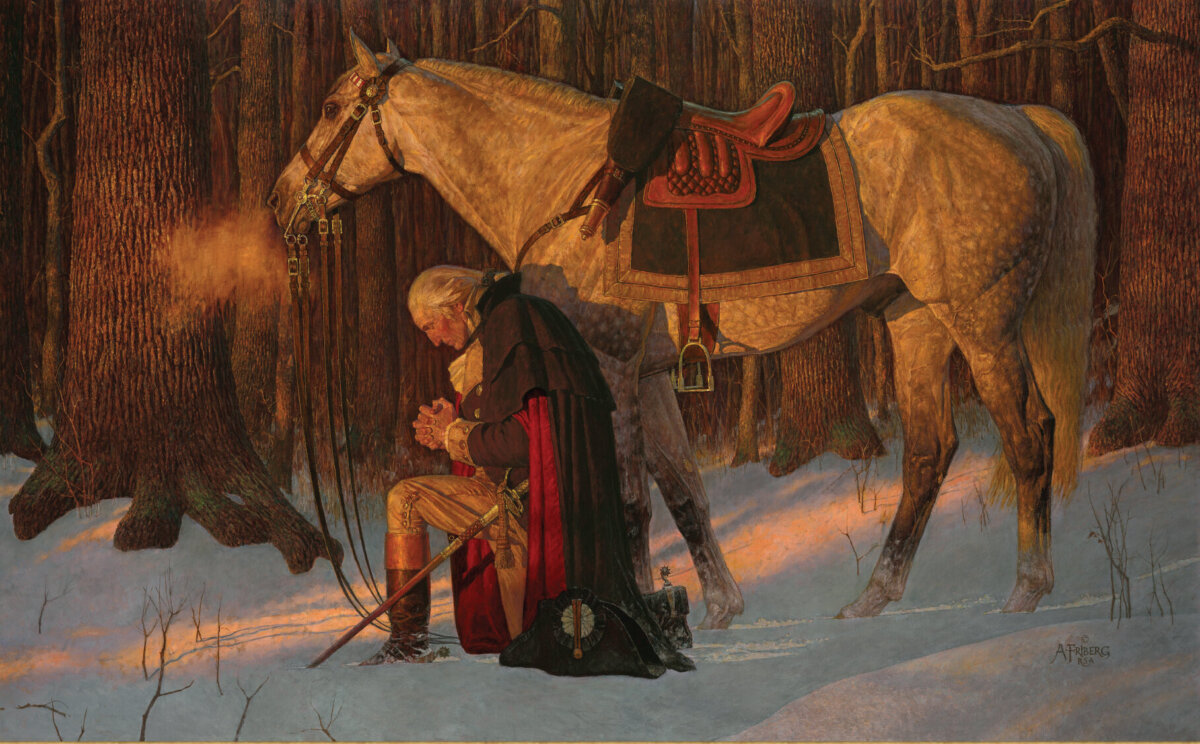
Prayer should be all the rage.
Study after study shows that the religious may look forward to longer, happier, healthier, and more productive lives than their non-religious counterparts. If you are religious and married, you are less likely to get a divorce and more likely to have children and more of them.
Our culture was built by people who organized their day around saying their prayers. Prayer is arguably the most ecumenical feature of Western religions. Muslims, Christians, and Jews recognize the Psalms, the most important and beautiful sequence of prayers ever composed, as a sacred text revealed to David. Prayer reaches across the denominational boundaries of the Christian religion. Christ himself taught his followers what to say when they pray to God the Father. None dispute it.
It stands to reason, then, that the separation between religion and state should be closed. Our governments should actively encourage religious practice—perhaps even mandate it—given the clear benefits conferred by religious life on their citizens and the potential of prayer to heal religious and cultural divisions.
If only it were so simple.
Economists would say such studies have happened upon the “positive externalities” of prayer. The bakery makes your neighborhood smell like a slice of heaven, but this is not what it sets out to do; its purpose is to churn out sourdough loaves, croissants, and a selection of your favorite cookies.
The prayerful may have built our culture, but they have divided it, too. Religious wars have haunted the West and the Christian religion in particular. Established religions led to the persecution of religious minorities and the irreligious alike. Great fights broke out over religious rubrics, for example, how, when, and what to pray.
Arguments that appeal to the utility of religion or our cultural debt to men and women who said their prayers cannot move you or me to fall down on our knees.
Think of the deathbed prayer for a moment. When a man prays in the knowledge he stands at death’s door, he does not do so to extend his life or improve its quality. Something more—something deeper—is at work in his intentions.
Uttered only after the prospect of a longer life and happiness in this world have all but vanished, deathbed prayers belie arguments from utility. What is that man doing when he prays on his deathbed? What are we doing who are praying for him?
Whatever your personal religious beliefs, it is impossible to deny that prayer aims at something higher—and taps into a desire greater—than anything this world can offer. What is prayer about, then, if not this world—the only world we know for certain? Those who pray seem to do so in the confidence that they can bring back news from an undiscovered country.
The man at prayer assumes at least two things, one obvious and the other extraordinary. First, he recognizes that he is in need, and then that there is something outside of him that can fill that need. This second assumption was once widely known as a belief in providence, the divine oversight over the whole of things—this world and the next—including a special interest in me, in those things I hope for, and in those for whom I pray.
But if such a benevolence watches over the world, why do the prayerful bother, one might wonder. Why not adopt a stoic posture, take comfort in the knowledge that there is a providence watching over us, and be at peace? And what exactly are we asking of this omniscient being who has it all in hand and who already knows our thoughts? What do we mean by addressing ourselves to him who already knows what we will do?
God may know the outcome, but we do not, the prayerful man answers. Prayer, therefore, must be the means by which God teaches us about what we are by teaching us about him.
Prayer is an act of faith, but it is not blind. The prayerful begin in the knowledge of their own limits: the man at prayer knows that he does not know. He entertains hopes, seeks comfort, and wills the good of himself and others. His highest hope, however, is to be relieved of his ignorance and know himself as God does.
This is perhaps the most astonishing assumption the prayerful make. They believe that there is a being outside of themselves who knows them better than they know themselves.
But is this really so astonishing? Friends, lovers, and parents all concede that those who love us in some sense know us better than we know ourselves. Those who pray to God simply finish the thought: there is a being who loves and knows me like my nearest and dearest, only more and better than they could ever do.
An early Christian missionary, St. Paul, wrote many strange things. One of them was his exhortation to Christians to “pray without ceasing.” What can he mean? Surely, this is impossible, even if it were desirable.
When we come to appreciate that prayer is inextricably bound up with self-knowledge, we begin to see what the prayerful have in common, from the child at bedtime to the man on his deathbed.
Prayer is a way of making our journey in the world self-conscious, a way of building up good spiritual habits, running a race that, in this world, is never finished and so must be “ceaseless.”
Good habits must be built up and cultivated. Prayer need not be said aloud, but it is especially important to do so with children.
Children are better than anyone I know at saying their prayers. They have no illusions about being in need: they thrill at the idea that we should wish the good of people we know, that God cares for them even more than their parents do—a father, even to daddy, and granddad—and they love reflecting on what they have to be thankful for, look forward to, and need help with.
As any parent will tell you, if nothing else, children are creatures of habit. After a while, you will not need to remember to say their prayers with them: they will insist on it. We should all be so lucky to pray with the gusto, innocence, and determined repetition of a child.
Perhaps the single greatest influence on how we pray in the Western tradition is St. Augustine of Hippo, who lived through the collapse of the greatest empire the world has ever known. Augustine thought of prayer as a great romance with the author of our being, a state of contemplation in which we learn to bring our will into conformity with His.
There is nothing in the world better we can do, no other way to acknowledge the most profound debt we have. Even as Augustine lived amid worldly ruin, his prayers preserved and rebuilt Western civilization; his life and writings—records of his prayer life—inspired and formed the basis of the monastic rule that saved our culture.
Those who truly pray, Augustine thought, do not aim at getting anything out of it other than a deeper knowledge of God himself. Getting the world back is a wonderful thing, whether it takes the form of a longer, happier life, a flourishing country, or a saved cultural inheritance. But only when we genuinely reach beyond this world can we gain access to the best it has to offer: the will of God done on Earth, as it is in Heaven.
Views expressed in this article are the opinions of the author and do not necessarily reflect the views of The Epoch Times.
 Friends Read Free
Copy
Facebook
Tweet
Friends Read Free
Copy
Facebook
Tweet