
Commentary
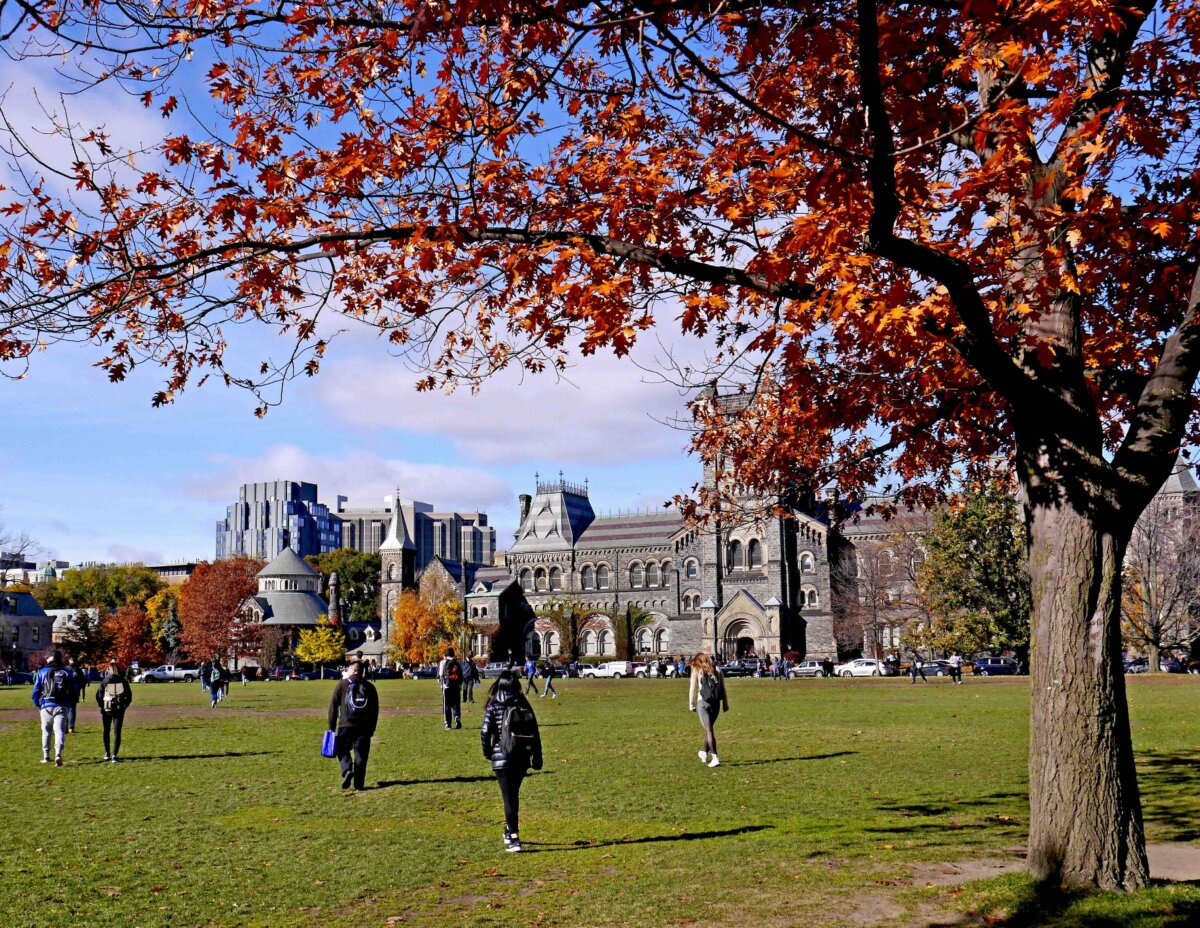
It is a comforting fiction that what happens in universities remains safely contained within ivy-covered walls.
In truth, the university is not an enclave but a seedbed. The habits of mind cultivated there, what counts as an argument, what qualifies as evidence, what may or may not be said, inevitably migrate outward into public life. If our civic discourse has grown shrill, technocratic, or morally evasive, we would do well to ask what intellectual formation has contributed to this shift. The classroom is a rehearsal space for our shared life. What we tolerate, reward, or neglect in our universities will eventually influence the character of our common life.
It is precisely this larger civic concern that animates the forthcoming volume edited by David W. Livingstone, professor of liberal studies at Vancouver Island University.
“Liberal Education and Civic Well-Being in Canada,” scheduled for release later this year, gathers scholars from across the country to assess not merely the administrative health of Canadian universities, but the deeper civic consequences of their philosophical drift.
The book is a response to “Bankrupt Education: The Decline of Liberal Education in Canada” by Waller R. Newell and Peter C. Emberley, first published in 1994. That earlier book diagnosed, with remarkable prescience, a loss of confidence in the moral and civic purpose of liberal learning. Livingstone’s volume asks what has become of Canadian universities in the three decades since.
Livingstone has said that returning to “Bankrupt Education” now felt “less like an act of commemoration than of necessity.” It remains, in his view, “one of the very few books to have grasped in a genuinely deep way what has gone wrong in Canadian universities.”
What continues to surprise him is not that the book identified real problems, but that so little has changed since it appeared. The issues Newell and Emberley named 30 years ago—ideological capture, the rise of activist scholarship, and a growing contempt for Canadian history and culture—are still with us. In some respects, he suggests, they are more entrenched than ever.
The present moment has only sharpened that realization. Universities across the country are now confronting serious budget pressures, forcing them to decide what really belongs at the core of their mission and what does not.
At the same time, Canadians are asking larger questions about citizenship: what it means, what it requires, and what kind of formation it presupposes. For Livingstone, these debates converge at precisely one point. Liberal education has traditionally been the centre of university life, and it remains the most appropriate preparation for citizens of a free society. It is not an ornament of higher education but its civic justification.
This, he hopes, is where the book can intervene. Not by offering technical fixes or policy blueprints, but by reframing the discussion itself, which is to say by encouraging the public, and those who shape higher-education policy, to insist that universities recover the courage to name liberal education as their primary task once again.
That earlier volume warned that liberal education in Canada was increasingly being undermined by vocationalism, managerialism, and, most importantly, by a philosophical confusion about the nature and purpose of higher education. Livingstone’s collection asks: What has happened to Canadian universities since those warnings were issued, and what does their current path mean for democratic self-governance?
By gathering scholars from across the country to explore these questions, Livingstone has made a meaningful contribution to Canadian intellectual life. The outcome is neither nostalgic nor polemical; it is a serious evaluation of how Canadian universities have evolved, what they have lost, and why those losses matter. I was honoured to contribute to this volume, which brings together voices united in the belief that the future of liberal education is inseparable from that of Canadian democracy.
The connection between liberal learning and democracy is neither abstract nor incidental. Democratic self-government presupposes citizens capable of exercising judgment, weighing competing claims, and distinguishing persuasion from coercion. These capacities are not innate, nor are they produced by technical training. They are cultivated through sustained engagement with history, philosophy, literature, and the disciplines that teach citizens to think across difference and disagreement.
Liberal education promotes habits of mind essential for democratic participation. It cultivates patience and tolerance, demonstrating that the world is complex and cannot be simplified into black-and-white terms. It encourages respect for evidence and emphasizes the importance of distinguishing between knowledge and belief. It teaches humility and the understanding that everyone is fallible. It exposes students to arguments they might disagree with, but they must first understand them. In doing so, it balances passion with reason and personal opinions with reflection. Liberal learning develops citizens capable of independent thought rather than mere conformity of sentiment.
Without this formation, societies grow more fragile and unstable. Slogans replace reasoned debate, and political disagreement turns into moral accusations. Citizens trained only to assert identities, repeat approved views, or vilify their political opponents are easily mobilized. But they are poorly equipped to govern themselves.
Liberal education, by contrast, prepares citizens for the demanding work of self-rule by habituating them to debate and judgment rather than instinct and outrage. Free institutions rely on educated citizens who can resist both official coercion and social conformity. In this way, liberal education is not just auxiliary to democracy but a core part of it. When universities drop liberal learning, they weaken a key cultural foundation that supports democratic freedom.
That is why the decline of liberal education cannot be dismissed as merely an internal academic issue. It serves as a warning about the erosion of the foundations that enable democratic self-governance. In reviving liberal learning, Canadians are not seeking nostalgia for a mysterious golden age; they are addressing the practical needs of democracy itself.
Since the publication of “Bankrupt Education” in 1994, Canadian higher education has come under growing instrumental and ideological pressure. Degrees are justified by their market value. Curricula are redesigned to satisfy external performance metrics and labour-market demands. Administrative bureaucracies have expanded while academic authority has weakened. At the same time, universities have become vulnerable to ideological capture, as moral and political doctrines are embedded in institutional policies and curricular requirements under the banners of equity, inclusion, and social justice.
Much of this ideological framework has not developed organically within Canadian intellectual traditions. It has been imported, often uncritically, from the United States, along with the language, assumptions, and moral reflexes of American campus politics. Concepts forged in a very different historical and constitutional setting are now routinely applied to Canadian institutions, frequently without serious reflection on their relevance or consequences. The result has been a narrowing of inquiry and a growing intolerance for dissent, all justified in the name of moral progress.
Faculty, meanwhile, find themselves constrained by administrative directives, compliance regimes, and implicit ideological expectations that narrow the boundaries of acceptable inquiry. The space for genuine intellectual risk has steadily contracted, replaced by a culture of caution in which conformity is often rewarded, and dissent quietly penalized.
The contributors to “Liberal Education and Civic Well-Being in Canada” argue that this situation cannot be corrected through technocratic reform alone. More funding, new governance models, or revised strategic plans will not restore liberal education if universities no longer believe in it. The problem is not primarily structural but philosophical. It concerns what universities understand themselves to be for and what kind of human beings they are attempting to form.
What is ultimately at stake is not the prestige of universities but the health of Canadian democracy itself. A free society depends on citizens educated to deliberate rather than react and to resist ideological fashion rather than submit to it. Universities once understood this responsibility as central to their public role.
The forthcoming volume is therefore best read as an invitation rather than a manifesto. It calls Canadians back to a conversation about first principles that has been neglected for too long. It asks whether our universities can recover the courage to defend liberal education in an age of managerial control, ideological pressure, and imported orthodoxies.
If Canadians care about freedom, they must care about the institutions that cultivate the habits of mind on which freedom depends. A free society is sustained not by slogans or credentials, but by judgment, memory, and the disciplined search for truth.
Livingstone’s new volume is not a lament but a summons. It reminds us that universities can once again become places where intellectual seriousness and civic responsibility meet. But only if we have the clarity and courage to insist upon it.
Views expressed in this article are the opinions of the author and do not necessarily reflect the views of The Epoch Times.
 Friends Read Free
Copy
Facebook
Tweet
Friends Read Free
Copy
Facebook
Tweet