Commentary
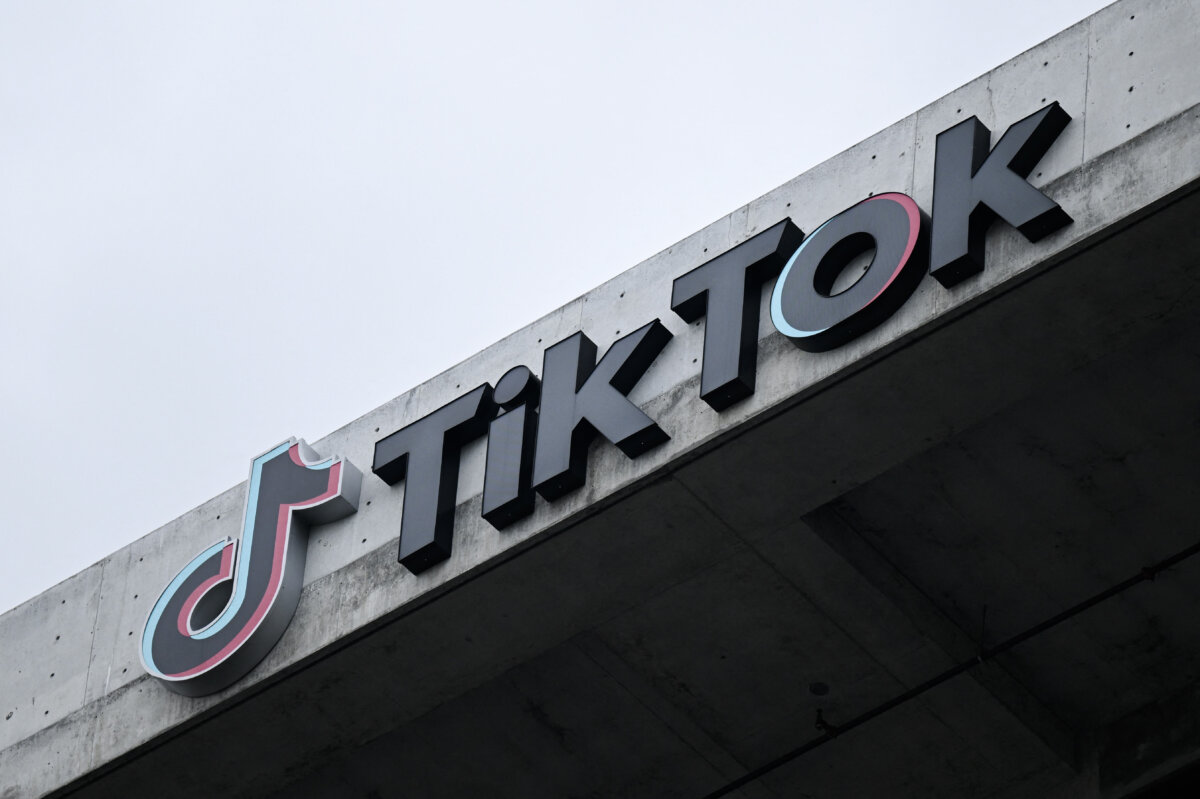
TikTok is spreading in Asia, threatening the stability of governments through the spark of riots, and sometimes overthrowing them in favor of regimes friendly to China.
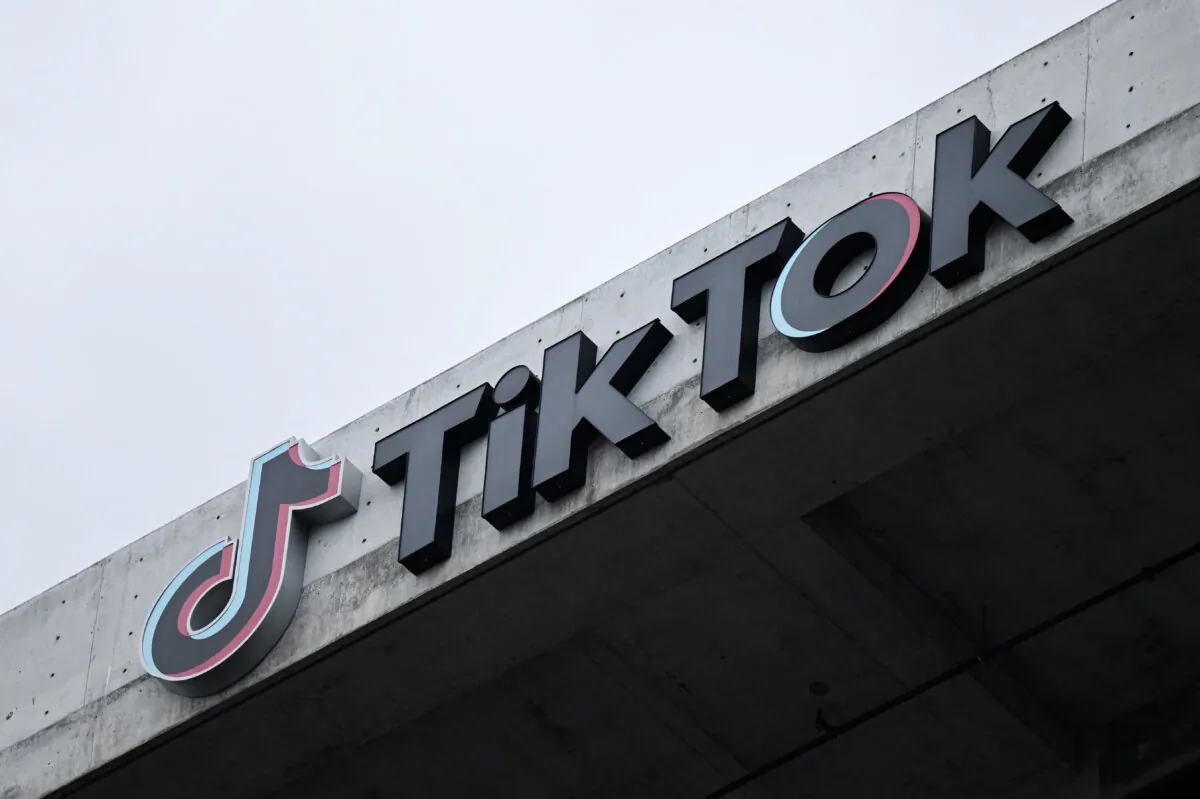
The app, originally based on Musical.ly, which a Chinese social media company purchased in 2017 for as much as $1 billion, risks becoming a tool in a pro-Beijing world revolution. The ability of Beijing to use TikTok to try to overthrow governments stems from its control of the TikTok algorithm, which determines what content is served to TikTokers in their daily feeds.
TikTok and revolt are increasingly seen as fashionable by youth throughout Asia. The New York Times is calling it an Asian “churn” or Arab Spring redux. During the Arab Spring, which began in 2010, Twitter played a significant role in helping to overthrow authoritarian regimes in the Middle East and North Africa.
Now, TikTok appears to be part of efforts to overthrow governments in Asia, even as Beijing bans its use in China in favor of a domestic version of the app.
TikTok revolts have happened recently in Bangladesh, Sri Lanka, Indonesia, and, in September, Nepal. TikTok provides Beijing with a lever to amplify local complaints about corruption, nepotism, youth unemployment, and poverty. The Chinese regime’s control of the algorithm turns up the heat to the point of revolt in countries that do not support Beijing’s priorities and reduces it in countries deemed friendly to the Chinese Communist Party’s (CCP’s) international goals.
Some complaints by the youth are real, while others are hyped. But Beijing’s control over its echo chamber provides the CCP with immense power and influence over governments worldwide.
New governments that result from TikTok revolts are generally closer to Beijing and tend to be worse than the old ones. They leave behind unelected leaders, a lack of law and order, the targeting of political opponents and minority groups, and political vacuums that the CCP can exploit.
The latest TikTok rebellion in Nepal is a complex case. A Maoist insurgency between 1996 and 2006 installed a communist party in an influential position in the government. Just as the government’s ties with India were warming and the Nepali prime minister was planning a state visit to India, TikTok inundated Gen Z youth, born between 1997 and 2012, with rapid-fire stories of nepotism, conspicuous consumption, and corruption.
The government responded with a new requirement, effective Sept. 4, intended to make social media more accountable (critics would say more easily censored). TikTok complied and remained online in Nepal, while Facebook and others refused and were shut down. The ban sparked riots that resulted in 51 deaths and 1,400 people injured. The prime minister resigned five days later, and the ban was lifted. He never got a chance to make his state visit to India.
In Bangladesh in 2024, riots and the resulting government repression led to as many as 1,400 deaths. The pro-India government of Sheik Hasina was replaced by one led by Muhammad Yunus, who leans toward China. He broke tradition by making his first bilateral visit abroad to Beijing. Previously, new presidents visited New Delhi first.
Since the revolt, Bangladesh has suffered an increase in attacks on religious minorities, political revenge, and lower gross domestic product growth, rather than real reforms. Beijing took advantage of the chaos by committing $2.1 billion in new investments, loans, and grants to Bangladesh, as well as a $400 million port modernization deal. Bangladesh greenlighted Chinese involvement in the strategic Teesta River project, which, along with a military buildup on China’s side of the border, is an existential threat to India’s “chicken neck” in the northeast.
Beijing increased its influence operations targeting youth in Sri Lanka between 2019 and 2021. In 2022, young protesters stormed the presidential palace, forcing the president to flee. The result was the election to the presidency of a Marxist and a Sri Lankan government that has human rights issues and continues to be heavily influenced by Beijing. The country’s financial crisis deteriorated, including foreign debt defaults. Sri Lanka is now in worse economic shape than at any time since its independence in 1948. The more desperate Sri Lanka is, the more it concedes to Beijing.
Avoiding more TikTok revolts around the world requires astute predictions and targeted political reforms. In August, the government of Indonesia risked being overthrown by a TikTok riot against the cost of living and lawmaker perks. Yet the year prior, inflation was just 2.4 percent, according to the government. This mattered little to TikTokers, whose violence was livestreamed by the platform. At least seven died. TikTok suspended its live broadcast function after Indonesian lawmakers accused it of fueling the crisis. Moderating reforms offered by the Indonesian president, such as cutting perks for parliamentarians and firing the country’s minister of finance, managed to avoid a government collapse.
TikTok’s Influence in the US
Americans should not think that they are immune. One Pennsylvania blogger writing about “The TikTok Revolution” in January said that “the revolution is happening because, first of all, millions of TikTok’ers are now seeing firsthand that China is actually pretty cool.”
She noted that removing China’s control of TikTok simply led TikTokers to shift to RedNote, which is even more extreme. Solving the TikTok threat, therefore, requires a broader solution to the CCP’s control of various forms of traditional and social media.
The threat of TikTok in the United States is likely much the same as its threat elsewhere, unless the U.S. government completes and other parties complete the pending deal to shift TikTok’s ownership to U.S. investors and control of its algorithm to a U.S. company. If not, Beijing could use the algorithm to feed U.S. TikTokers the same kind of provocative stories that sparked riots and the overthrow of governments in Asia.
There is no reason that democracies should allow China to use freedom of speech against their own freedoms. Plenty of better social media companies can provide youth around the world with full freedom of speech. This is what the U.S. government is realizing with its pressure campaign to not only force TikTok’s owner, ByteDance, to divest from TikTok U.S. in favor of American investors but, more crucially, to relinquish control of the algorithm itself.
How the United States might go further to wrest control of all traditional and social media from the CCP, for sale to private investors, is another matter. But no other solution is likely to be as satisfactory when it comes to ending Beijing’s growing malign influence over the world’s youth and therefore the CCP’s prospects for world revolution.
Views expressed in this article are the opinions of the author and do not necessarily reflect the views of The Epoch Times.
 Friends Read Free
Copy
Facebook
Tweet
Friends Read Free
Copy
Facebook
Tweet